Introduction:
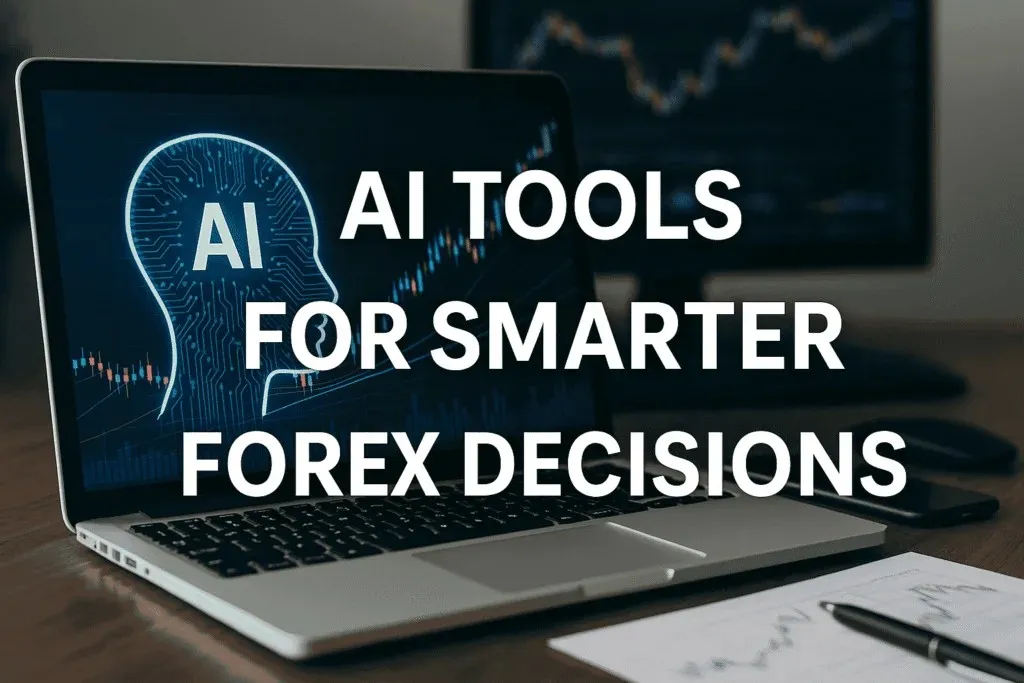
Artificial Intelligence is changing how forex traders analyze markets and make trading decisions. With access to real-time data, AI forex tools use pattern recognition, predictive modeling, and automation to simplify decision-making.
These tools minimize emotional trading, improve speed, and allow traders to make data-backed moves. Whether you’re an analyst or developer exploring algorithmic systems, understanding AI’s impact on forex is essential.
For a detailed overview of other trading technologies, see our Ultimate Guide to Forex Tools and Resources.
1. What Are AI Forex Tools?
AI forex tools use algorithms to analyze market data, identify patterns, and make predictions. They process vast amounts of information faster than humans, providing insights that support consistent trading performance.
These tools include:
- Trading bots that execute trades automatically.
- Machine learning tools that improve predictions through data learning.
- Automation systems that reduce manual effort in analysis and execution.
2. Why AI Matters in Forex Trading
Traditional analysis depends on manual chart reading and personal judgment. AI replaces this with structured data models that learn from past outcomes.
Key advantages of using AI in forex trading:
- Consistent trade execution without emotional influence.
- Real-time adaptation to changing conditions.
- Faster signal generation and back-testing.
- Improved risk control through automated limits.
3. Core Functions of AI in Forex
AI-driven trading systems operate based on three primary functions:
a. Data Processing
AI collects and filters market data from multiple sources, including price charts, economic news, and sentiment feeds.
b. Pattern Recognition
Machine learning algorithms identify recurring setups, such as price breakouts or reversals.
c. Prediction Modeling
Based on past outcomes, AI forecasts probable price movements and suggests entries or exits.
Together, these functions create a workflow where human traders supervise rather than manually manage every trade.
4. Categories of AI Forex Tools
AI forex tools can be divided into several categories, each supporting a specific trading function.
1. Forecasting Tools
They use regression models and deep learning to predict currency price trends.
2. Sentiment Analysis Tools
These systems scan financial news and social media to gauge market mood.
3. Automated Trading Bots
They open and close positions based on predefined rules or learned behavior.
4. Strategy Builders
AI helps traders design and test strategies using historical data without coding.
5. Risk Management Tools
They monitor volatility, margin use, and exposure to minimize losses.
5. How Machine Learning Powers Forex Analysis
Machine learning (ML) tools study past market data to find relationships between variables like volume, volatility, and direction. Over time, these tools improve their prediction accuracy through feedback loops.
Example:
A machine learning model may analyze historical EUR/USD price data and learn how volatility reacts to economic reports. Over multiple datasets, it adjusts its future predictions automatically.
ML-driven systems are the backbone of AI-based trading, helping traders understand probability rather than relying on guesswork.
6. Popular AI Forex Tools and Platforms
Let’s explore key AI-driven platforms that traders use today for smarter decisions.
1. MetaTrader with AI Plugins
MetaTrader allows integration of AI-based Expert Advisors (EAs). Traders can install custom scripts that analyze patterns and execute trades automatically.
Highlights:
- Supports both MT4 and MT5.
- Customizable AI-based bots.
- Back-testing tools for performance validation.
2. TradingView with Machine Learning Scripts
TradingView’s open-source Pine Script environment supports AI-inspired logic.
Users can apply pre-built indicators or connect AI data sources through APIs.
Highlights:
- Cloud access across devices.
- Large community sharing AI models.
- Visualization of ML-based trend predictions.
3. QuantConnect
A cloud-based research platform that supports algorithmic trading using Python and machine learning libraries.
Highlights:
- Supports multiple broker connections.
- Ideal for AI researchers and quants.
- Enables back-testing across global markets.
4. Capitalise.ai
A no-code automation platform where traders type commands in plain English to automate trades.
Highlights:
- Simple natural language interface.
- Integration with major forex brokers.
- AI-driven trade management and monitoring.
5. AlgoTrader
An institutional-grade platform for automated trading strategies with AI support.
Highlights:
- Machine learning modules for predictive modeling.
- Integrates with advanced data sources.
- Designed for quantitative hedge funds and professionals.
7. AI and Forex Automation
Forex automation allows trades to run on autopilot using predefined rules. AI upgrades this system by adding learning capabilities. Instead of fixed strategies, AI bots learn from each trade, adjusting parameters over time.
For example:
- A bot identifies that volatility increases before major news.
- It reduces position size automatically to limit risk.
- The same system increases trade frequency during stable sessions.
8. Role of Trading Bots in Modern Forex
Trading bots apply AI to manage multiple currency pairs simultaneously. They follow strict rules but adapt through ongoing data input.
Main benefits:
- 24/7 trading without supervision.
- Reduced emotional bias.
- Instant reaction to technical triggers.
- Customizable to different risk levels.
9. Real-World Examples of AI in Forex
AI-driven models have already proven effective across global forex operations.
Examples include:
- Banks and institutions use neural networks to predict exchange rate movements.
- Retail platforms offering automated trading bots for independent traders.
- Signal providers that combine AI analysis with human verification for improved reliability.
10. Challenges of Using AI in Forex
While AI tools improve decision-making, they also present technical and strategic challenges.
Common limitations:
- High dependency on data quality.
- Potential for overfitting models.
- Need for continuous system updates.
- Lack of transparency in black-box algorithms.
11. How AI Improves Risk Management
AI systems track exposure, drawdown, and margin use in real time.
If volatility rises, the system may close or adjust trades instantly.
Practical features:
- Automated stop-loss and take-profit rules.
- Margin alerts based on volatility metrics.
- Position sizing calculated using AI models.
12. Integrating AI with Other Forex Tools
AI works best when combined with charting tools, calculators, and data software. For example:
- AI predictions can be cross-checked with technical chart patterns.
- Forex calculators confirm position sizing before execution.
- Data software feeds AI with clean, accurate inputs.
13. Ethical Use of AI in Forex Trading
Ethical trading requires fair use of AI models.
AI systems should avoid exploiting market inefficiencies in a way that causes artificial volatility.
Traders must ensure transparency, data privacy, and fairness in automated decision-making.
14. Future of AI in Forex Trading
AI’s role in forex will continue to expand as computational power grows.
Emerging trends include:
- Integration of deep reinforcement learning.
- Hybrid systems that mix human input with AI signals.
- Predictive engines based on global data feeds.
15. Key Takeaways for Traders
- AI forex tools use data learning to support trading accuracy.
- Machine learning and automation create consistent execution.
- Trading bots save time and minimize emotional trading errors.
- Proper integration with existing forex tools improves reliability.
16. Related Reading
For deeper insights into complementary tools like forex calculators, charting tools, and data software, read our Ultimate Guide to Forex Tools and Resources.
Conclusion
AI is redefining forex decision-making through automation, precision, and learning capabilities.
Traders who use AI forex tools gain faster insights, reduced risk, and improved accuracy across all market conditions.
Whether you use trading bots, machine learning tools, or fully automated systems, integrating AI into your strategy can lead to smarter, data-driven results.
For more articles and resources on trading technology, visit our Forex Tools & Resources section. Stay informed, stay analytical, and let AI help you trade intelligently.