
Introduction
Ask a struggling trader why they lost, and you will often hear that the signal looked good. A single indicator flashed, a level held once, a candle formed and they pulled the trigger. The professionals do something different: they wait until several independent factors point to the same conclusion before risking a dollar. That principle is called confluence in trading, and it is one of the most powerful concepts a trader can master. In this guide, we explain what is confluence in forex, why stacking multiple signals dramatically improves your odds, and how to build a practical trading confluence strategy without drowning in indicators.
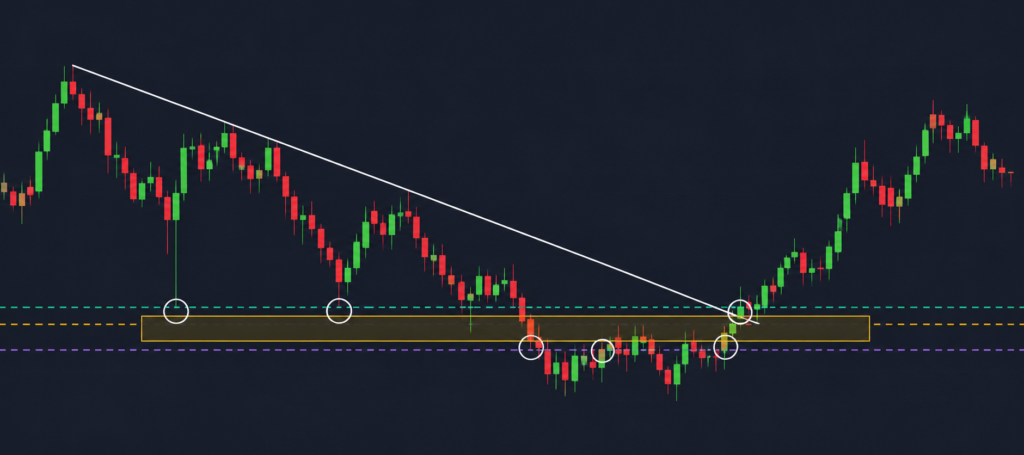
What Is Confluence in Trading?
To answer what is confluence in forex, confluence is the alignment of multiple independent factors pointing to the same trading conclusion at the same place and time. Instead of relying on a single signal, you wait until several pieces of evidence a key level, the trend direction, a candlestick pattern, an indicator reading all agree before taking a trade. The more factors that line up, the higher the probability the trade works.
Think of it like a courtroom. A single piece of evidence is rarely enough to convict; a strong case is built when multiple independent pieces of evidence point to the same verdict. Trading is similar. One indicator can easily give a false signal, but when a support level, the prevailing trend, and a reversal candle all point to a bounce at the same spot, the case for the trade becomes far stronger.
Confluence does not guarantee a winning trade nothing does. What it does is improve your odds and your trade selection. By taking only setups where the evidence genuinely aligns, you naturally filter out the weak, low-probability trades that drain accounts. Confluence in trading is, at its core, a discipline of patience: waiting for the market to make a strong case before you act.
Why Confluence Improves Your Odds
The power of confluence lies in probability. Every individual signal has a certain chance of being a false alarm. When you require several independent signals to agree, you dramatically reduce the chance that all of them are wrong at once. A trade backed by three or four aligned factors is statistically more likely to succeed than one based on a single signal, simply because more evidence supports it.
Confluence also forces selectivity, which solves one of trading’s biggest problems: overtrading. Beginners take too many trades, acting on every minor signal and bleeding their accounts through low-quality setups and accumulated costs. By demanding confluence, you naturally trade less and trade better, waiting for the high-probability situations and ignoring the noise in between. Fewer, stronger trades almost always beat many weak ones.
There is a psychological benefit too. When you enter a trade backed by multiple aligned factors, you trade with greater conviction and calm, because you have a clear, evidence-based reason for the position. This confidence helps you follow your plan, honor your stop, and avoid the second-guessing that plagues traders who act on flimsy signals. Confluence improves not just your odds but your discipline and your mindset.
The Best Confluence Factors to Combine
A practical trading confluence strategy combines factors that are genuinely independent, so that each adds new information rather than repeating the same thing. Support and resistance levels are a cornerstone areas where price has reacted before and is likely to react again. Layering the trend direction on top is powerful: a setup that aligns with the larger trend is far stronger than one fighting it. For a deeper look at how these support/resistance and trend factors overlap into tradeable zones, see our guide to forex confluence zones.
Other reliable factors include Fibonacci retracement levels, which often mark where pullbacks end; key moving averages that act as dynamic support or resistance; and candlestick patterns like pin bars or engulfing candles that signal rejection or momentum at a level. Multiple-timeframe analysis adds another dimension, confirming that a setup on your trading timeframe agrees with the higher-timeframe picture.
| Confluence Factor | What It Tells You | Strength When Aligned |
|---|---|---|
| Support and resistance | Where price reacts | Core anchor for the trade |
| Trend direction | The path of least resistance | Greatly improves odds |
| Fibonacci level | Where pullbacks often end | Pinpoints entry zones |
| Moving average | Dynamic support and resistance | Adds dynamic confirmation |
| Candlestick pattern | Rejection or momentum | Times the entry |
| Higher timeframe | Bigger-picture agreement | Confirms the bias |
The goal is not to use all of these at once but to find two, three, or four that genuinely agree at the same place. When a support level, the prevailing trend, a Fibonacci zone, and a rejection candle all point to a bounce at one spot, you have a textbook confluence setup worth trading.
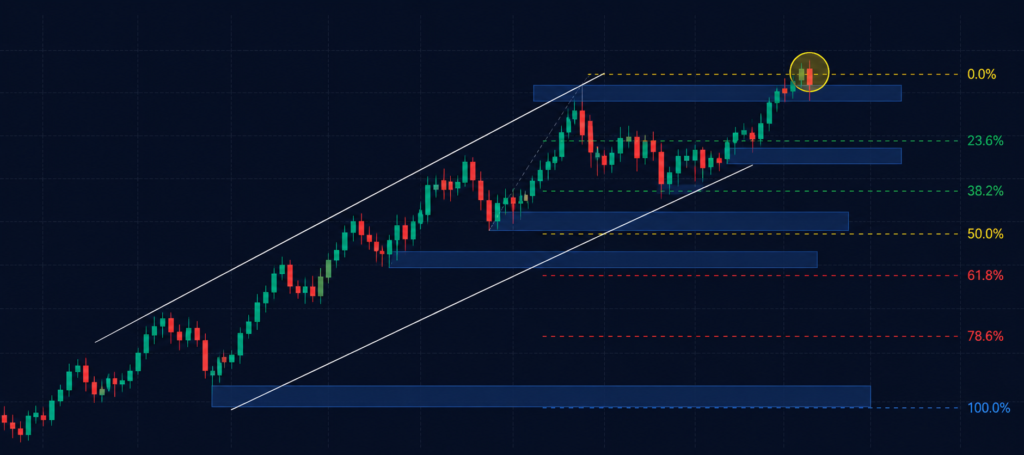
How to Build a Trading Confluence Strategy
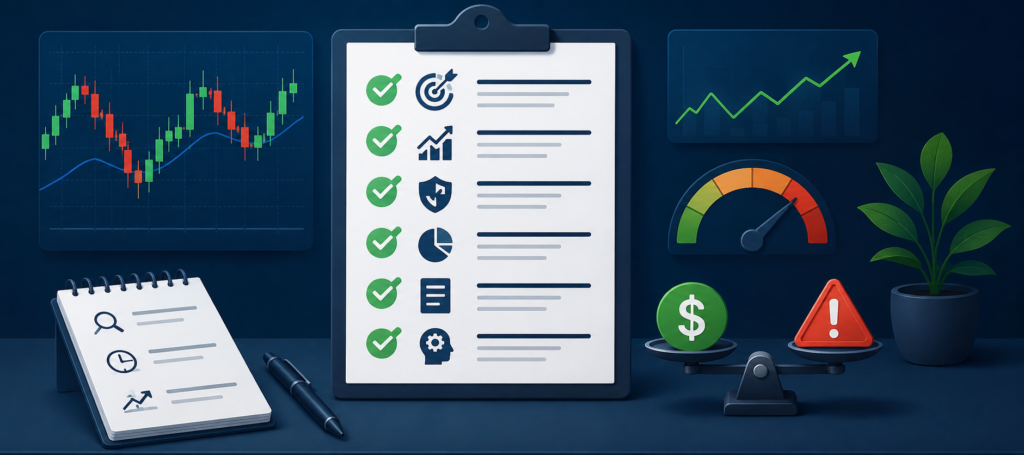
Building a trading confluence strategy starts with choosing a small set of factors you understand well, rather than throwing every tool at the chart. Pick a primary anchor often support and resistance or supply and demand and decide which additional factors you will require to confirm a trade. A simple, repeatable checklist is far more effective than a vague intention to look for confluence.
Next, define how much confluence is enough to trigger a trade. Many traders require at least two or three aligned factors before entering, and reserve their largest conviction for setups where even more line up. The key is consistency: apply the same standard to every trade so you are not rationalizing weak setups in the heat of the moment. Your checklist becomes the filter that keeps you disciplined.
Finally, wrap the strategy in proper risk management. Confluence improves your odds but never eliminates losses, so you still risk only a small fraction of your account per trade and place a stop at a logical level. The beauty of confluence is that high-probability setups often offer excellent risk-to-reward, because a strong level gives you a tight, logical stop and a clear target. Combining selective, confluence-based entries with disciplined risk control is a powerful, sustainable approach.
How Much Confluence Is Too Much?
A natural question is whether more confluence is always better, and the honest answer is no. Beyond a point, adding factors produces diminishing returns and can actually hurt you. If you demand that ten different signals align perfectly before every trade, you will rarely find a setup, miss good opportunities, and grow frustrated. Perfection is the enemy of execution.
There is also the danger of redundancy and clutter. Some factors essentially measure the same thing, so stacking them adds the illusion of confluence without genuine independent confirmation. Three momentum indicators all saying oversold is not three independent signals; it is one signal repeated. Cluttering your chart with dozens of tools also makes analysis harder and decisions slower, the opposite of what confluence should achieve.
The sweet spot is usually a handful of genuinely independent factors. Two to four aligned signals from different categories a level, a trend, and a price-action trigger, for example typically offer a strong edge without making setups impossibly rare. The goal is a clean, repeatable read of the market, not a cluttered chart that demands perfection. Confluence is a tool for clarity and selectivity, and overdoing it defeats that purpose.
What Top Traders and Research Say
The principle of waiting for strong, aligned evidence runs through the wisdom of successful traders. In Trading in the Zone, Mark Douglas emphasizes thinking in probabilities and taking only setups that fit a well-defined edge. Confluence is a practical way to define that edge, requiring multiple factors to agree so that each trade fits a clear, repeatable standard rather than a fleeting impulse.
Research on technical analysis supports the value of combining methods. The study “Foundations of Technical Analysis” by Lo, Mamaysky, and Wang found that technical signals can carry genuine information when defined and applied rigorously. Confluence applies this rigor by demanding that several well-defined signals align, reducing the chance of acting on a single false reading and improving the reliability of the overall approach.
As Jesse Livermore observed, “There is a time to go long, a time to go short and a time to go fishing.” Confluence is what tells you when it is time to act and when it is time to wait. By requiring genuine alignment before trading, you naturally fish doing nothing far more often, and you act decisively only when the market presents a strong, multi-factor case.
Frequently Asked Questions
What is confluence in trading?
Confluence in trading is the alignment of multiple independent factors pointing to the same conclusion at the same place and time. Instead of relying on a single signal, you wait until several pieces of evidence such as a key level, the trend direction, a Fibonacci zone, and a candlestick pattern all agree before taking a trade. The more genuinely independent factors that line up, the higher the probability the trade succeeds. Confluence does not guarantee a win, but it improves your odds and filters out the weak, low-probability setups that drain accounts.
What is confluence in forex specifically?
The concept of what is confluence in forex is identical to confluence in any market: combining several independent technical factors to confirm a high-probability setup before entering. In forex, traders commonly stack support and resistance, trend direction, Fibonacci retracements, moving averages, candlestick patterns, and multiple-timeframe analysis. For example, a strong buy setup might occur where a support level, the larger uptrend, a Fibonacci retracement zone, and a bullish rejection candle all align at the same price. That alignment builds a far stronger case than any single signal could on its own.
How do I build a trading confluence strategy?
To build a trading confluence strategy, choose a small set of factors you understand well, starting with a primary anchor like support and resistance or supply and demand. Decide which additional factors you will require to confirm a trade, and define how many must align often two to four before you enter. Turn this into a simple, repeatable checklist and apply it consistently to every trade. Finally, wrap it in disciplined risk management, risking only a small fraction of your account and placing a logical stop. Consistency and selectivity are what make the strategy effective.
How many confluence factors should I use?
You should generally use a handful of genuinely independent factors, typically two to four from different categories, rather than as many as possible. More is not always better: demanding that many signals align perfectly makes setups impossibly rare and leads to missed trades and frustration. Stacking redundant factors that measure the same thing also creates a false sense of confirmation. The sweet spot combines a level, a trend, and a price-action trigger, for example, giving a strong edge while keeping setups achievable and your chart clean enough to read clearly.
Does confluence guarantee a winning trade?
No, confluence never guarantees a winning trade, because nothing in trading does. What confluence does is improve your probability by requiring multiple independent factors to agree before you act, reducing the chance that you are fooled by a single false signal. Even the cleanest multi-factor setup can fail, which is why every confluence trade still requires a stop loss and conservative position sizing. Treating a strong setup as a certainty and oversizing is a serious mistake. Confluence loads the odds in your favor, but disciplined risk management remains essential on every trade.
Final Thoughts
Confluence in trading is the quiet discipline that separates patient professionals from impulsive gamblers. Rather than acting on a single flickering signal, you wait until the market builds a genuine case a key level, the prevailing trend, a Fibonacci zone, a rejection candle, all pointing to the same conclusion at the same spot. Understanding what is confluence in forex transforms how you select trades: you naturally take fewer, stronger setups, avoid the overtrading that drains accounts, and enter with the calm conviction that comes from real evidence. The key is balance. Build a trading confluence strategy around a handful of genuinely independent factors, apply a consistent checklist, and avoid both the trap of redundant clutter and the paralysis of demanding perfection. Above all, remember that confluence improves your odds but never removes risk every trade still needs a stop and sensible sizing.
This article is for educational purposes only and does not constitute financial advice. Forex trading carries significant risk, and no setup, however strong, guarantees profit. Only trade with capital you can afford to lose.
Trade only the best setups. Visit forextradingboards.com for strategy guides, confluence breakdowns, and market analysis built to help you trade selectively and profitably.