

Introduction
Most new traders do not lose because the market is impossible to beat. They lose because of a handful of avoidable habits that quietly drain their accounts week after week. The forex trading mistakes beginners make are remarkably predictable and repeatable, which is actually good news, because predictable problems have proven solutions. Once you can name each mistake, you can build a defense against it.
The painful early stage of trading is where most people quit, usually after blowing one or two accounts and concluding that forex is rigged. In reality, they simply repeated the same errors until their capital ran out. This guide walks through the eight costliest mistakes one by one, and crucially, it pairs every single one with a clear, practical fix. Master these, and you will shorten the hardest part of the learning curve while protecting your capital long enough to actually grow.
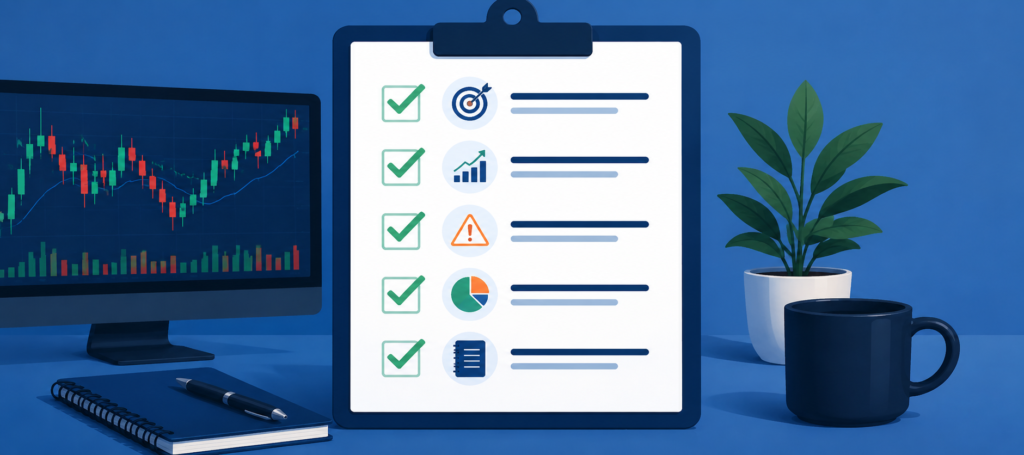
Fig 1.1: (Forex trading mistakes beginners make checklist for building a complete trading plan)
Trading Without a Plan
The first and most damaging mistake is trading purely on impulse. A beginner sees a candle shoot up, feels a jolt of excitement, and clicks buy without any defined reason, entry logic, or exit. That is not trading; it is gambling with extra steps. Without a plan, every decision is driven by emotion, and emotion is the worst possible guide in a fast-moving market.
A written trading plan fixes this almost instantly. It defines what you trade, the exact conditions for entering, where you will take profit, where you will cut losses, and how much you will risk on each position. With those rules in place, every action has a reason behind it, and you stop reacting to random price flickers. The plan becomes a filter that keeps you out of low-quality trades and in control of the good ones.
Among the common forex trading mistakes, the absence of a plan is the root cause of nearly all the others. Overtrading, emotional decisions, and inconsistent risk all flow naturally from having no framework. Build the plan first, and many of the remaining mistakes simply disappear because there is no longer any room for impulsive behavior.
Overleveraging the Account
Leverage is seductive because it promises enormous profits from tiny price moves. New traders, hungry for fast results, often crank it to the maximum and open positions far larger than their account can safely absorb. It feels powerful right up until a single normal pullback wipes out weeks of careful gains in minutes. Leverage magnifies losses just as eagerly as it magnifies wins.
The fix is disciplined position sizing based on a fixed risk percentage. Rather than asking how large a position you can open, ask how much you are willing to lose if the trade fails, and size accordingly. Risking only a small, fixed slice of your account per trade, commonly one percent or less, turns a losing streak into a survivable dip instead of an account-ending catastrophe. The math quietly protects you from your own worst impulses.
Respecting leverage is one of the most important forex beginner mistakes to avoid, because over-sizing is what turns small, normal errors into permanent damage. A trader who risks one percent can be wrong many times in a row and still have plenty of capital to recover. A trader who risks twenty percent needs only a short bad run to be finished. The difference is not skill; it is sizing.
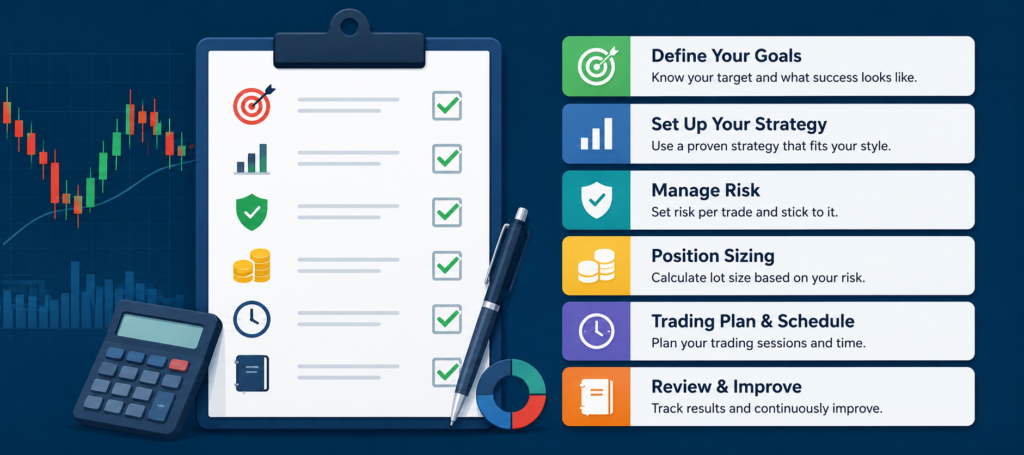
Fig 1.2 :(Common forex trading mistakes overleveraging versus safe position sizing.)
Trading Without a Stop Loss
Many beginners skip the stop loss entirely, convinced that the trade will eventually turn back in their favor. Sometimes it does, which is the trap, because that occasional rescue reinforces a dangerous habit. Eventually, one trade keeps running against them, and a small manageable loss balloons into a catastrophic one that erases the entire account in a single position.
A stop loss is non-negotiable for any serious trader. It defines your maximum risk before you ever enter, and it removes the agonizing temptation to hold a losing trade out of hope. By deciding your exit in advance, you take the emotion out of the worst moments, when fear and denial are most likely to cloud your judgment. Place the stop at a logical level beyond a swing high or low, where the trade idea is genuinely invalidated.
The discipline to honor that stop is just as important as setting it. Moving a stop further away to avoid a loss is simply choosing a bigger loss later. Let the stop do its job without interference, accept the small defined loss, and move on to the next setup. Protecting capital is the first and most important job of any trader.
Letting Emotions Drive Decisions
Fear and greed are the silent killers of trading accounts. Greed pushes traders to oversize positions, hold winners far too long, and chase every move out of a fear of missing out. Fear does the opposite, forcing them to cut good trades early or pile into revenge trades to recover a loss. Both emotions lead to the same place: inconsistent, destructive decisions.
The antidote is to prioritize process over outcome. When you follow a tested plan with fixed, small risk, the emotional weight of any single trade shrinks dramatically. No individual win can make you reckless, and no single loss can devastate you, because each trade is just one of many in a long series. You stop reacting to every tick and start executing a strategy with calm, mechanical consistency.
This emotional stability is not a personality trait you are born with; it is a byproduct of good risk management and a clear plan. Traders who feel calm are usually the ones who have removed the pressure by sizing small and defining their rules. Get those foundations right, and the discipline that looks so impressive in others becomes far easier to maintain yourself.
Image alt: Forex beginner mistakes to avoid emotional trading cycle of fear and greed — Suggested image: fear-and-greed emotion cycle diagram.
Overtrading the Market
Beginners often equate constant activity with progress, taking dozens of trades a day in a restless search for action and quick profits. But more trades simply mean more spread costs, more chances to make a mistake, and far more emotional exhaustion. Activity feels productive, yet it usually erodes both your account and your focus rather than building them.
Quality beats quantity in every timeframe and every market. Wait patiently for setups that meet every condition in your plan, and let everything else pass without a second thought. A handful of high-probability, well-managed trades will almost always outperform a frantic flurry of impulsive ones. The professional’s edge often comes not from trading more, but from trading less and choosing better.
| Mistake | Quick Fix |
|---|---|
| No trading plan | Define entries, exits, and risk in writing before trading |
| Overleveraging | Risk a small fixed percentage, around 1%, per trade |
| No stop loss | Set a logical stop at invalidation before every entry |
| Emotional trading | Follow your process, not your feelings, on every trade |
| Overtrading | Take only A-grade setups and skip the rest |
Ignoring Risk-to-Reward
Some beginners are genuinely puzzled to find that they win most of their trades and still lose money overall. The culprit is almost always a poor risk-to-reward ratio, where a string of small wins is repeatedly erased by one or two oversized losses. A high win rate means nothing if your losers dwarf your winners.
The fix is to demand setups that pay at least 1.5 to 2 times your risk before you take them. With a healthy ratio working in your favor, you can be wrong more often than you are right and still grow your account steadily over time. This single mental shift, from chasing wins to chasing favorable ratios, transforms long-term results more than almost any indicator ever could.
Thinking in terms of reward versus risk also improves your patience and selectivity. When you only take trades that offer a strong payoff relative to the risk, you naturally filter out the marginal setups that quietly bleed accounts. Over hundreds of trades, that disciplined filtering is what separates traders who compound from traders who tread water.
Skipping a Trading Journal
Without a record of your trades, every mistake is doomed to repeat itself indefinitely. Beginners who do not journal cannot see their own patterns, so they keep making the same errors over and over without ever understanding why their results refuse to improve. Memory is unreliable, and the trades you most need to learn from are often the ones you would rather forget.
A simple journal that logs your entries, exits, the reasons for each trade, and your emotional state reveals exactly where you leak money. Maybe you lose most often on Fridays, or after a big win, or when you deviate from your plan. These patterns are invisible in the moment but obvious in the data. Reviewing your journal weekly turns scattered, random experience into structured, deliberate improvement.
This feedback loop is one of the fastest ways to grow as a trader. The journal holds you accountable, highlights your strengths so you can lean into them, and exposes the leaks so you can plug them. Few habits offer such a high return for so little effort, yet most beginners skip it entirely, which is precisely why most beginners stay stuck.
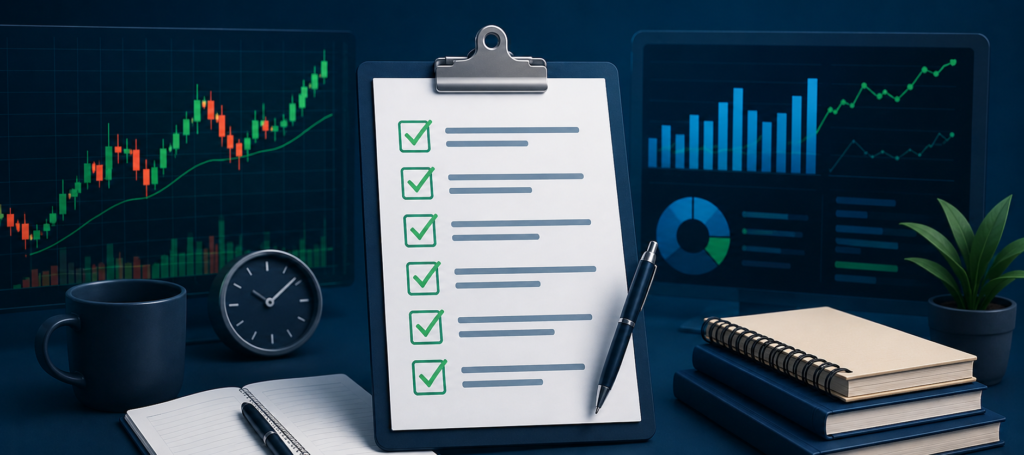
Fig 1.4: (Forex trading journal example showing entries, exits, risk and emotions for beginners)
Expecting to Get Rich Quickly
Finally, unrealistic expectations quietly cause some of the most reckless behavior of all. Beginners who expect to double their account in a month inevitably take wild, oversized risks to hit that fantasy target, and they burn out fast when reality refuses to cooperate. The dream of overnight riches is the enemy of the consistency that actually builds wealth.
Trading is a skill that compounds gradually, much like any serious profession. Setting realistic goals, protecting your capital, and focusing on steady, repeatable execution will take you far further than any get-rich-quick mindset. Survival is the first job; once you can consistently avoid blowing up, profit follows naturally from discipline and time. Slow and durable beats fast and fragile every single time.
Frequently Asked Questions
What are the most common forex trading mistakes beginners make?
The forex trading mistakes beginners make most often include trading without a written plan, overleveraging the account, skipping stop losses, and letting fear and greed drive decisions. Each of these can drain an account quickly, but every one is fixable with discipline and clear rules. The absence of a plan tends to sit at the root, because it allows all the other mistakes to creep in unchecked.
What is the biggest forex beginner mistake to avoid?
The single biggest forex beginner mistake to avoid is overleveraging. Trading positions that are far too large for your account turns a normal, routine losing trade into a devastating one, and it is the leading cause of blown accounts. Capping your risk at a small fixed percentage per trade removes most of this danger, because no single loss can do permanent damage.
Why do most beginner forex traders lose money?
Most beginners lose because of poor risk management, the lack of a trading plan, and emotional decision-making, not because the market is unbeatable. They repeat the same common forex trading mistakes until their capital runs out. Fixing these structural issues, sizing small, planning trades, and following a process, dramatically improves long-term results even without changing the underlying strategy.
How can beginners avoid emotional trading?
The most effective way to avoid emotional trading is to follow a written plan with fixed, small risk on every trade. When no single position can hurt your account badly, fear and greed lose their grip and you can execute calmly. Emotional stability is mostly a byproduct of good risk management, so getting your sizing right does more for your psychology than any amount of willpower.
Do I really need a trading journal as a beginner?
Yes, a journal is one of the most valuable habits you can build early. It reveals repeating mistakes and hidden patterns that are impossible to see in the moment, such as losing more on certain days or after big wins. Reviewing it regularly converts random trial-and-error into structured improvement, making it one of the fastest paths to consistency.
How long does it take to become a consistent forex trader?
Becoming consistent usually takes a year or more of deliberate practice, journaling, and disciplined risk management, though it varies by individual. The biggest accelerator is avoiding account-ending mistakes so you stay in the game long enough to learn. Traders who set realistic expectations and protect their capital progress far faster than those chasing quick riches and blowing up repeatedly.
Final Thoughts
The forex trading mistakes beginners make are remarkably consistent across nearly every new trader, and that consistency is your greatest advantage, because it means the solutions are known and repeatable. Build a written plan, risk only a small fixed percentage per trade, always use a stop loss, and let your process override your emotions. Avoid the temptation to overtrade, demand a healthy risk-to-reward ratio on every setup, keep an honest journal, and ground your goals in reality rather than fantasy. By treating these common forex trading mistakes as a checklist of exactly what not to do, you shorten the most painful part of the learning curve and protect your capital long enough to actually improve. Master the forex beginner mistakes to avoid, stay patient and disciplined, and the consistency you are chasing will follow as a natural result of doing the simple things right, again and again.