
Introduction
Almost every successful forex trader has a graveyard of early errors behind them accounts blown, lessons learned the hard way, and habits unlearned at great cost. The truth is that most newcomers do not fail because the market is impossible; they fail because they repeat the same handful of predictable errors. Understanding the forex trading mistakes beginners make before you make them is one of the cheapest, most powerful advantages you can give yourself. In this guide, we walk through the most common forex trading mistakes, explain why they are so destructive, and lay out the forex beginner mistakes to avoid with practical fixes for each.
Mistake 1: Trading Without a Plan
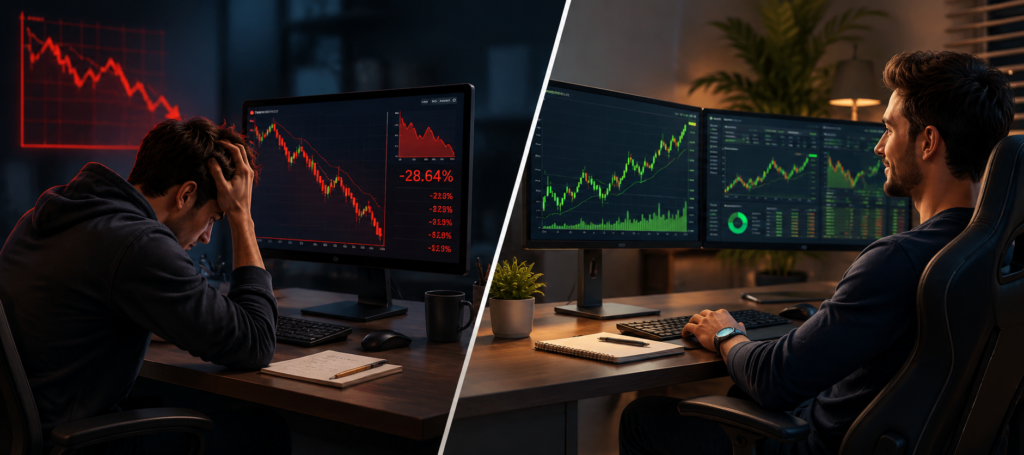
The most foundational of the forex trading mistakes beginners make is trading without a written plan. Newcomers often open trades based on a hunch, a tip, or a feeling that the market looks like it will go up. Without defined rules for entry, exit, risk, and position size, every decision becomes improvised and emotional, and improvised trading is gambling dressed up as analysis.
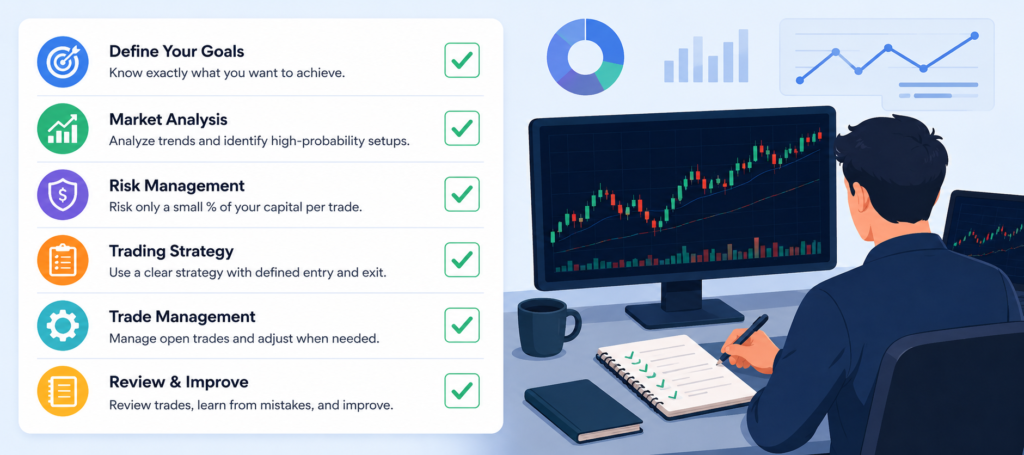
A trading plan removes guesswork. It states exactly what conditions must be present before you enter, where your stop loss and target sit, how much you risk per trade, and when you stop trading for the day. With these rules in place, you trade a process rather than a mood, and you can review your decisions objectively afterward. The plan is what turns random activity into a repeatable, improvable system.
The fix is simple but requires discipline: write your plan before you trade, and follow it without exception. Even a basic plan beats no plan, because it gives you a standard to measure yourself against. Over time, you refine it based on your results, but the act of having and following a plan is itself the difference between a trader and a gambler.
Mistake 2: Overleveraging and Poor Position Sizing
Among the most account-destroying common forex trading mistakes is overleveraging. The high leverage brokers offer tempts beginners to open positions far too large for their account, reasoning that a bigger position means bigger profits. It also means bigger losses, and a single bad trade with excessive size can wipe out a large chunk of capital in minutes.
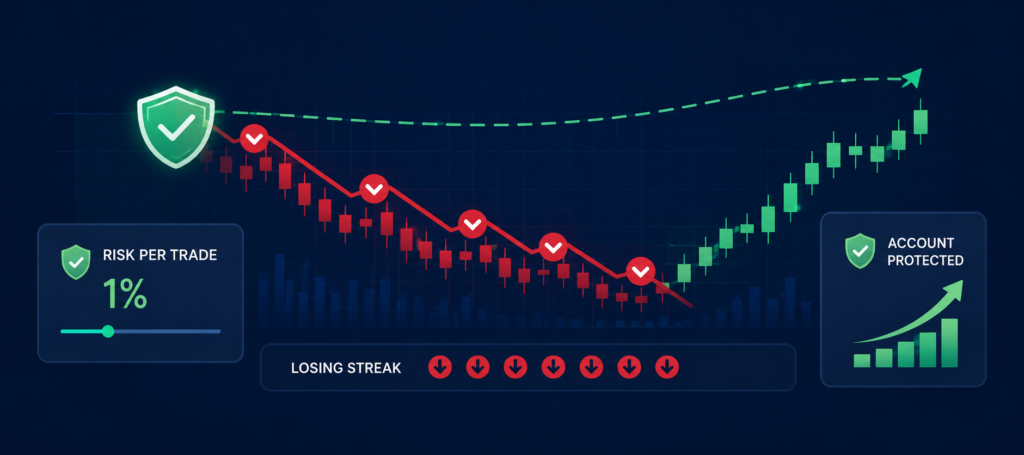
The problem is that beginners size positions based on the profit they hope for rather than the loss they can afford. Professional traders do the opposite: they decide how much they are willing to lose on a trade typically one or two percent of the account and size the position so that hitting the stop costs only that amount. This keeps every loss small and survivable, no matter how many come in a row.
The fix is to embrace conservative position sizing and treat leverage as a tool, not a temptation. Risk a small, fixed fraction per trade, use a position size calculator to get it right, and never increase your size to make back losses. This single discipline does more to keep beginners alive than any entry strategy, because it ensures no individual trade can do catastrophic damage.
Mistake 3: Trading Without a Stop Loss
A close cousin of poor sizing is trading without a stop loss, one of the most dangerous forex beginner mistakes to avoid. A stop loss is a predefined exit that closes a losing trade at a controlled level. Without one, a losing position can run indefinitely, and beginners often hold losers in the desperate hope they will turn around, watching small losses balloon into account-threatening ones.
The psychology behind this mistake is powerful. Admitting a loss feels like admitting you were wrong, so traders move or remove their stops to avoid that admission. But the market does not care about your ego, and a single unstopped trade in a strong adverse move can undo weeks of careful gains. Hope is not a risk management strategy.
The fix is to place a stop loss on every trade, at a logical level, before you enter and never to move it further away once the trade is live. The stop defines your risk and removes the emotional decision of when to exit a loser. Honoring it without exception is what keeps your losses small and your account intact, even when individual trades go against you.
Mistake 4: Letting Emotions Drive Decisions
Fear and greed are the twin engines behind most beginner errors, and learning to manage them is central to the forex trading mistakes beginners make. Greed pushes traders to overtrade, oversize, and hold winners too long out of a desire for more. Fear pushes them to cut winners short, hesitate on good setups, and panic out of trades at the worst moments. Both lead to poor, impulsive decisions.
Revenge trading is emotion at its most destructive. After a loss, the urge to win the money back immediately drives traders into impulsive, oversized trades that often deepen the damage. One loss becomes two, then three, and a manageable setback turns into a blown account in a single emotional spiral. Recognizing this pattern is the first step to breaking it.
The fix combines a solid plan with self-awareness. When you trade a defined process and risk only a small amount per trade, each individual trade matters less, which naturally calms your emotions. Stepping away after a loss, sticking to predefined daily limits, and keeping a journal to spot emotional patterns all help. Emotional control is a skill that develops with practice, and it is just as important as any technical strategy.
| Mistake | Why It Hurts | The Fix |
|---|---|---|
| No trading plan | Decisions become emotional | Write and follow defined rules |
| Overleveraging | One trade can wipe the account | Risk 1 to 2 percent per trade |
| No stop loss | Small losses become huge | Set a stop on every trade |
| Emotional trading | Drives impulsive decisions | Trade a process, step away after losses |
| Unrealistic expectations | Leads to reckless risk-taking | Treat forex as a long-term skill |
Mistake 5: Expecting to Get Rich Quick
Perhaps the most pervasive of the common forex trading mistakes is the expectation of fast, easy riches. Marketing and social media flood beginners with images of overnight success, fueling the belief that a small account can become a fortune in weeks. This expectation is not just wrong; it is actively dangerous, because it drives the reckless risk-taking that destroys accounts.
When a trader expects quick riches, they oversize, overtrade, and ignore risk management, because patient, disciplined trading feels too slow. The inevitable losses then trigger frustration and even more reckless behavior. The unrealistic expectation, more than any single technical error, is the root cause of the spiral that wipes out most beginners in their first year.
The fix is a complete mindset shift. Treat forex as a serious skill that takes years to master, like any profession. Expect to be unprofitable while you learn, protect your capital fiercely so you survive the learning curve, and measure progress in consistency rather than quick gains. The traders who succeed are those who accept that real, durable profitability is built slowly through discipline, not conjured overnight through luck.
What Top Traders and Research Say
The greats are unanimous that survival and discipline matter more than brilliance. In Trading in the Zone, Mark Douglas argues that consistent results come from a disciplined, probabilistic mindset rather than from finding perfect trades. Most beginner mistakes overtrading, moving stops, revenge trading are failures of mindset, exactly the area Douglas identifies as decisive.
Academic research puts hard numbers behind the warnings. Barber and Odean’s study “Trading Is Hazardous to Your Wealth” found that the most active traders earned the lowest net returns, undermined by overtrading and costs. This is a direct rebuke to the frantic, high-frequency style beginners often adopt in pursuit of quick profits. Trading less, but with more discipline, is the evidence-based path to better results.
As Jesse Livermore observed, “It was never my thinking that made the big money for me. It was always my sitting.” Beginners, by contrast, cannot sit still they overtrade, chase, and force action. Learning to wait for high-quality setups and to do nothing when there is nothing to do is one of the hardest and most valuable lessons in trading.
Frequently Asked Questions
What are the most common forex trading mistakes beginners make?
The most common forex trading mistakes beginners make include trading without a plan, overleveraging and poor position sizing, trading without a stop loss, letting emotions like fear and greed drive decisions, and expecting to get rich quickly. These errors are interconnected: unrealistic expectations fuel reckless sizing, which leads to large losses, which trigger emotional revenge trading. Most beginners fail not because the market is impossible but because they repeat these predictable mistakes. Recognizing them in advance and building disciplined habits from the start is the cheapest, most powerful advantage a new trader can have.
How can I avoid losing money as a beginner forex trader?
The best forex beginner mistakes to avoid revolve around risk management. Risk only a small fixed percentage of your account per trade, typically one to two percent, and use a position size calculator to get it right. Always place a stop loss before entering and never move it further away. Trade a written plan rather than acting on hunches, and step away after losses to avoid revenge trading. Finally, treat forex as a long-term skill rather than a quick-money scheme. These habits keep your losses small and survivable while you learn.
Why do most forex beginners fail?
Most beginners fail because of a combination of unrealistic expectations and poor risk management. Expecting quick riches drives them to oversize positions, overtrade, and ignore stops, so a few bad trades wipe out their accounts. Emotional reactions like fear, greed, and revenge trading then accelerate the damage. Research, including Barber and Odean’s study on overtrading, confirms that aggressive, high-frequency trading erodes returns. The market is learnable, but it punishes impatience and reckless risk-taking, which is exactly the behavior unrealistic expectations produce in new traders.
Is trading without a stop loss ever a good idea?
For beginners, trading without a stop loss is almost never a good idea and is one of the most dangerous habits to develop. A stop loss caps your loss at a controlled level, while trading without one lets a losing position run indefinitely as you hope for a reversal. This is how small, manageable losses balloon into account-threatening ones. Even experienced traders who manage risk in other ways rely on strict risk control. New traders should place a logical stop on every single trade and honor it without exception to protect their capital.
How long does it take to become a profitable forex trader?
Becoming consistently profitable usually takes years, not weeks or months, and most traders endure a long period of losses and learning first. Forex is a genuine skill comparable to any profession, requiring deep study of strategy, risk management, and trading psychology. The traders who succeed protect their capital fiercely during the learning curve, keep a journal to improve, and measure progress in consistency rather than quick gains. Anyone promising rapid, guaranteed profitability is misleading you. Patience and disciplined practice, sustained over time, are what eventually produce reliable results.
Final Thoughts
The forex trading mistakes beginners make are remarkably consistent across the world, which is actually good news: predictable errors are avoidable errors. Trading without a plan, overleveraging, skipping stop losses, surrendering to emotion, and chasing quick riches are the five horsemen of the blown account, and nearly every failed beginner fell to some combination of them. The path forward is not to find a secret strategy but to build disciplined habits from day one — risk a small fixed amount per trade, always use a stop, trade a written plan, manage your emotions, and treat forex as a long-term craft. Keep a journal, learn from every loss, and refuse to let any single mistake end your journey. Master the forex beginner mistakes to avoid now, on paper, rather than later, with your capital, and you give yourself the one thing every aspiring trader needs most: the time to actually learn.
This article is for educational purposes only and does not constitute financial advice. Forex trading carries a high risk of loss, and most retail traders lose money. Only trade with capital you can afford to lose.
Start your journey the smart way. Visit forextradingboards.com for beginner guides, risk-management strategies, and honest market analysis built to help you avoid costly mistakes and trade with confidence.