
Gold Trading for Beginners: Your Complete Guide to Getting Started
Gold has attracted traders and investors for centuries. Today, it remains one of the most powerful and liquid assets in the financial market. If you are new to this world, this guide on gold trading for beginners will walk you through everything you need to know from how the market works to proven strategies and trading hours.

Why Trade Gold?
Gold is not just a shiny metal. It is a financial powerhouse. Traders love gold because it offers real opportunities in both rising and falling markets.
Here is why gold trading makes sense for beginners:
- Safe haven asset: Gold holds value during economic crises and market crashes.
- High liquidity: You can buy and sell gold quickly at any time during market hours.
- Low correlation: Gold often moves independently of stocks, which makes it great for portfolio balance.
- Accessible: You do not need physical gold to trade. You can use CFDs, ETFs, or forex pairs like XAU/USD.
Understanding Gold Trading Hours
One of the first things every beginner must learn is gold trading hours. Unlike the stock market, gold trades nearly 24 hours a day, five days a week.
Here is a breakdown of the key gold trading hours in different sessions:
Session | Time (GMT) | Best For |
Sydney | 10:00 PM – 7:00 AM | Early movers |
Tokyo | 12:00 AM – 9:00 AM | Asian market trends |
London | 8:00 AM – 5:00 PM | High volatility |
New York | 1:00 PM – 10:00 PM | Peak volume |
Pro Tip: The best time to trade gold is during the London–New York overlap (1:00 PM – 5:00 PM GMT). This window offers the highest trading volume and tightest spreads. Beginners should focus on this window to maximize their trade accuracy.
Gold trading hours matter because price movements are stronger when more traders are active. Thin markets can cause erratic price swings that are hard to predict.
How Gold Trading Works for Beginners
As a beginner, you will likely trade gold through one of these methods:
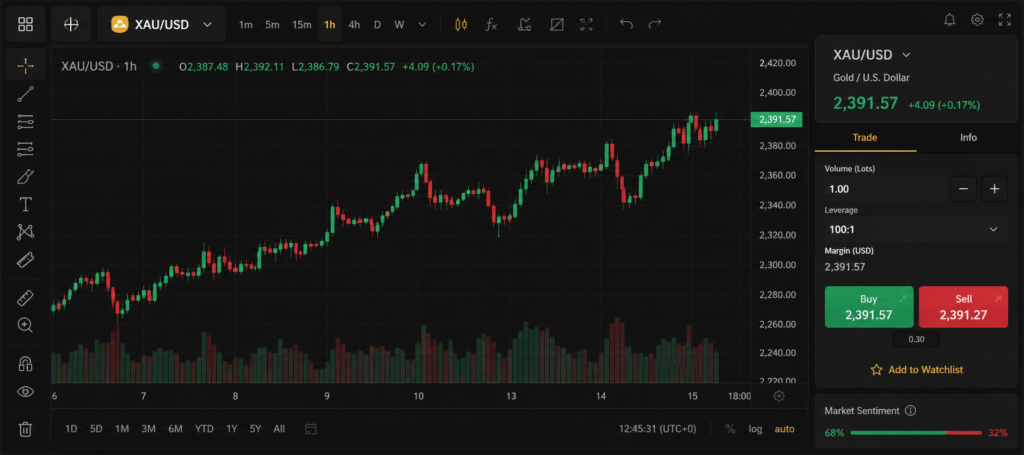
XAU/USD Forex Pair: Trade gold against the US dollar directly on a forex platform. This is the most popular method.
Gold CFDs (Contracts for Difference): Speculate on gold price without owning it physically.
Gold ETFs: Buy shares in a fund that tracks gold prices. Lower risk, but less flexibility.
Gold Futures: Contracts to buy or sell gold at a future date. More advanced and higher risk.
For most beginners, starting with XAU/USD on a regulated forex broker is the safest and most flexible route. You can start with small lot sizes and build your skills over time.
Best Gold Trading Strategy for Beginners
Picking the right gold trading strategy is what separates consistent traders from those who lose money. Here are three beginner-friendly strategies:
1. Trend Following Strategy
This is the most beginner-friendly gold trading strategy. You identify the direction of the trend up or down and trade with it.
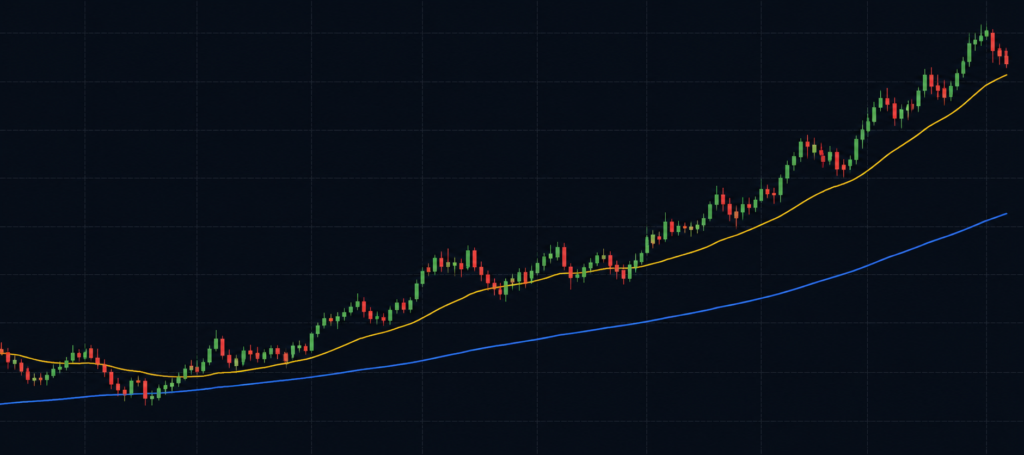
Use the 50-day and 200-day moving averages to identify long-term trends.
Enter a buy trade when the 50-day MA crosses above the 200-day MA (Golden Cross).
Enter a sell trade when the 50-day MA crosses below (Death Cross).
2. Support and Resistance Strategy
Gold respects key price levels. Here is how to use them:
Identify major support levels (where price tends to bounce up) and resistance levels (where price tends to reverse down).
Buy near strong support. Sell near strong resistance.
Always confirm the level with at least two previous price reactions.
3. News-Based Gold Trading Strategy
Gold reacts sharply to global events and economic news. This gold trading strategy focuses on:
US Dollar strength: When the USD weakens, gold prices typically rise.
Inflation data: High inflation boosts gold as a hedge.
Geopolitical tensions: Wars, crises, and political instability push gold prices higher.
US Federal Reserve decisions: Interest rate hikes often pressure gold prices downward.
Track these events using an economic calendar and plan your trades around them.
Risk Management in Gold Trading
No gold trading guide for beginners is complete without talking about risk. Gold is volatile. Prices can move 20–30 dollars in minutes during major news releases.
Follow these risk rules:
Never risk more than 1–2% of your account per trade.
Always use a stop-loss: set it below support for buy trades, above resistance for sell trades.
Avoid overleveraging: High leverage magnifies losses just as fast as profits.
Use a demo account first: Practice your gold trading strategy on virtual funds before going live.
Choosing the Right Platform for Gold Trading
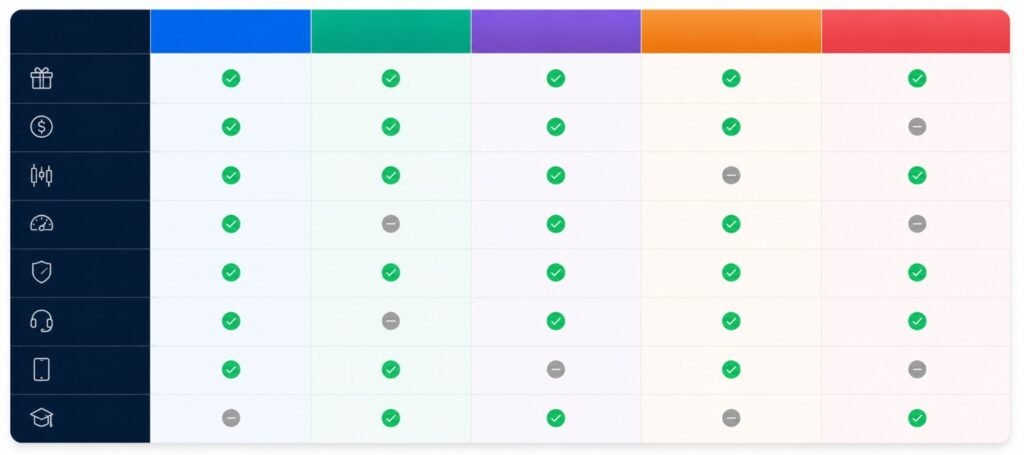
Pick a broker that offers:
Regulation by a recognized authority (FCA, CySEC, ASIC)
Low spreads on XAU/USD (below 0.3 pips is ideal)
MetaTrader 4 or MetaTrader 5 platform support
Fast order execution and reliable customer support
Competitive leverage options suitable for beginners
FAQs: Gold Trading for Beginners
What is the minimum capital needed to start gold trading?
You can start with as little as $100 on many platforms, but $500–$1,000 gives you better flexibility and room for proper risk management.
What are the best gold trading hours for beginners?
The London–New York overlap (1:00 PM – 5:00 PM GMT) offers the best liquidity and price action. Focus on these gold trading hours to find stronger trading setups.
Is gold trading profitable for beginners?
es. With gold CFDs or micro-lots on forex brokers, you can trade XAU/USD with very small position sizes and control your risk precisely.
What moves the gold price the most?
The US Dollar, interest rates, inflation data, and geopolitical events are the biggest drivers of gold price movements.
Final Thoughts
Gold trading for beginners does not need to be complicated. Start by understanding the basics how the market works, the best gold trading hours, and a simple but reliable gold trading strategy. Then practice consistently, protect your capital with solid risk management, and never stop learning.
Gold has made fortunes for disciplined traders. It can do the same for you but only if you approach it with patience, knowledge, and a clear plan.