
Introduction
professional trading setup Every successful trader understands that performance depends on more than strategy. Focus, clarity, and discipline start with your professional trading setup. The way you design your workspace affects how you think, decide, and execute trades.
A productive workspace setup encourages concentration and reduces stress. The right trading equipment supports accuracy and speed. Together, these elements create a trade environment that promotes consistency, efficiency, and confidence.
This guide helps traders create a professional and distraction-free workspace that supports their daily goals and strengthens trading discipline.
Why Your Trading Environment Matters
A professional trading setup is not about luxury. It’s about creating a space that supports decision-making. Your forex trading consistency environment influences how well you manage pressure, process information, and maintain emotional control.
Key Benefits:
- Improved focus. A clean and organized setup reduces distractions.
- Faster decision-making. Proper tools allow instant access to market data.
- Lower stress, Comfortable ergonomics reduce physical and mental fatigue.
- Consistent results Routine environment helps build stable habits.
Step 1: Choosing the Right Location
Start by selecting a space that supports focus. The goal is to create separation between trading and daily life.
Ideal Trading Space Features:
- Quiet area with minimal foot traffic.
- Adequate lighting (preferably natural).
- Reliable internet connection.
- Space for monitors and ergonomic furniture.
If possible, dedicate a room or corner exclusively for trading. This helps your mind associate the area with focus and work, building a mental habit of discipline.
Step 2: Building the Perfect Professional Trading Setup
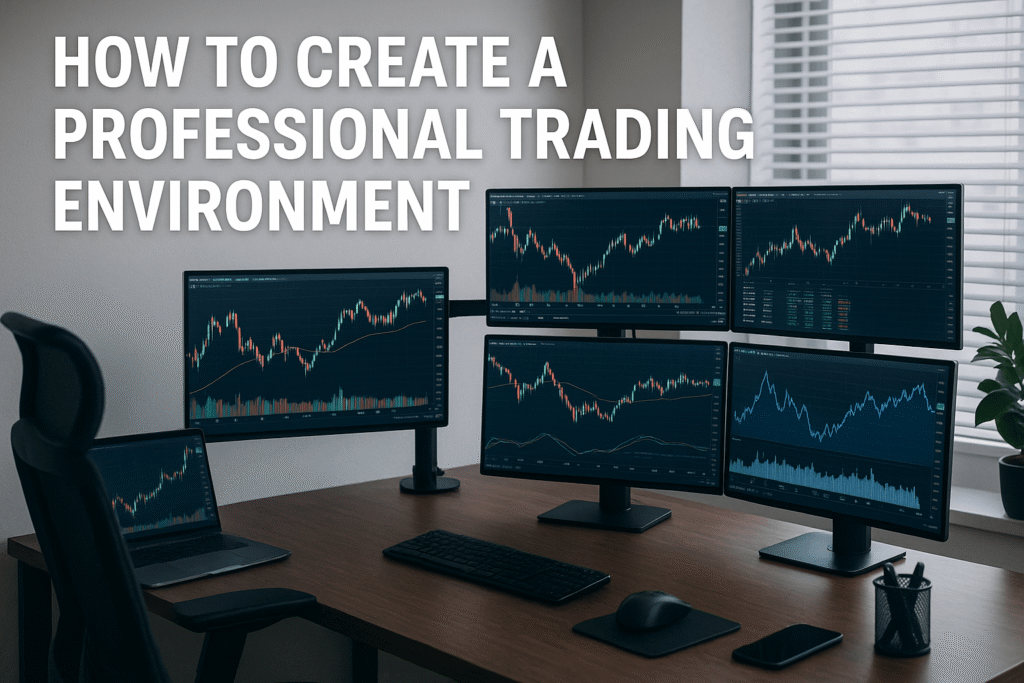
A trader’s desk is the control center. Every detail contributes to comfort, efficiency, and concentration.
Key Workspace Elements:
1. Desk
Choose a sturdy desk with enough surface area for multiple monitors. Keep it free of clutter. A minimal workspace improves mental clarity.
2. Chair
Invest in an ergonomic chair with lumbar support. Long trading hours require comfort that maintains posture and prevents fatigue.
3. Lighting
Natural light improves mood and focus. If unavailable, use adjustable LED lighting that reduces glare on your screens.
4. Temperature
Maintain a comfortable temperature. A cool, stable environment helps reduce stress during active trading sessions.
5. Sound Control
Noise distracts focus. Consider soundproofing, headphones, or background white noise to stay in a steady mindset.
A balanced workspace setup allows you to focus on markets without interference.
Step 3: Selecting the Right Trading Equipment
Your trading equipment should match your trading style and volume. The goal is reliable and speedy tools that perform when it matters most.
Essential Equipment Checklist:
1. Computer System
Use a fast processor and at least 16GB RAM to handle multiple trading platforms smoothly. Reliability is more important than aesthetics.
2. Monitors
Dual or triple monitors increase screen space for charts, news, and orders. Maintain consistent resolution and alignment for visual comfort.
3. Internet Connection
Stable, high-speed internet is essential. Use wired connections for minimal latency and have a backup mobile hotspot ready.
4. Backup Power
An uninterrupted power supply (UPS) prevents unexpected losses during outages.
5. Keyboard and Mouse
Choose wired or low-latency wireless options. Comfort and precision are priorities.
6. Headphones or Speakers
If you follow live news, invest in quality sound for clarity without distractions.
Your trading setup doesn’t have to be expensive it just needs to be efficient and consistent.
Step 4: Organizing Digital Tools and Platforms
Once your physical setup is ready, organize your digital environment. The right setup saves time and reduces stress during volatile moments.
Trading Software Setup:
- Choose one reliable trading platform for execution.
- Use charting tools like TradingView or MetaTrader for analysis.
- Set hotkeys for quick trade management.
- Organize watchlists by category (majors, minors, indices, commodities).
- Use cloud backup to save templates and notes.
Step 5: Managing Distractions
A professional trading setup must protect focus. Distractions can break attention and trigger impulsive decisions.
Practical Tips to Stay Focused:
- Keep phones on silent during trading hours.
- Disable social media notifications.
- Inform family members of your trading schedule.
- Avoid multitasking.
Step 6: Maintaining Ergonomics and Health
Trading involves long screen hours. Without proper ergonomics, fatigue builds quickly, affecting performance.
Ergonomic Tips for Traders:
- Keep monitors at eye level to avoid neck strain.
- Adjust chair height so feet rest flat on the floor.
- Maintain 90-degree elbow angles while typing.
- Stretch every hour.
- Stay hydrated throughout sessions.
Step 7: Creating a Productive Atmosphere
A professional environment isn’t only physical it’s mental. The space should trigger focus and calm.
Simple Ways to Build a Positive Atmosphere:
- Keep the area clean and organized daily.
- Use neutral colors like grey or blue to promote calmness.
- Add a small plant or minimal decoration for freshness.
- Maintain good air circulation
Step 8: Building a Routine Around Your Workspace
Consistency thrives on structure. A dedicated workspace encourages repetitive behavior a foundation for trading discipline.
Build habits around your setup:
- Start trading at the same time daily.
- Review setups before the session.
- Record outcomes after trades.
- Shut down systems after review.
This daily rhythm aligns with habit building and routine trading, the same principles discussed in the How to Build Consistency in Forex Trading guide. Both focus on structure, repetition, and mental preparation, essential traits for steady performance.
Step 9: Managing Lighting and Screen Setup for Focus
Your eyes work hardest during trading. Poor lighting can lead to fatigue and distraction.
Lighting Guidelines:
- Avoid direct sunlight on screens.
- Use diffused lighting for balance.
- Adjust screen brightness to match room conditions.
- Use blue light filters during long sessions.
Step 10: Adding Backup and Safety Measures
A professional trading setup must handle unexpected situations without panic.
Backup Essentials:
- Keep a second computer or laptop ready.
- Maintain a mobile internet backup.
- Use a cloud storage solution for data.
- Have access to broker mobile apps.
- Keep emergency contact numbers visible.
Psychological Benefits of a Professional Trading Setup
Your environment affects your mind. A professional trading space promotes a calm mindset, which is critical for rational trading.
Mental Advantages:
- Reduces emotional trading impulses.
- Encourages structured decision-making.
- Builds confidence through routine.
- Creates separation between trading and personal life.
How Lifestyle Affects Trading Performance
Trading is a mental game supported by lifestyle choices. Nutrition, sleep, and exercise all influence performance.
Lifestyle Tips for Traders:
- Sleep at least 7 hours for clear judgment.
- Eat balanced meals to sustain energy.
- Exercise regularly to release tension.
- Practice short breathing exercises before sessions.
Common Mistakes Traders Make in Their Workspaces
Even with good intentions, traders often overlook key elements in their setups.
Avoid These Mistakes:
- Using cluttered desks that create mental noise.
- Trading from uncomfortable positions.
- Ignoring cable management and lighting.
- Overdecorating with unrelated items.
- Working in noisy or distracting environments.
Long-Term Value of a professional trading setup
A strong setup builds discipline and long-term consistency. It reflects a commitment to trading as a profession, not a hobby.
Over Time, You’ll Notice:
- Better focus under pressure.
- Faster trade execution.
- Less fatigue after sessions.
- Improved confidence in your process.
Conclusion
A professional trading setup is more than furniture and screens. It’s a reflection of your focus, discipline, and respect for the craft of trading. The right workspace setup and trading equipment help reduce distractions, manage stress, and encourage consistent habits.
Start with a quiet space, reliable hardware, and organized systems. Build daily routines around your workspace. Over time, your environment becomes a silent partner in your trading success.
To strengthen your discipline further, explore the How to Build Consistency in Forex Trading guide, a perfect next step for traders aiming to develop structure through habit building and routine trading.