
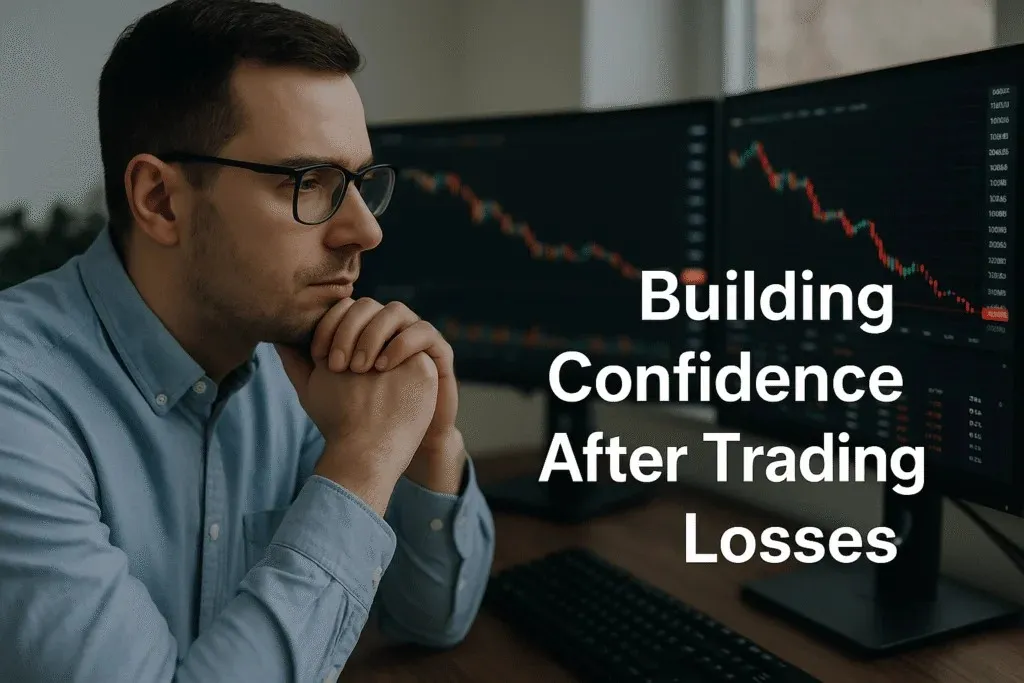
Introduction
recover from trading losses Every forex trader faces losing streaks. Even skilled professionals experience consecutive losses that shake confidence and focus. What separates long-term traders from short-term survivors is their ability to recover mentally and rebuild trust in their own process.
This guide explains how to recover from trading losses, strengthen your mindset, and develop resilience in forex. By following these structured techniques, traders can convert setbacks into learning experiences and return to the market with clarity and discipline.
Understanding the Psychological Impact of recover from trading losses
Trading losses affect more than your account balance they influence your thoughts, emotions, and behavior. After several losing trades, many traders experience:
- Self-doubt about their strategy
- Fear of entering new positions
- Anger and frustration
- Impulsive decision-making to “win back” losses
Why Confidence Drops After Losses
Confidence in trading depends on trust trust in your analysis, your system, and your ability to make decisions under pressure. Losing streaks weaken that trust.
Here’s why:
- Emotional Bias After losses, the brain recalls pain faster than success, creating hesitation.
- Identity Conflict Traders often connect performance to self-worth, making losses feel personal.
- Distorted Thinking Losses trigger fear-driven beliefs like “the market is against me” or “my method doesn’t work.”
Step 1: Accept and Analyze the Losses
The first step in mental recovery after trading losses is acceptance. Losses are data, not failures. Every trade provides feedback about execution, psychology, and market conditions.
How to Analyze Without Emotional Bias
- Review Your Journal Look for recurring mistakes late entries, over-leverage, missed stops.
- Identify Context Was the market trending, consolidating, or reacting to news?
- Separate Emotion from Execution Focus on facts, not frustration.
- Rate Decision Quality Ask, “Did I follow my plan?” instead of, “Did I win?”
Step 2: Pause Before Trading Again
Jumping back into the market after losses often leads to “revenge trading.” This behavior compounds damage because emotions, not logic, drive decisions.
Take a trading break for a set period perhaps 24 hours or even a few days. Use this pause to:
- Reflect on what went wrong
- Reconnect with your trading plan
- Regain emotional neutrality
- Engage in non-trading activities like exercise or reading
Step 3: Rebuild Mental Focus
Confidence grows through small, consistent wins. To recover from a losing streak, focus on mental stability before financial gain.
Mental Recovery Practices
- Visualization Picture yourself executing trades calmly and objectively.
- Affirmations Remind yourself that losses are part of statistical outcomes, not personal failures.
- Mindfulness or Meditation Spend 5–10 minutes daily observing thoughts without judgment.
- Structured Routine Begin each session with a pre-trade checklist and end with post-trade review.
Step 4: Adjust Position Size Temporarily
After consecutive losses, reduce your trade size. Smaller positions minimize emotional intensity and financial risk while rebuilding decision-making confidence.
For example:
- If you normally risk 2% per trade, drop to 0.5–1%.
- Focus on perfect execution, not profit.
Step 5: Redefine Your Relationship with Losses
Traders who succeed long-term view losses as tuition, not punishment. Each losing trade teaches something about discipline, structure, or patience.
Shift Your Perspective
- Losses are feedback, not proof of failure.
- You control process, not market outcome.
- Success depends on consistent behavior, not single results.
Step 6: Rebuild a Structured Routine
Consistency is the foundation of confidence. A structured trading routine helps remove emotion by turning decisions into habits.
Sample Daily Routine for Confidence Recovery
- Morning Review your trading plan and current market conditions.
- Pre-Trade Define risk per trade and checklist setup conditions.
- During Trades Monitor emotions, not just price.
- Post-Trade Record results and write one insight about behavior.
Step 7: Set Realistic Performance Goals
Trade often lose confidence because they expect quick recovery. Setting unrealistic profit targets creates pressure, which triggers emotional trading.
Instead, aim for process-based goals like:
- “Follow my plan for five consecutive trades.”
- “Avoid changing stop-loss levels.”
- “Journal every trade today.”
Step 8: Learn from Institutional Mindsets
Institutional traders experience losses too but their systems prevent emotional collapse. They focus on process discipline, not daily outcomes.
What You Can Learn from Institutional Mindsets
- Risk per trade is pre-defined.
- Losses are reviewed collectively, not personally.
- Emphasis is on consistency, not perfection.
- Performance is judged over hundreds of trades.
Step 9: Strengthen Your Support System
Trading can feel isolating. Sharing your experiences with other traders or coaches provides perspective and motivation.
Join communities focused on trading psychology, or work with a performance coach who understands market behavior. They can help you recognize patterns and correct them before they repeat.
Having emotional accountability reinforces confidence during recovery phases.
Step 10: Reconnect with Your Long-Term Vision
Losses can distract you from why you started trading. Revisit your original goals financial independence, skill development, or market mastery.
Write them down again. Reminding yourself of purpose rebuilds internal motivation and prevents short-term frustration from controlling your mindset.
Long-term confidence grows from clarity of purpose combined with daily discipline.
Trading Psychology Tips for Confidence Recovery
- Stop Measuring Success by P&L Measure success by discipline and execution.
- Limit Screen Time Over-analysis increases anxiety. Step away when uncertain.
- Celebrate Discipline Reward yourself for following rules, not for profits.
- Avoid Comparing Journeys Each trader’s experience is unique. Focus on your own growth.
- Review Past Wins Remind yourself that skill, not luck, created previous success.
Integrating Emotional Discipline for Future Resilience
Rebuilding confidence after losses isn’t a one-time task it’s an ongoing practice. Emotional discipline transforms trading from reactive behavior into a structured process.
By applying consistent review, journaling, and mental conditioning, traders develop psychological strength that protects them from future drawdowns.
To understand emotional control at a deeper level, explore our Comprehensive Guide to Forex Trading Psychology. It explains forex trading psychology, trader mindset, emotional discipline, and trading behavior strategies that align with professional standards.
Long-Term Benefits of Mental Recovery
Developing resilience in forex trading offers lasting benefits beyond the market:
- Stronger self-awareness Recognize emotions before they control actions.
- Improved consistency Focus on execution, not expectation.
- Calmer decision-making Handle volatility without panic.
- Sustainable confidence Trust your system, even after temporary setbacks.
Conclusion
Every trader faces losses, but recovery defines success. The ability to recover from trading losses is less about market prediction and more about mindset control.
By accepting mistakes, reducing risk, and focusing on process-driven habits, traders rebuild confidence with structure, not emotion. Resilience grows from repetition, learning, and self-awareness.
Each losing streak becomes an opportunity to strengthen discipline and refine strategy. With a calm mind, structured plan, and long-term focus, confidence returns naturally one decision at a time.
The Difference Between a Losing Streak and a Strategy Breakdown
One of the most psychologically damaging mistakes traders make is confusing a normal losing streak with evidence that their strategy no longer works. Every profitable trading strategy produces losing runs. A strategy with a 60% win rate will still produce sequences of five or more consecutive losses on a regular basis due to the natural variance of financial markets. Understanding this is fundamental to maintaining confidence during difficult periods.
The critical distinction is whether your losses come from following your strategy correctly or from deviating from it. Run a detailed trade review after any losing streak: go through each losing trade and ask whether it met all your entry criteria and whether your stop was placed at a technically justified level. If the answer is yes, the losses are the cost of doing business — variance in action — and your confidence in the strategy should remain intact. If the losses came from rule-breaking, the solution is process improvement, not emotional recovery.
Set a statistical threshold before concluding that a strategy has stopped working. Many experienced traders use a rule such as: “I will review my strategy parameters if I see a drawdown exceeding twice my historical maximum drawdown, or more than 10 consecutive losses with correct execution.” This gives you an objective trigger for re-evaluation rather than reacting emotionally to a temporary losing patch.
Rebuilding Confidence Through Position Sizing, Not Avoidance
After a significant loss or losing streak, many traders either stop trading entirely or significantly reduce their frequency. While a brief pause to review is healthy, prolonged avoidance reinforces anxiety about the markets and delays the confidence-building process. A more effective approach is to return to trading at a greatly reduced position size — small enough that individual outcomes feel inconsequential while you re-establish your process and rhythm.
Trading micro lots or a fraction of your normal size while still following your full strategy lets you accumulate a series of correctly executed trades. The goal is not to generate returns but to separate the experience of trading well from the experience of making money. When you can consistently follow your process at small size and see your edge playing out over 20–30 trades, you can gradually scale back toward normal position sizes with your confidence rebuilt on a solid foundation of disciplined execution.
Frequently Asked Questions: Recovering Confidence After Forex Losses
How long should I take a break after a major loss?
There is no fixed rule, but the break should last until you can review the losing trades calmly and objectively without feeling defensive or angry. For most traders, this takes 24–72 hours. The purpose of the break is to allow your stress response to settle, not to avoid the reality of the loss. If you find yourself still unable to review trades dispassionately after several days, consider speaking with a trading coach or mentor who can provide objective perspective.
Is it normal to fear trading after a big loss?
Completely normal. Losing a significant amount of money triggers the same neural threat response as physical danger. The brain attempts to protect you by making future risk-taking feel aversive. This is the biological basis of loss aversion, which is well-documented in behavioural economics research. Acknowledging that this fear is a normal response — not a sign of weakness or incompetence — is the first step toward managing it constructively rather than being controlled by it.
Should I change my strategy after a losing period?
Only if your trade review provides objective evidence that the strategy’s edge has deteriorated. Changing strategy after losses driven by correct execution is one of the most common mistakes in trading — it is called “strategy abandonment” and it means you never stick with any approach long enough to see its full statistical edge play out. Before changing anything, analyse your last 20–30 trades systematically: were losses from valid setups or from rule deviations? If losses came from valid setups with correct execution, stay the course.
How do I stop replaying losing trades in my head?
Write the trade down in detail in a trade journal — what happened, what you were thinking, what the setup looked like, and what the outcome was. Getting the experience out of your head and onto paper externalises it, which reduces rumination significantly. Once it is documented, close the journal and make a conscious decision to focus on the next session rather than the past. The act of recording a loss is also an act of processing it and moving forward.
Can talking to other traders help after a difficult period?
Yes, with caveats. Sharing experiences with traders who understand the psychological realities of the markets can normalise your experience and provide perspective. However, avoid forums or communities where traders exaggerate wins and hide losses — this creates distorted comparisons that compound self-doubt. Seek out honest, experienced traders or trading communities where authentic discussion of both wins and losses is the norm. A mentor who has experienced significant drawdowns and recovered from them is particularly valuable during difficult periods.