Introduction
A strong fomc forex trading strategy is one of the most valuable skills a currency trader can build, because few scheduled events move the market as violently as a Federal Reserve decision. When the Federal Open Market Committee speaks, the US dollar can swing dozens of pips in seconds, spreads widen, and stop-losses get hunted on both sides. This guide explains how to trade fomc in forex with a calm, rules-based approach instead of guessing. You will learn what the FOMC actually controls, why the statement and press conference matter more than the headline rate, and how hawkish versus dovish tones translate into dollar strength or weakness. We will cover waiting strategies, retest entries, fading overreactions, position sizing, and wider stops. Most importantly, you will get fomc forex impact explained in plain language so you can manage risk and trade the aftermath with confidence rather than fear.
What the FOMC Is and Why It Moves Forex
The FOMC, or Federal Open Market Committee, is the policy-setting arm of the US Federal Reserve. It meets eight times a year to decide the federal funds rate, the benchmark interest rate that ripples through the entire global financial system. Because the US dollar sits on one side of most major currency pairs, any shift in Fed policy directly affects forex valuations.
Interest rates are the engine of currency strength. Higher rates tend to attract capital seeking better yield, lifting demand for the dollar. Lower rates do the opposite. Traders do not just react to the decision itself; they react to expectations. If the market has already priced in a hike, the actual announcement may barely move price. The surprise relative to expectations is what truly drives volatility.
This is the core of fomc forex impact explained: markets trade the gap between what was expected and what was delivered. A widely anticipated decision produces a muted response, while an unexpected tone shift triggers a sharp repricing across every dollar pair at once.
The Four Moving Parts of an FOMC Event
An FOMC release is not a single number. It is a sequence of signals, and each one can move the dollar. Understanding the components helps you avoid trading on incomplete information.
First comes the rate decision itself, the headline figure. Second is the policy statement, where subtle wording changes hint at future direction. Third is the Summary of Economic Projections, including the famous dot plot, which maps where each official expects rates to go. Fourth is the press conference led by the Fed Chair, where unscripted remarks frequently spark a second wave of volatility larger than the initial release.
The table below summarizes how each component typically influences the USD. Treat these as general tendencies, not guarantees, since context always matters.
| FOMC Component | What It Reveals | Typical USD Impact |
|---|---|---|
| Rate Decision | The headline funds rate move | High if a surprise, low if priced in |
| Policy Statement | Tone and forward guidance | Moderate to high on wording shifts |
| Dot Plot / Projections | Future rate expectations | High when dots shift up or down |
| Press Conference | Chair’s nuance and Q&A | Often the largest second-wave move |
Many traders make the mistake of reacting to the headline rate and ignoring the statement and press conference. The smart approach is to wait for the full picture before committing real risk.
Hawkish vs Dovish: Reading the Tone
Every fomc forex trading strategy depends on correctly reading the Fed’s tone. The two key words are hawkish and dovish.
A hawkish Fed signals concern about inflation and a willingness to raise rates or keep them high. Hawkish surprises usually strengthen the dollar, pushing pairs like EUR/USD down and USD/JPY up. A dovish Fed signals concern about growth and a willingness to cut rates or pause hikes. Dovish surprises typically weaken the dollar.
The challenge is that tone lives in language, not just numbers. Phrases like “ongoing increases” versus “data dependent” carry enormous weight. The dot plot adds another layer: if officials’ projected rates drift higher, that is hawkish even when the current rate is unchanged. Learning to interpret this language is what separates a reactive gambler from a prepared trader who knows how to trade fomc in forex with intent.
Why So Many Traders Avoid the Spike
Here is a truth experienced traders accept: the moment of release is often the worst time to enter. During the spike, spreads widen dramatically, liquidity thins, and slippage can turn a planned five-pip stop into a thirty-pip loss. Price can shoot one direction, reverse violently, and trap entries on both sides within seconds. This whipsaw destroys accounts that chase the first candle.
A disciplined fomc forex trading strategy respects this danger. Rather than trying to be fastest, the goal is to be most prepared. Many professionals simply do not trade the initial burst at all. They let the market reveal its true direction, then act. Avoiding the spike is not weakness; it is risk management. The dollar’s first move is frequently a fake-out before the real trend establishes itself once the press conference clarifies the message.
Practical FOMC Strategies After the Dust Settles
There is no single correct way to trade the Fed, but several proven approaches share one trait: patience. The comparison table below outlines the main styles, when they fit, and their main risk.
| Strategy | Core Idea | Best For | Main Risk |
|---|---|---|---|
| Wait-and-Trade | Let volatility settle, then trade the clear trend | Most traders | Missing the early move |
| Trend Retest | Enter on a pullback to a broken level after the move | Trend followers | Price never retests |
| Fade the Overreaction | Counter an exaggerated spike back toward fair value | Experienced traders | Catching a falling knife |
| Pre-News Positioning | Position before release based on expectations | High conviction only | Whipsaw and gaps |
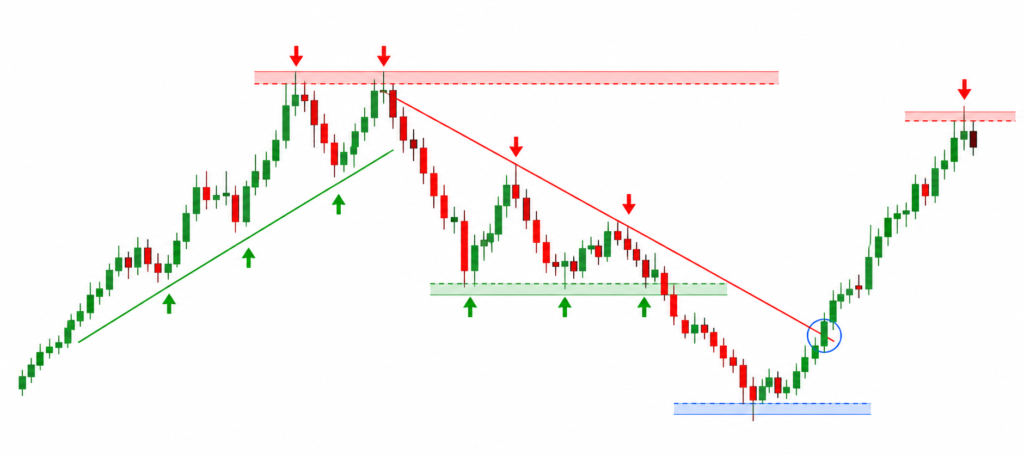
The wait-and-trade method is the safest foundation. You stand aside during the chaotic first minutes, let spreads normalize, and only engage once a direction holds. The trend-retest approach builds on this: after a strong dollar move, price often pulls back to a former support or resistance level before continuing. That retest offers a cleaner entry with a defined stop.
Fading overreactions suits more advanced traders. When the market spikes far beyond what the news justifies and then stalls, a measured counter-trade toward equilibrium can work, but only with strict stops. Pre-news positioning is the riskiest and should be reserved for those with strong conviction and small size, because a surprise can gap straight through a stop.
Position Sizing, Stops, and Risk Management
No discussion of how to trade fomc in forex is complete without risk control, because this is where most accounts are won or lost. The volatility that makes FOMC attractive is the same volatility that punishes oversized trades.
Reduce your position size around the release. If you normally risk one percent per trade, consider half that on FOMC day to absorb wider stops without blowing your risk budget. Use wider stop-losses than usual, because tight stops get swept by noise. Counterintuitively, a wider stop with a smaller position can be safer than a tight stop with a full position.
Account for spread widening and slippage in your math. The price you see is not always the price you get during the spike. Set realistic profit targets, and never move your stop further away in hope. A single disciplined trade matters more than catching every move.
Keep these core rules in mind:
- Cut position size, widen stops, define your exit before entry, and never add to a losing FOMC trade.
This single short list captures the discipline that keeps traders solvent through volatile releases.
Building Your FOMC Trading Plan Step by Step
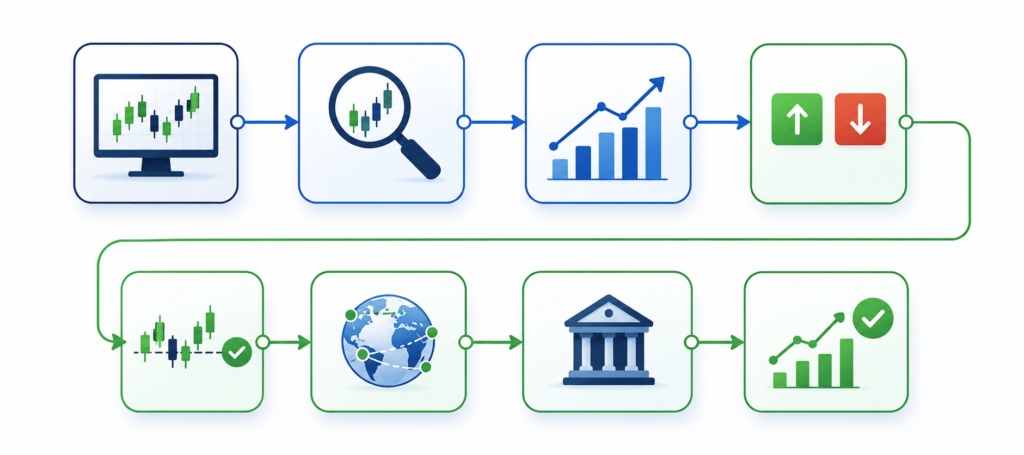
A repeatable process turns theory into a usable fomc forex trading strategy. Start before the meeting by checking the economic calendar and noting the consensus expectation for the rate and the tone. Knowing what is priced in tells you what would count as a surprise.
As the release approaches, mark key support and resistance levels on your chart and decide in advance which strategy you will use. When the numbers hit, resist the urge to click. Watch the statement, then the dot plot, then listen to the press conference. Only after the message is clear do you look for your setup, whether that is a trend retest or a fade.
Finally, journal every FOMC trade. Record the expectation, the outcome, your entry, and your emotions. Over several meetings, patterns emerge that sharpen your edge. Consistency, not prediction, is the goal. The Fed will always surprise sometimes; your plan is what keeps those surprises from becoming disasters.
What Top Traders and Research Say
Seasoned voices reinforce the case for caution and process. In his classic book Trading in the Zone, Mark Douglas argues that consistent results come from disciplined risk management and emotional control, not from predicting every move, a lesson tailor-made for chaotic news events like the FOMC.
Academic research supports this too. The well-known study by Barber and Odean on overtrading found that investors who traded most frequently earned the worst returns, largely due to overconfidence and excessive activity. Fast, reactive FOMC trading is exactly the behavior their data warns against. Kahneman and Tversky’s work on loss aversion further explains why traders hold losers too long during volatile spikes, hoping a reversal will save them.
As Paul Tudor Jones put it: “The most important rule is to play great defense, not great offense.” Around an FOMC release, defense means smaller size, wider stops, and the patience to wait for clarity.
Frequently Asked Questions (FAQs)
What is the best FOMC forex trading strategy for beginners?
For beginners, the safest fomc forex trading strategy is wait-and-trade. You stand aside during the volatile first minutes, let spreads normalize, and only enter once a clear direction holds after the press conference. This avoids the whipsaw that traps inexperienced traders. Combine it with reduced position size and wider stops to protect your account while you learn the rhythm of Fed releases.
Why does the FOMC move the forex market so much?
The FOMC sets US interest rates, and rates drive currency value. Because the dollar is on one side of most major pairs, any shift in Fed policy reprices the entire market at once. This is fomc forex impact explained simply: traders react to the surprise versus expectations, and that gap fuels rapid volatility across every dollar pair simultaneously.
Should I trade during the FOMC announcement itself?
Most experienced traders avoid the exact moment of release. Spreads widen, liquidity thins, and slippage can blow out your stop. Learning how to trade fomc in forex usually means waiting for the dust to settle rather than chasing the first candle. The initial spike is often a fake-out before the real trend appears once the statement and press conference are digested.
What does hawkish vs dovish mean for the dollar?
A hawkish Fed leans toward higher rates and typically strengthens the dollar. A dovish Fed leans toward lower rates and usually weakens it. The tone shows up in the statement wording, the dot plot, and the Chair’s remarks, not just the headline rate. Reading this tone correctly is central to any effective fomc forex trading strategy.
How should I size positions around an FOMC release?
Reduce your normal risk, often by half, because volatility is elevated. Pair the smaller position with a wider stop-loss so noise does not sweep you out. This combination keeps your dollar risk controlled while giving the trade room to breathe. Define your exit before entry, and never add to a losing FOMC position in hope of a reversal.
Which currency pairs react most to the FOMC?
The most liquid dollar majors react hardest, including EUR/USD, GBP/USD, and USD/JPY, along with the US Dollar Index. These pairs see the sharpest moves and the widest spreads during releases. Focusing on one or two familiar pairs helps you apply your fomc forex trading strategy consistently rather than spreading attention too thin during a fast-moving event.
Final Thoughts
A reliable fomc forex trading strategy is built on preparation and discipline, not prediction. The FOMC moves the dollar because it sets US interest rates, and markets trade the surprise between expectations and reality. By understanding the four components, the rate decision, the statement, the dot plot, and the press conference, you can read hawkish versus dovish tone and act with intent. The safest path is to avoid the chaotic spike, wait for clarity, and enter on a clean retest or a measured fade, all while cutting position size and widening stops. Risk management is the difference between surviving the Fed and being swept away by it. Master these principles and the FOMC becomes an opportunity rather than a threat. For more practical, risk-aware trading guides and market analysis, visit forextradingboards.com and keep sharpening your edge.
This article is for educational purposes only and does not constitute financial advice. Always do your own research and consider consulting a licensed professional before trading.