
Forex CFD Trading Explained: What It Is, How It Works & Why Traders Choose It
The financial markets have never been more accessible. Whether you are a first-time trader or an experienced investor looking to diversify, forex CFD trading sits at the center of modern retail trading. It combines the world’s largest financial market forex with the flexibility of Contracts for Difference.
But what exactly is forex CFD trading? How does it differ from regular forex? And is it the right move for you?
This guide answers all of that. Let’s break it down simply, clearly, and honestly.
What Is Forex CFD Trading?
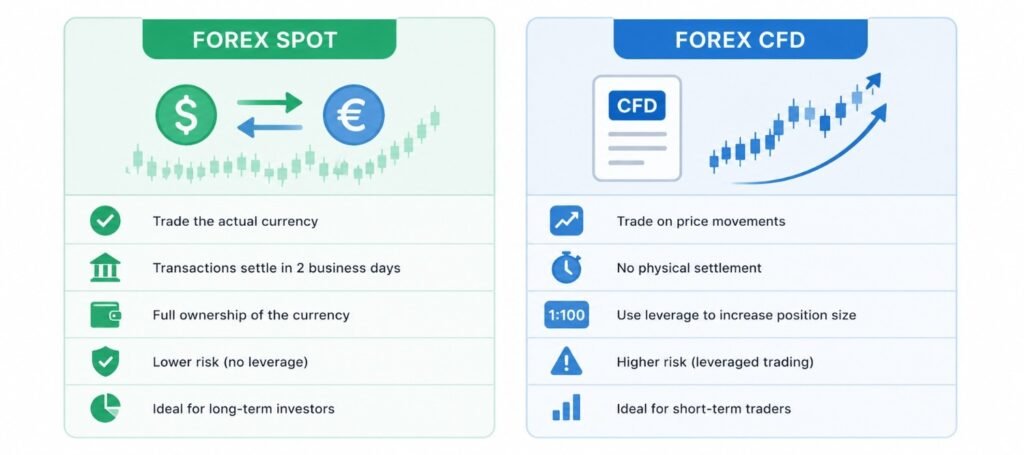
A Contract for Difference (CFD) is a financial agreement between a trader and a broker. You agree to exchange the difference in the price of a currency pair from when you open a trade to when you close it.
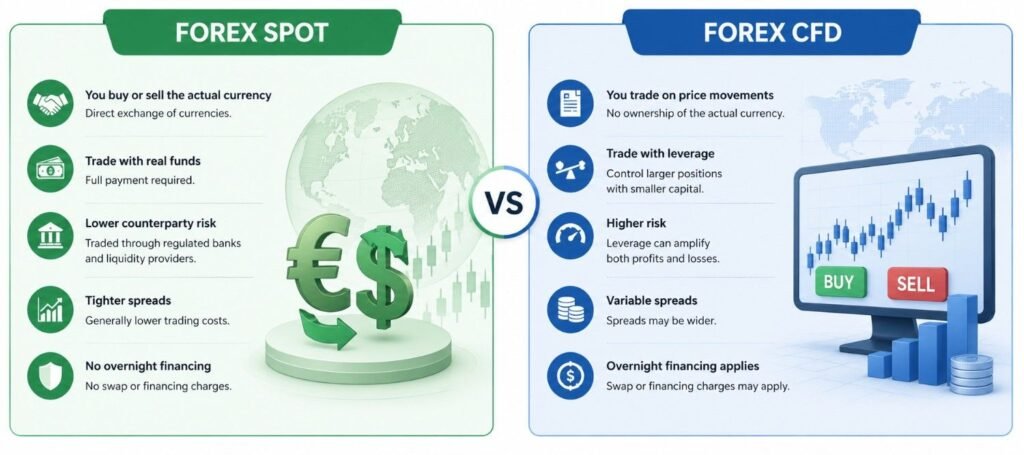
In forex and CFD trading, you never buy or sell actual currencies. You speculate on price movements. If you think EUR/USD will rise, you go long. If you think it will fall, you go short. Your profit or loss depends entirely on how the price moves.
CFD forex trading gives you:
- Access to the forex market without owning any physical currency
- The ability to profit in both rising and falling markets
- Leverage, which lets you control larger positions with a smaller deposit
- Flexibility to trade dozens of currency pairs from one single account
This is why millions of retail traders globally choose forex CFD as their primary method of market participation.
How Does Forex CFD Trading Work?
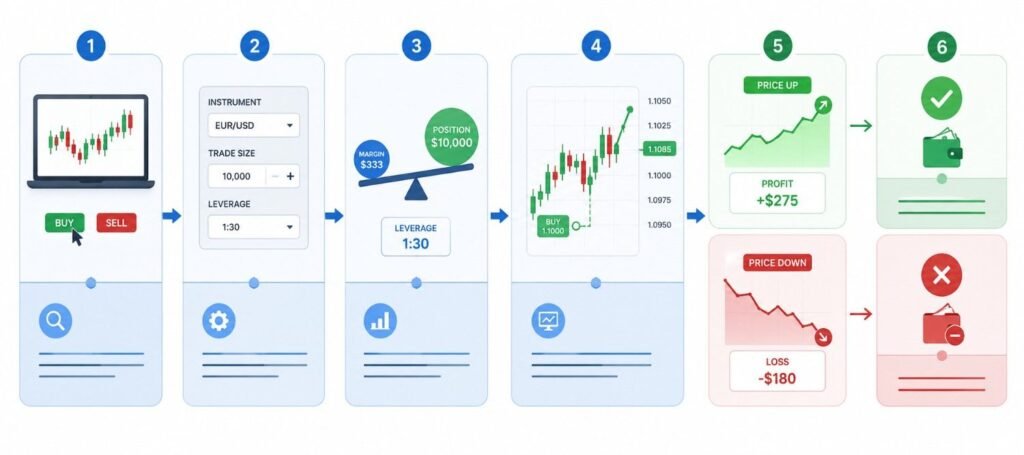
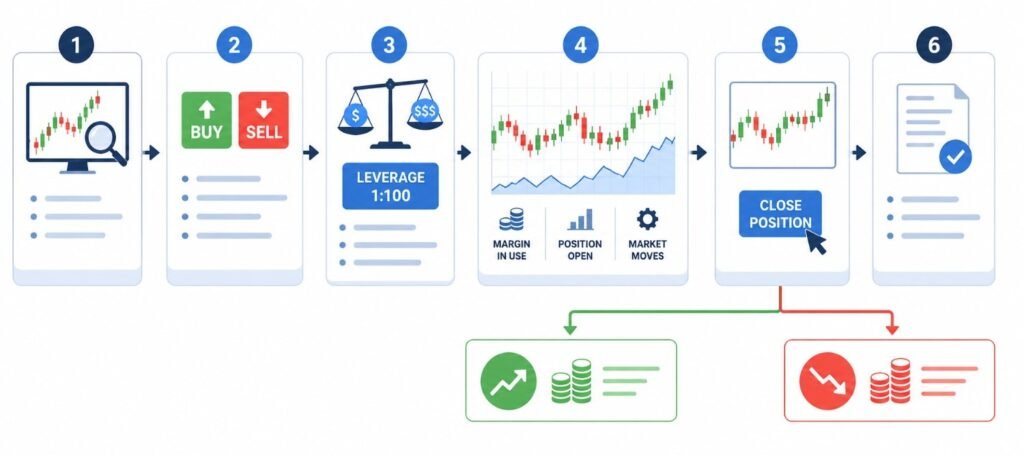
Understanding the mechanics is essential before placing your first trade. Here is a clear step-by-step breakdown:
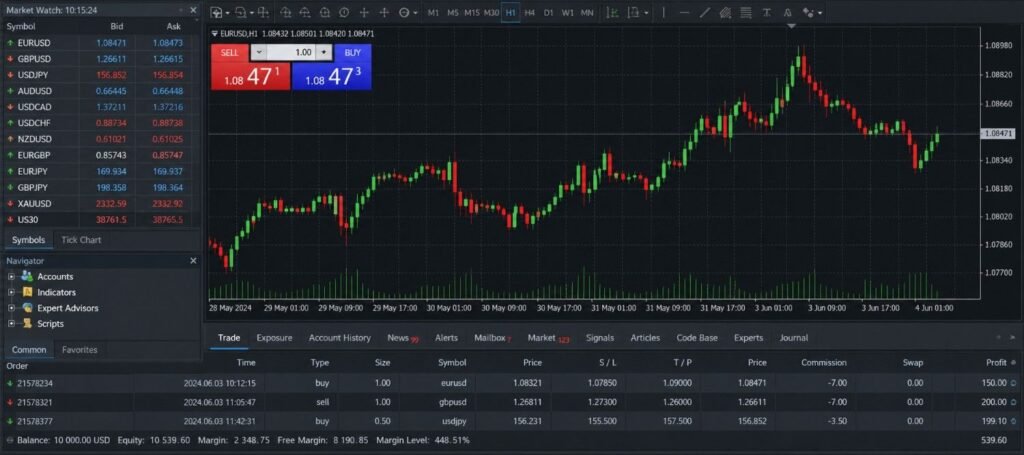
Step 1 — Choose a Currency Pair Select a pair such as GBP/USD, EUR/JPY, or AUD/USD. Every pair has a bid price (sell) and an ask price (buy).
Step 2 — Decide Your Direction If you expect the price to rise, open a buy (long) position. If you expect it to fall, open a sell (short) position.
Step 3 — Apply Leverage Most forex CFD platforms offer leverage. For example, 1:100 leverage means a $500 deposit controls a $50,000 position. This magnifies both profits and losses.
Step 4 — Monitor the Trade The market moves in pips. A pip is typically the fourth decimal place in a currency quote. Your profit or loss grows with each pip of movement.
Step 5 — Close the Trade When you close the position, the difference between your entry and exit price is settled as cash profit or loss directly in your account.
It is straightforward in concept but it demands discipline, strategy, and consistent risk management.
Forex CFD vs Spot Forex — Key Differences
Many beginners confuse these two structures. Here is a clear side-by-side comparison:
| Feature | Forex CFD | Spot Forex |
| Asset Ownership | No | No (for retail) |
| Leverage Available | Yes | Yes |
| Profit Both Ways | Yes | Yes |
| Overnight Swap Fees | Yes | Yes |
| Physical Delivery | No | Sometimes |
| Best Suited For | Short to medium-term | Institutional/long-term |
| Platform Access | MT4, MT5, cTrader | MT4, MT5, proprietary |
In practice, most retail traders prefer CFD forex because it is easier to access, more cost-effective, and better suited to active strategies like day trading and swing trading.
Benefits of Forex and CFD Trading
Forex and CFD trading offers clear, practical advantages. Here is exactly why traders around the world prefer this structure:
- Global market access. Trade major, minor, and exotic currency pairs from one account, 24 hours a day, five days a week.
- Two-way trading. Profit whether markets rise or fall. Short selling is built directly into the structure.
- Leverage. Control larger positions without committing your full capital upfront. Amplify your market exposure efficiently.
- Low entry cost. Many regulated brokers allow you to start forex CFD trading with as little as $10 to $100.
- No expiry dates. Unlike futures contracts, CFDs have no fixed expiry. You close the trade on your own terms.
- Tight spreads. Competitive brokers offer spreads starting from 0.0 pips on major forex pairs, keeping your trading costs minimal.
- Platform flexibility. Trade via MetaTrader 4, MetaTrader 5, cTrader, or proprietary apps on desktop and mobile.
These benefits make cfd forex trading a powerful option for active traders who value flexibility, speed, and global reach.
Risks of Forex CFD Trading You Must Understand
honest guide skips the risks. Forex CFD trading carries real financial risk, and clear awareness is your first line of defense.
- Leverage amplifies losses. A 1% adverse move with 1:100 leverage can erase your full margin deposit instantly.
- Market volatility. Currency pairs can shift sharply on central bank announcements, inflation data, or geopolitical events.
- Overnight fees. Holding positions past market close incurs swap charges that accumulate over time.
- Broker risk. Trading with an unregulated broker increases counterparty and withdrawal risk significantly.
- Emotional decisions. Overtrading and revenge trading remain the leading causes of loss among retail traders.
Studies across major brokers consistently show that the majority of retail CFD traders lose money. This happens not because the instrument is unfair, but because most traders begin without a tested strategy or proper risk controls.
The solution is consistent: educate yourself thoroughly, use stop-loss orders on every trade, start with a demo account, and never risk more than you can afford to lose.
How to Choose the Right Forex CFD Broker
Your broker shapes your entire trading experience from costs to safety. Here is what to evaluate:
| Criteria | What to Look For |
| Regulation | FCA, ASIC, CySEC, or other Tier-1 bodies |
| Spreads | From 0.0–0.6 pips on major pairs |
| Trading Platform | MT4, MT5, cTrader, or proprietary |
| Leverage Options | Up to 1:500 for eligible accounts |
| Execution Model | ECN or STP for fairest pricing |
| Customer Support | 24/5 live chat, multilingual preferred |
| Demo Account | Available before real capital commitment |
| Withdrawals | Fast processing, multiple methods, no hidden fees |
Always verify the regulatory status of any forex CFD broker independently before depositing funds. A regulated broker provides investor protection, transparent pricing, and legal recourse if issues arise.
Best Practices for Forex CFD Trading in 2026
Whether you are new to forex and CFD trading or refining a current approach, these practices will serve you well:
- Always set a stop-loss. Define your maximum acceptable loss before entering any trade. No exceptions.
- Follow a written trading plan. Define entry criteria, exit points, and risk per trade in advance. Stick to it strictly.
- Start with a demo account. Test your full strategy on a demo account before committing any real money.
- Use leverage responsibly. High leverage is available, but experienced traders often use 1:10 or less in practice.
- Keep a trading journal. Record every trade, the reasoning behind it, and the outcome. Review it weekly.
- Monitor economic events. Interest rate decisions, CPI releases, and employment data move currency pairs significantly.
- Diversify across pairs. Trading multiple currency pairs reduces your dependence on a single market direction.
Discipline consistently outperforms intelligence in trading. Risk control and consistency are what separate long-term profitable traders from the rest.
FAQs About Forex CFD Trading
Lorem ipsum dolor sit amet, consectetur adipiscing elit. Ut elit tellus, luctus nec ullamcorper mattis, pulvinar dapibus leo.
What is the difference between forex and CFD trading?
Forex refers specifically to currency pair trading. CFD trading covers forex, stocks, indices, commodities, and crypto. Forex CFD means trading currency pairs through the Contract for Difference structure speculating on price without owning the underlying asset.
Far far away, behind the word Mountains far from the countries Vokalia and Consonantia, there live the blind texts. Separated they live in Bookmark
Is forex CFD trading legal?
Yes, in most countries cfd forex trading is fully legal and regulated. The UK (FCA), Australia (ASIC), and the EU (CySEC/MiFID II) all have clear regulatory frameworks in place. Always verify the specific rules applicable in your country.
Far far away, behind the word mountains, far from the countries Vokalia and Consonantia, there live the blind texts. Separated they live in Bookmarksgrove right at the coast
Can I make money with forex CFD trading?
Yes, but consistent profitability requires skill, a tested strategy, and strict discipline. Profitable traders focus on risk management above all. Small, consistent gains compounded over time outperform chasing large, risky trades.
Far far away, behind the word mountains, far from the countries Vokalia and Consonantia, there live the blind texts. Separated they live in Bookmarksgrove right at the coast
What leverage is available in forex CFD trading?
Retail traders in regulated markets typically access 1:30 to 1:50 leverage under frameworks like MiFID II. Offshore brokers may offer up to 1:500 or higher. Higher leverage increases both potential returns and potential losses equally.
Far far away, behind the word mountains, far from the countries Vokalia and Consonantia, there live the blind texts. Separated they live in Bookmarksgrove right at the coast
How much money do I need to start forex CFD trading?
MetaTrader 4 and MetaTrader 5 remain the most widely used platforms globally. cTrader is preferred for ECN-style trading. Many brokers also offer clean proprietary platforms with built-in analytics and mobile access.Many regulated brokers allow accounts from as little as $10 to $100. However, a more practical starting range for effective risk management is $500 to $1,000 for beginners.
Far far away, behind the word mountains, far from the countries Vokalia and Consonantia, there live the blind texts. Separated they live in Bookmarksgrove right at the coast
What fees are involved in forex CFD trading?
Main costs include the spread (difference between buy and sell price), overnight swap fees for positions held past market close, and commission charges on ECN account types. Standard accounts typically carry no direct per-trade commission.
Far far away, behind the word mountains, far from the countries Vokalia and Consonantia, there live the blind texts. Separated they live in Bookmarksgrove right at the coast
Final Thoughts
Forex CFD trading is one of the most accessible, flexible, and globally active ways to participate in financial markets today. It offers genuine opportunity but only to traders who approach it with the right knowledge and the right habits.
Understanding what cfd forex is forms the foundation. But building a solid strategy, choosing a regulated broker, and managing your risk with consistency is what actually produces results over time.
Start smart. Trade with purpose. Protect your capital.