
Introduction
A forex PAMM account lets you put money to work in the currency market without trading a single position yourself. Instead, you allocate capital to a professional money manager who trades a pooled fund. The manager earns a performance fee. You share in the gains and the losses in proportion to your stake. This model appeals to busy people who believe in forex but lack the time, skill, or temperament to trade. Yet it carries real risk, and not every manager deserves your trust. This article explains how PAMM allocation works, who the key players are, and how profit-sharing is calculated. It compares PAMM with MAM, LAMM, and copy trading. It also covers how to vet a manager, spot red flags, understand regulation, and set realistic return expectations before you commit any capital.
Quick SERP Snapshot
Based on offline knowledge, the first page for “forex PAMM account” is dominated by broker landing pages that promote their own PAMM services, comparison and review sites that rank brokers by minimum deposit and fee, and a layer of investing education content explaining the mechanics. Broker pages tend to push sign-ups and gloss over downside risk. Review sites lean heavily on affiliate links and feature tables. The clearest content gap sits with honest, neutral education: a single resource that explains profit-sharing math, walks through manager due diligence, and treats risk and regulation seriously. That gap is exactly what this article fills.
What a Forex PAMM Account Actually Is
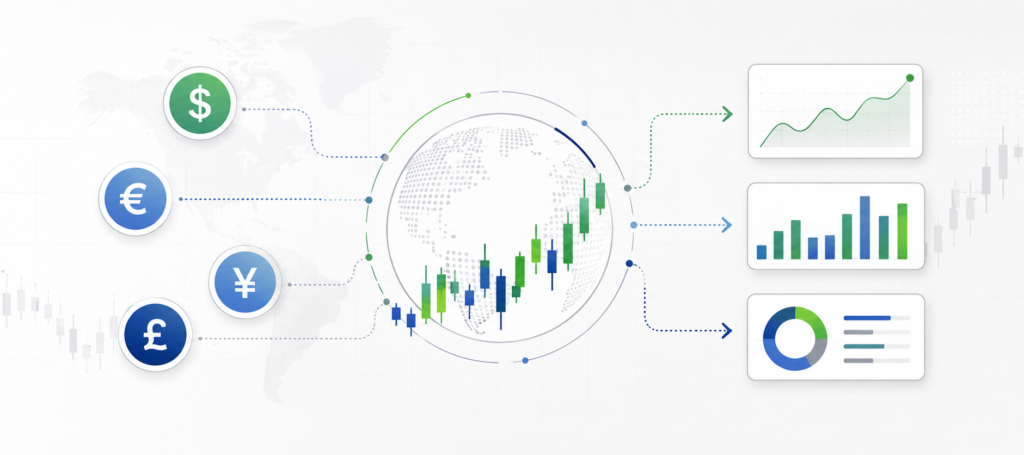
A forex PAMM account is a pooled investment structure offered by many forex brokers. PAMM stands for Percentage Allocation Management Module. The name describes the core mechanic precisely. Several investors deposit funds into a shared trading account. A single money manager trades that combined pool. Each investor owns a percentage of the pool equal to their share of the total capital. Profits and losses are distributed back to investors in that same percentage.
The appeal is simple. You gain exposure to a professional trader’s skill without learning to trade or watching charts. You keep your money in your own brokerage account. You authorize the manager to trade on your behalf, but you never hand over the cash directly. The broker acts as the custodian and the referee. It calculates allocations, applies fees, and credits each investor automatically.
This structure differs from a traditional fund. There is no fund prospectus in most cases, no fund administrator, and often no formal regulatory wrapper. The PAMM lives inside a retail forex broker. That makes it accessible and low-cost. It also makes oversight thinner than what a regulated fund offers. Understanding that trade-off is the first step toward investing wisely.
How PAMM Allocation Works in Practice
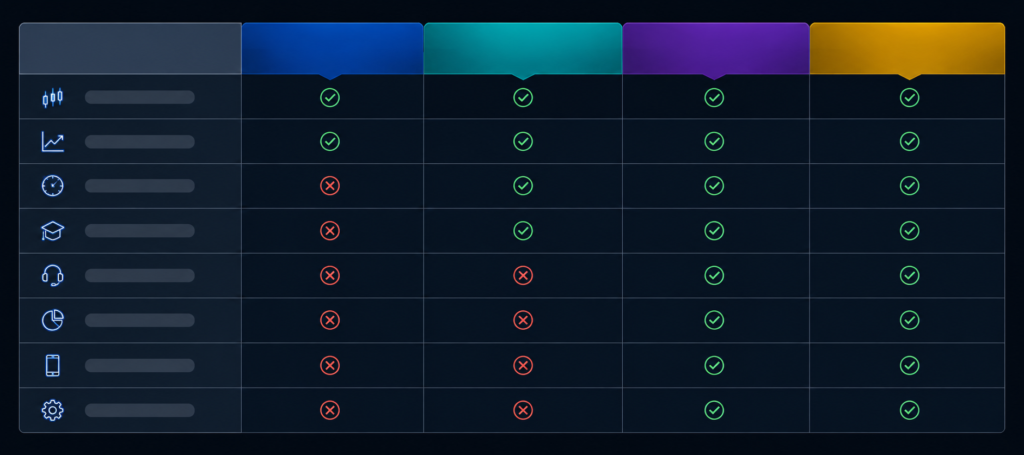
The allocation math is the heart of the system. Imagine three investors fund a PAMM. Investor A deposits $5,000, Investor B deposits $3,000, and Investor C deposits $2,000. The pool totals $10,000. Their shares are 50 percent, 30 percent, and 20 percent. The manager trades the full $10,000 as one account. Suppose the manager earns $1,000 over the month, a 10 percent gross gain. Before fees, Investor A receives $500, Investor B receives $300, and Investor C receives $200. Each gain matches the investor’s stake exactly.
Losses follow the same rule. If the pool falls 10 percent, each investor absorbs a proportional drop. No investor can lose more than their deposited capital in a properly run PAMM, though leverage inside the pool magnifies how fast gains and losses arrive. The broker recalculates every investor’s percentage whenever someone deposits or withdraws. This keeps the allocation fair as the pool changes size.
Most PAMM platforms settle results at the end of a defined trading period, often called a rollover. At rollover, the broker locks in performance, applies the manager’s fee, and updates balances. Withdrawals and new deposits typically take effect at the next rollover. This timing protects existing investors from being diluted mid-trade and ensures everyone is measured against the same starting point.
The Roles of the Money Manager and the Investor
The relationship has two sides, and each carries distinct responsibilities. The money manager designs the strategy, executes trades, and manages risk for the entire pool. The manager usually invests personal capital alongside investors, which is a healthy sign of alignment. When a manager has real skin in the game, every loss hurts them too. The manager earns income mainly through a performance fee, so their reward depends on producing genuine returns rather than simply gathering assets.
The investor’s role is smaller but not passive. You choose the manager. You decide how much to allocate and when to withdraw. You monitor performance against your expectations and your risk tolerance. You are responsible for understanding the strategy, the fee structure, and the maximum historical drawdown before you commit. A PAMM investment is not a savings account. It demands ongoing attention even though you never place a trade yourself.
The broker sits between the two parties as the infrastructure provider. It enforces the rules, calculates allocations, and ensures the manager cannot directly access investor funds. A reputable broker keeps client money in segregated accounts, separate from the firm’s operating capital. That segregation matters enormously if the broker ever faces financial trouble.
PAMM Investment Profit-Sharing and Performance Fees
Profit-sharing is where incentives are set, and it deserves careful study. The standard model charges a performance fee, expressed as a percentage of the profit the manager generates for each investor. Fees commonly range from 20 percent to 50 percent of profits. A manager who earns you $1,000 and charges a 30 percent performance fee keeps $300, leaving you $700. The fee applies only to profit, not to your principal, which aligns the manager’s pay with your gains.
The high water mark is a crucial protection inside good profit-sharing arrangements. Under a high water mark, the manager only earns a performance fee on new profits above the previous peak balance. If your account drops and then recovers, the manager does not get paid twice for the same ground. They must first recoup the loss before any fresh fee applies. Always confirm a high water mark exists. Without one, a volatile manager can collect fees during recoveries that merely undo earlier damage.
Some PAMM structures add a management fee charged on assets regardless of performance, and a few brokers add their own spread or commission. These layers erode returns quietly. The table below compares typical fee and structure elements across the main managed trading models so you can weigh them side by side.
| Feature | PAMM | MAM | LAMM | Copy Trading |
|---|---|---|---|---|
| Allocation basis | Percentage of pooled equity | Flexible, per-investor settings | Lot size replicated equally | Trade-by-trade copy |
| Investor control | Low | Medium | Low to medium | High |
| Pooled or separate | Pooled | Separate sub-accounts | Separate accounts | Your own account |
| Typical performance fee | 20-50% | 20-50% | 20-40% | 0-30% or fixed |
| High water mark common | Yes | Yes | Sometimes | Rare |
| Best suited to | Hands-off investors | Tailored risk needs | Lot-matched copying | Active selectors |
Managed Forex Account Alternatives Worth Knowing
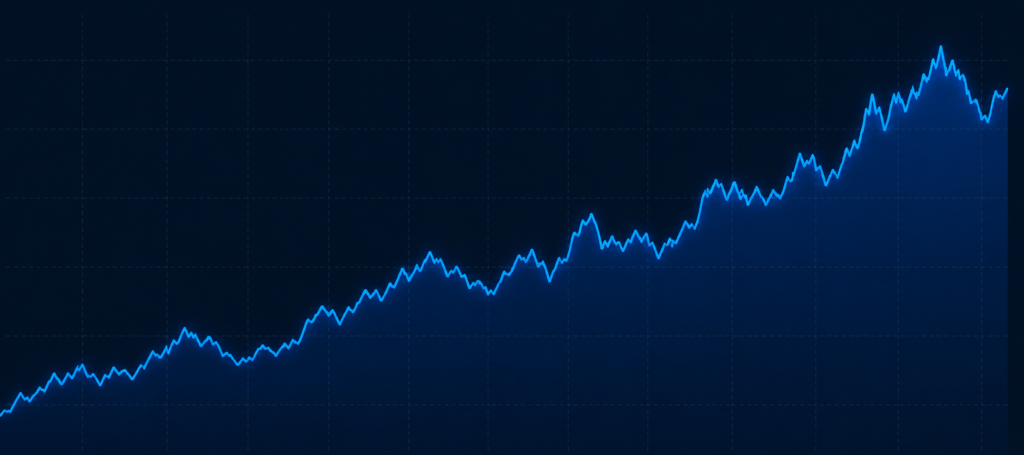
A managed forex account is the broader category that PAMM belongs to. Within it, several models compete, and each fits a different investor. The MAM, or Multi-Account Manager, gives the manager more flexibility than PAMM. The manager can assign different risk levels or leverage to individual investor sub-accounts. A cautious investor and an aggressive investor can follow the same strategy at different intensities. This personalization is the MAM’s main advantage over the one-size-fits-all PAMM.
The LAMM, or Lot Allocation Management Module, replicates trades by lot size rather than by equity percentage. If the manager opens one lot, each linked account opens one lot too, regardless of account size. This can suit investors with similar balances but becomes risky when account sizes differ widely, because a fixed lot is a far larger bet for a small account than a large one.
Copy trading and social trading sit at the most accessible end. You browse a leaderboard, pick a trader, and the platform mirrors their trades into your own account in real time. You retain full control and can stop copying instantly. The trade-off is that leaderboards reward recent winners, which encourages performance-chasing into strategies that may already be peaking. Each model has a place. The right choice depends on how much control you want and how closely you want your results tied to the manager’s.

Choosing a Manager: Track Record and Drawdown
Selecting the manager is the single most important decision in any PAMM investment, and surface metrics mislead. A headline return of 300 percent means little without context. The first number to examine is maximum drawdown, the largest peak-to-trough decline the account has suffered. A manager who returned 80 percent but endured a 60 percent drawdown took enormous risk to get there. A manager who returned 30 percent with a 12 percent maximum drawdown produced a far more durable result. Risk-adjusted return matters more than raw return.
Length of track record is the second filter. A strong three-month run can be luck. Currency markets move through trending and ranging regimes, and a strategy that thrives in one can collapse in another. Look for at least twelve to twenty-four months of verified history that spans different market conditions. Examine the equity curve for smoothness. A jagged curve with sharp recoveries often signals a martingale or grid strategy that doubles down on losers. Such strategies look brilliant until the day they blow up.
Finally, weigh consistency, transparency, and the manager’s own capital. A manager who publishes monthly results, explains the strategy in plain terms, and invests significant personal funds has aligned interests with yours. Spread your allocation across two or three uncorrelated managers rather than concentrating everything in one. Diversification among managers cushions you when any single approach hits its inevitable rough patch.
Risks and Red Flags You Must Watch
Every forex PAMM account carries the full risk of leveraged currency trading, and capital loss is a genuine possibility. The most dangerous red flag is a promise of guaranteed or fixed monthly returns. No honest manager can guarantee profit in a market driven by central banks, geopolitics, and liquidity shocks. Any pitch advertising “5 percent per month, risk-free” should end the conversation immediately. Those claims are the signature of Ponzi schemes that pay early investors with later investors’ money until the pool collapses.
Hidden strategies deserve equal suspicion. If a manager refuses to describe how they trade, or hides behind vague phrases like “proprietary algorithm,” you cannot assess the risk you are taking. Watch for managers who show only recent results and bury or omit the bad months. Extremely high leverage, frequent large positions, and recovery patterns consistent with martingale betting all warn of an account engineered to look good until it doesn’t. A short summary of the clearest warning signs follows.
- Guaranteed returns, fixed monthly payouts, or “no loss” language
- No verified, long-term track record across varied market conditions
- Opaque strategy, no high water mark, or no manager capital invested
Beyond the manager, scrutinize the broker. An unregulated offshore broker can freeze withdrawals, widen spreads, or vanish entirely. Confirm segregation of client funds and read the withdrawal terms before depositing. The strongest strategy means nothing if you cannot get your money back.
Regulation and Realistic Returns
Regulation shapes how safe a PAMM structure really is. In well-regulated jurisdictions, forex brokers must hold client money in segregated accounts, maintain capital reserves, and submit to audits. Bodies such as the UK’s FCA, Australia’s ASIC, and Cyprus’s CySEC impose these duties. Many PAMM offerings, however, operate through offshore entities with lighter oversight, partly because pooled managed trading can collide with stricter fund rules onshore. Before investing, identify which legal entity actually holds your money and which regulator, if any, supervises it. That single check separates a recoverable misstep from a total loss.
Realistic returns are the other reality check. Skilled professional traders may target annual returns in the range of roughly 15 to 40 percent in strong conditions, with meaningful drawdowns along the way and losing years included. Anyone implying steady double-digit monthly gains is selling fantasy. Sustainable performance is lumpy. It includes flat stretches and painful drawdowns that test your patience far more than your spreadsheet suggests. Size your allocation as risk capital you can afford to lose, not as money earmarked for rent or retirement. Treated as one part of a diversified plan, a managed forex account can add value. Treated as a guaranteed income engine, it sets you up for disappointment.
What Experienced Investors and Research Say
Seasoned investors converge on a few hard-won truths about handing money to traders. In Market Wizards, Jack Schwager interviewed dozens of elite traders and found that risk control, not bold prediction, separated the great from the rest. Their edge lived in how they managed losses, which is exactly what you should evaluate in a PAMM manager’s drawdown history.
The academic record reinforces caution. In their study “Trading Is Hazardous to Your Wealth,” finance professors Brad Barber and Terrance Odean analyzed thousands of retail accounts and found that the most active traders earned the lowest net returns, largely because costs and overconfidence eroded their gains. The lesson transfers directly: high activity and high fees are headwinds, so favor managers whose results survive after costs rather than those who simply trade the most.
A famous line from Warren Buffett captures the right mindset in nine words: “Rule No. 1: Never lose money.” He was making a point about prioritizing capital preservation, and that priority should guide how you assess any forex PAMM account before committing funds.
Frequently Asked Questions (FAQs)
What is a forex PAMM account in simple terms? A forex PAMM account is a pooled investment where many investors fund a single account traded by one money manager. Each investor owns a percentage of the pool equal to their share of the capital. Profits and losses are distributed in that same percentage. You never trade yourself, and your money stays in your own brokerage account. The manager earns a performance fee from the profits they generate, which keeps their pay tied to your results.
How is a PAMM account different from a managed forex account in general? A managed forex account is the broad category, while PAMM is one specific structure within it. PAMM pools capital and allocates results by equity percentage. MAM offers per-investor risk settings, LAMM copies trades by lot size, and copy trading mirrors trades into your own account. Each model balances control, customization, and convenience differently, so the best fit depends on how hands-off you want to be.
Can I lose money in a PAMM investment? Yes. A PAMM investment carries the full risk of leveraged forex trading, and you can lose part or all of your deposited capital. There are no guaranteed returns. A poor manager, a high-risk strategy, or an adverse market can produce serious losses. Always review maximum drawdown, verify the track record over many months, and only invest money you can genuinely afford to lose.
How are PAMM managers paid? Managers earn mainly through a performance fee, typically 20 to 50 percent of the profit they generate for each investor. The fee applies to profit, not principal. A high water mark should ensure the manager only earns fees on new gains above the previous peak, so they cannot collect twice for recovering the same losses. Some structures add management fees or spreads, which reduce your net return.
Is a forex PAMM account safe and regulated? Safety depends heavily on the broker and the jurisdiction. Brokers regulated by bodies like the FCA, ASIC, or CySEC must segregate client funds and meet capital rules. Many PAMM offerings run through offshore entities with lighter oversight. Before investing, confirm which entity holds your money, check the regulator, and read the withdrawal terms carefully. Regulation reduces risk but never eliminates market loss.
Final Thoughts
A forex PAMM account offers a genuinely useful path into the currency market for people who trust the asset class but not their own trading hands. The structure is elegant: pool capital, let one skilled manager trade, and share results by percentage. Yet the model rewards diligence above all. The investors who succeed treat manager selection as serious research, prize low drawdown over flashy returns, demand a high water mark, verify regulation, and size their stake as risk capital. They diversify across managers and judge performance over years, not weeks. Approached this way, a PAMM investment can complement a broader portfolio. Approached as a shortcut to guaranteed income, it disappoints. Stay skeptical of promises, study the math behind every fee, and keep your expectations grounded in what real professionals actually earn.
Disclaimer: This article is for educational purposes only and does not constitute financial, investment, or trading advice. Forex trading and managed accounts carry a high level of risk, and your capital is at risk. Past performance does not guarantee future results. Always conduct your own research and consult a qualified, licensed financial advisor before making any investment decision.
Ready to learn more about smart, risk-aware forex investing? Visit forextradingboards.com for in-depth guides, broker insights, and practical strategies to help you navigate managed forex accounts with confidence.