
Introduction
If you trade the New York session, you have probably noticed that price often accelerates at very specific moments in the hour. Those moments are what the Inner Circle Trader community calls ICT macros, and understanding them can reshape how you read intraday delivery. In this guide you will learn exactly what ICT macros are, the precise ICT macro times in New York local time, and why algorithmic price delivery tends to run liquidity and rebalance toward fair value during these narrow windows. We will connect macros to the wider ICT toolkit, including liquidity pools, order blocks, fair value gaps, and the Silver Bullet setup. You will see a clear time table, real research context, and practical ways disciplined traders frame their sessions around these windows. By the end, you should be able to spot a macro forming and know what to expect from it.
What Are ICT Macros?
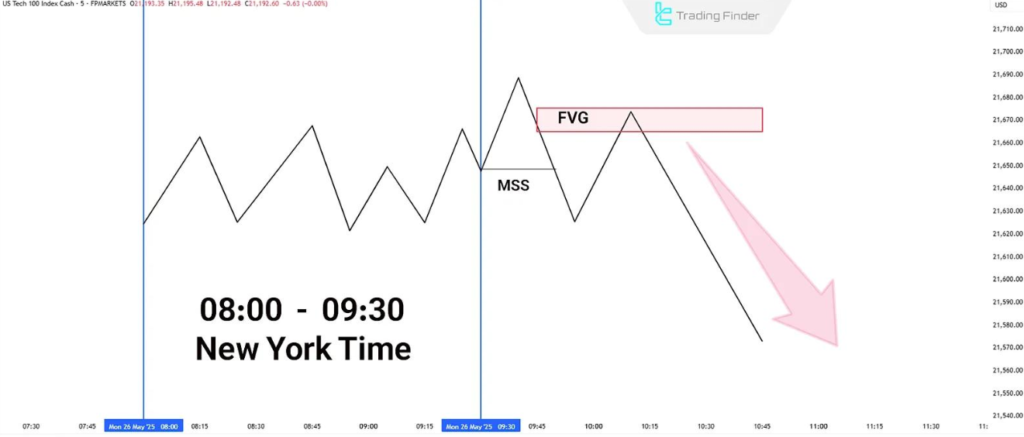
Let us start with the core definition. ICT macros are short, recurring time windows during the trading day when algorithmic price delivery tends to become more active and directional. The Inner Circle Trader, Michael J. Huddleston, popularized the idea that the market is engineered by algorithms rather than random buyers and sellers. Within that framework, macros are the moments when those algorithms are most likely to seek liquidity and rebalance price toward fair value.
So what are ICT macros in practical terms? Each macro is typically a twenty-minute window. Price often runs a nearby pool of liquidity, then delivers back toward a fair value gap or an order block. The window is not magic. It is simply a period when institutional order flow and programmed delivery tend to cluster, producing cleaner, more readable moves than the choppy minutes in between.
Think of a macro as a scheduled expansion. Before the window, price may drift or consolidate. When the macro opens, you frequently see displacement, a sharp move that breaks structure and leaves an imbalance behind. That imbalance becomes the target for a later retracement. Traders who understand this rhythm stop chasing every candle and instead wait for these defined windows to act.
Importantly, macros are a concept for observation and probability, not a guaranteed signal. They tell you when to pay attention. Your actual decision still depends on structure, bias, and confirmation. Used this way, macros bring focus to an otherwise noisy trading day.
The Exact ICT Macro Times in New York
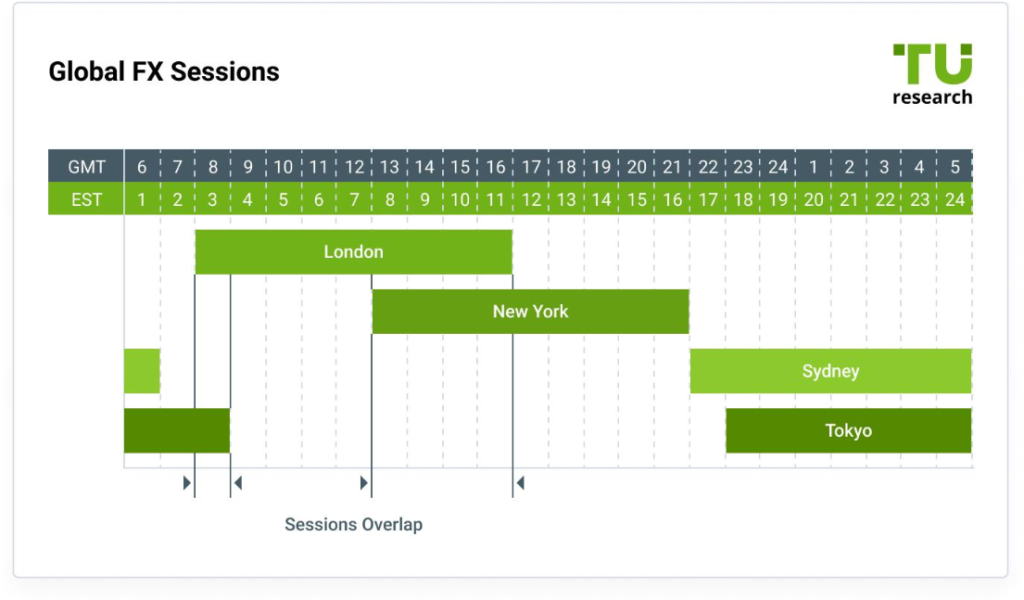
The most searched detail behind ict macro times is the schedule itself. ICT teaching centers on the New York session and its overlap with London, so the windows are quoted in New York local time (Eastern Time). The macros cluster around the London open, the New York AM session, the lunch period, and the New York PM session.
The table below lays out the commonly referenced macro windows. Each window is roughly twenty minutes, and the surrounding session context helps you understand what the algorithm is usually doing at that time.
| Macro Window (New York / ET) | Session Context | Typical Behaviour |
|---|---|---|
| 02:33 – 03:00 | London session | Early London liquidity run and expansion |
| 04:03 – 04:30 | London session | Continuation or reversal into NY pre-market |
| 08:50 – 09:10 | New York AM (pre-open) | Positioning ahead of the equities open |
| 09:50 – 10:10 | New York AM | Prime AM macro, often runs session highs or lows |
| 10:50 – 11:10 | New York AM | Second AM macro, continuation toward the target |
| 11:50 – 12:10 | New York lunch | Lunch macro, often thinner and trickier |
| 13:10 – 13:40 | New York PM | Early PM expansion after lunch |
| 15:15 – 15:45 | New York PM (close) | Final macro into the equities close |
Read the schedule as a rhythm rather than a rulebook. The 09:50 to 10:10 and 10:50 to 11:10 AM windows receive the most attention because they overlap the highest-liquidity part of the New York morning. The lunch macro is often noisier because participation drops. The late PM macro around the equities close can produce sharp, decisive moves as positions are squared. Always confirm the current session times against daylight saving changes, since ET shifts through the year.
Why Macros Exist: Liquidity and Algorithmic Delivery
To trust the windows, you need to understand why they behave the way they do. Modern currency and index markets are driven by algorithms that manage order flow around institutional needs. These systems are not trying to be fair to retail traders. They are trying to fill large orders efficiently, which means sourcing liquidity where it sits.
Liquidity sits in predictable places. It rests above old highs, below old lows, and around obvious support and resistance where stop orders accumulate. During a macro window, the algorithm often runs toward one of these pools, triggers the resting orders, and uses that liquidity to fill the opposite side of institutional positions. This is the classic liquidity run, and macros are simply the scheduled moments when it tends to happen.
After the run, price frequently reverses or rebalances. This is where the concept of fair value comes in. When price moves too quickly, it leaves inefficiencies behind. The algorithm often returns to those inefficiencies to deliver price fairly before continuing. Macros, therefore, are not just about the raid on liquidity. They are about the two-sided delivery: take the liquidity, then rebalance.
This is why the twenty-minute framing matters. The window is long enough to contain a full sequence, a sweep and a reaction, but short enough to keep you focused. Rather than watching six hours of screen time, you concentrate on the handful of minutes when the machine is most likely to show its hand.
How Macros Connect to Order Blocks and Fair Value Gaps
Macros rarely work in isolation. They gain their power when combined with the structural tools ICT traders already use, especially order blocks and fair value gaps.
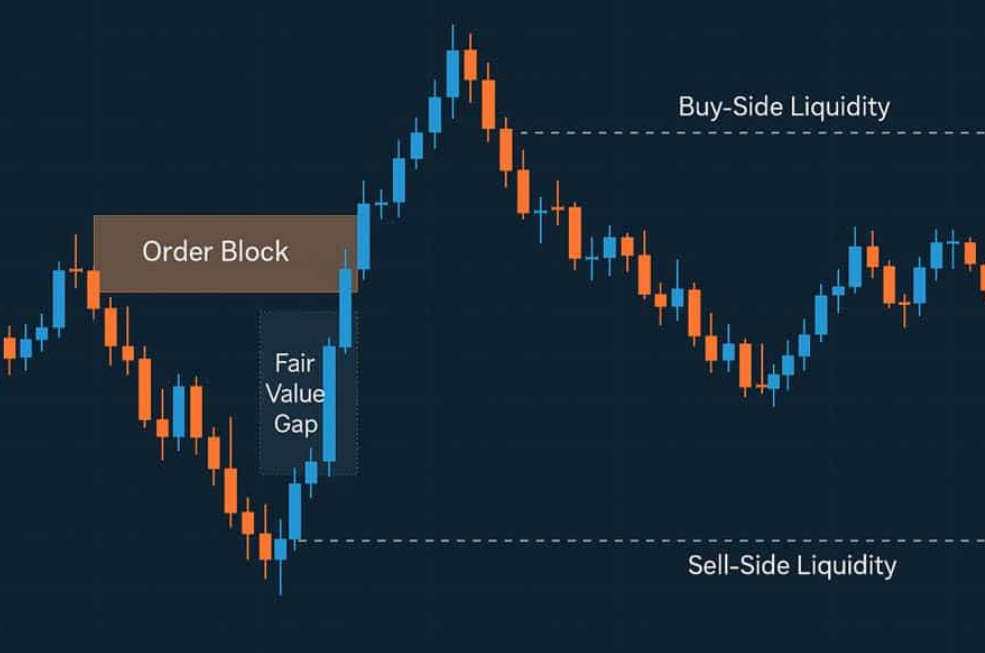
An order block is the last opposing candle before a strong move, the area where institutions are believed to have placed significant orders. When a macro window opens and price displaces away from an order block, that block becomes a reference point. If price later returns to it during or after the macro, many traders treat the retest as a potential entry aligned with the algorithm.
A fair value gap, or FVG, is the imbalance left behind by a fast move, a gap between candle wicks where price delivered inefficiently. Macros frequently create these gaps because the displacement inside the window is sharp. The same gaps then become magnets. Price often returns to fill part of the FVG before the next expansion, giving patient traders a defined area to watch.
The interplay is the key insight. A macro can be the catalyst that creates a fair value gap by sweeping liquidity, and the same session can bring price back into that gap or the associated order block for a rebalance. When your bias, an unfilled FVG, and a macro window all point the same direction, you have a confluence that many ICT practitioners consider high probability. Alone, each tool is suggestive. Stacked together inside a macro, they become a plan.
The Silver Bullet and Its Macro Overlap
No discussion of macros is complete without the Silver Bullet. This is one of ICT’s most popular setups, and it lives directly inside macro time.
The Silver Bullet is a one-hour window, most famously 10:00 to 11:00 in New York, though ICT also references a London Silver Bullet and an afternoon window. Notice how neatly this overlaps the 09:50 to 10:10 and 10:50 to 11:10 macros. That overlap is not a coincidence. The Silver Bullet was designed to capture exactly the kind of liquidity raid and fair value gap fill that macros describe.
The setup itself is deliberately simple. During the window, you wait for price to sweep a nearby liquidity pool, create a displacement, and leave a fair value gap. You then look for an entry as price retraces into that gap, targeting the opposite liquidity. Because the macro concentrates delivery into a narrow window, the Silver Bullet gives structure to what would otherwise feel like guesswork.
For newer traders, the value of pairing the two ideas is discipline. Macros tell you when to look. The Silver Bullet tells you what pattern to look for. Together they discourage overtrading. You are not hunting setups all day. You are waiting for a specific window and a specific sequence, then standing aside when neither appears.
How Traders Actually Use Macros in a Session
Turning theory into routine is where most people struggle. Experienced ICT traders tend to build their day around a repeatable process rather than reacting to every tick.
The routine usually begins before the New York open. The trader defines a directional bias using higher timeframe structure, the daily and hourly charts, and identifies the draw on liquidity, the pool price seems likely to target. With bias set, the macros become checkpoints. Instead of watching continuously, the trader sharpens attention when each window approaches.
When a macro opens, the trader watches for the expected sequence: a run on liquidity in the direction of, or counter to, the bias, followed by displacement and an imbalance. If the sequence aligns with the pre-planned bias, they look for an entry on the retracement into the order block or fair value gap. If it does not align, they wait. Patience during a macro is as valuable as action.
Risk management stays front and center. A defined window does not remove the need for a stop-loss, and macros can and do fail. Seasoned traders size positions conservatively, place stops beyond the structure that would invalidate the idea, and accept that some windows produce nothing worth trading. The goal is not to trade every macro. It is to trade the clean ones that match a prepared plan.
Here is the short checklist many traders keep at hand:
- Confirm higher timeframe bias and the likely draw on liquidity before the session.
- At each macro window, watch for a liquidity sweep, displacement, and a fresh fair value gap.
- Enter only when the sequence aligns with your bias, and always define your invalidation.
Common Mistakes and Misconceptions
Because macros are easy to describe and hard to master, beginners repeat a familiar set of errors. Naming them helps you avoid them.
The first mistake is treating the clock as a signal. A macro window opening does not mean you should enter a trade. The window tells you to watch, not to click. Traders who buy or sell simply because the clock struck 09:50 tend to give back gains quickly.
The second mistake is ignoring bias. Macros deliver in a direction that usually connects to a higher timeframe narrative. If you trade a macro against a strong daily trend without a clear reason, you are fighting the very algorithm you are trying to follow. Context first, timing second.
A third misconception is that macros are precise to the second and universal across every instrument. They are approximate windows, and behaviour varies by market and by day. Index futures, major forex pairs, and metals can each express macros differently. Treat the times as a focusing tool, not a law of physics.
Finally, many newcomers overtrade. There are several macros each day, and the temptation is to force something in every one. The best practitioners often take a single, clean setup and skip the rest. Selectivity, not frequency, protects the account. Respecting these boundaries keeps macros a useful edge rather than a source of avoidable losses.
What Top Traders and Research Say
It is worth grounding these session-timing ideas in the broader literature of market behaviour, because the notion that price moves in recognizable, repeatable patterns is far older than ICT.
On the classic side, John J. Murphy’s Technical Analysis of the Financial Markets remains a foundational text. Murphy explains how support, resistance, and price patterns concentrate order flow at predictable levels, the same clustering of resting orders that macro-based liquidity runs exploit. Reading it gives macros a wider technical context rather than treating them as an isolated trick.
On the research side, the academic paper by Andrew W. Lo, Harry Mamaysky, and Jiang Wang, Foundations of Technical Analysis (Journal of Finance, 2000), is directly relevant. Using rigorous statistical methods, the authors found that certain technical patterns do carry practical information beyond random noise. Their work does not endorse any single strategy, but it lends credibility to the broader premise that structured, repeatable price behaviour can be studied and, at times, used.
And on mindset, a line often attributed to trader Ed Seykota captures the discipline macros demand: “The trend is your friend except at the end.” The reminder is simple. Timing and structure help, but no window guarantees an outcome, so respect for context and risk always comes first.
Frequently Asked Questions
What are ICT macros in simple terms? ICT macros are short, recurring time windows, usually about twenty minutes, when algorithmic price delivery tends to become more active and directional. During these windows, price often runs a pool of liquidity and then rebalances toward fair value. They do not guarantee a move; they simply mark the moments when institutional delivery is most likely to show. Traders use them to focus attention rather than to generate automatic signals.
What are the main ICT macro times? The most watched ict macro times fall in New York local time and cluster around the London open and the New York AM, lunch, and PM sessions. The two prime windows are 09:50 to 10:10 and 10:50 to 11:10 in the morning, with additional windows earlier in London and later into the PM close. Always adjust for daylight saving changes, since New York time shifts through the year.
Are ICT macros the same as the Silver Bullet? No, but they overlap. The Silver Bullet is a specific one-hour setup, most famously 10:00 to 11:00 in New York, that sits directly on top of the AM macros. Macros describe when delivery concentrates, while the Silver Bullet describes a pattern to trade inside that time. Many traders use them together for structure and discipline.
Do ICT macros work on forex and indices? They can appear across major forex pairs, index futures, and metals, since all are influenced by similar institutional order flow and New York session timing. However, behaviour varies by instrument and by day, so the windows are best treated as a focusing tool rather than a fixed rule. Test them on your chosen market and keep detailed notes before relying on them.
Can beginners trade ICT macros safely? Beginners can study macros, but they should start on a demo account and pair the concept with a clear higher timeframe bias. The biggest risks are treating the clock as a signal and overtrading every window. With patience, defined invalidation, and conservative sizing, macros can become a helpful part of a wider plan rather than a shortcut to profits.
Final Thoughts
ICT macros offer a disciplined way to read the trading day by concentrating your attention on the narrow windows when algorithmic delivery is most active. Once you understand what ICT macros are and memorize the key ict macro times in New York, you can stop chasing every candle and start waiting for the sweep, the displacement, and the rebalance that these windows tend to produce. Combined with order blocks, fair value gaps, and the Silver Bullet, macros turn a chaotic session into a structured plan built around liquidity and fair value. Remember that no window removes the need for bias, patience, and strict risk management. Study the concept carefully, journal your results, and let the data guide you. For more practical breakdowns of ICT concepts, session timing, and smart money strategy, keep reading and exploring the guides at forextradingboards.com.
Disclaimer: This article is for educational purposes only and does not constitute financial or investment advice. Trading carries substantial risk; always do your own research and consult a licensed professional before making decisions.
Related guides: