
Imbalance Trading: How to Trade ICT Imbalance Like Institutional Traders
Most retail forex traders focus on indicators. They use RSI, MACD, and moving averages. But institutions do not trade this way. They leave behind price imbalances. They move markets through order flow. Understanding imbalance trading can completely change how you read charts.
This guide breaks down everything. You will learn what ICT imbalance is, how institutional order flow works, and how to build a strategy around these concepts.
What Is Imbalance Trading?
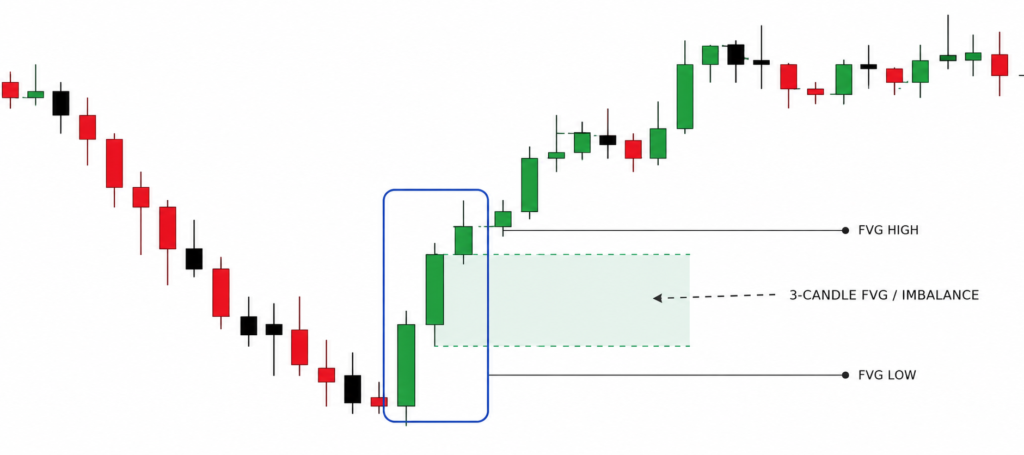
Imbalance trading is a method of reading price inefficiencies in the market. When price moves too fast in one direction, it leaves behind a gap. This gap is called an imbalance. Buyers and sellers were not balanced during that move. Price often returns to fill that zone.
This concept is central to ICT (Inner Circle Trader) methodology. It is also deeply connected to smart money concepts (SMC). Professional traders hunt these imbalance zones daily.
Think of it this way. When a large institution places a massive buy or sell order, price reacts violently. This violent move creates an imbalance. Retail traders see random candles. Institutional traders see an opportunity.
What Is ICT Imbalance?
ICT imbalance refers specifically to a three-candle formation on the price chart. It is also called a Fair Value Gap (FVG). This forms when:
- Candle 1 moves strongly in one direction
- Candle 2 (the middle candle) moves aggressively
- Candle 3 leaves a gap between the wick of Candle 1 and Candle 3
That gap in the middle is the ICT imbalance. Price has moved without fair value being established. The market tends to revisit this area later.
Two types of ICT imbalance:
- Bullish FVG : Gap forms during an upward displacement. Price may retrace into this zone to continue higher.
- Bearish FVG : Gap forms during a downward displacement. Price may retrace into this zone to continue lower.
ICT imbalances are not random. They form during high-volume institutional moves. This is why they hold significance.
Understanding Institutional Order Flow
Institutional order flow is the movement of large buy and sell orders placed by banks, hedge funds, and central banks. These institutions do not trade all at once. They build positions slowly and strategically.
Here is what makes institutional order flow different from retail trading:
- Retail traders react to price. Institutions create price movement.
- Institutions use order blocks, imbalances, and liquidity pools.
- They accumulate positions where retail traders place their stop losses.
When you understand institutional order flow, you stop chasing the market. You start anticipating where price is going next.
Key signs of institutional order flow:
- Sharp displacement candles with large body size
- Break of market structure after consolidation
- Price returning to fill a Fair Value Gap
- Liquidity sweeps above old highs or below old lows
How to Identify an Imbalance Zone on a Chart
Finding an imbalance trading zone requires practice. Follow these steps:
Step 1 : Mark the displacement Look for a strong, impulsive candle. This is usually bigger than surrounding candles. It breaks structure or sweeps a liquidity level.
Step 2 : Identify the three-candle formation Check if there is a gap between the high of Candle 1 and the low of Candle 3 (for bullish). That gap is your ICT imbalance zone.
Step 3 : Wait for price to return Do not enter at the current price. Wait for a retrace. Price often returns to fill the imbalance before continuing in the original direction.
Step 4 : Confirm with higher timeframe bias Always align your imbalance entry with the higher timeframe institutional order flow direction. A bullish FVG on the 15-minute chart is stronger when the daily chart is also bullish.
Imbalance Trading Strategy: Step-by-Step
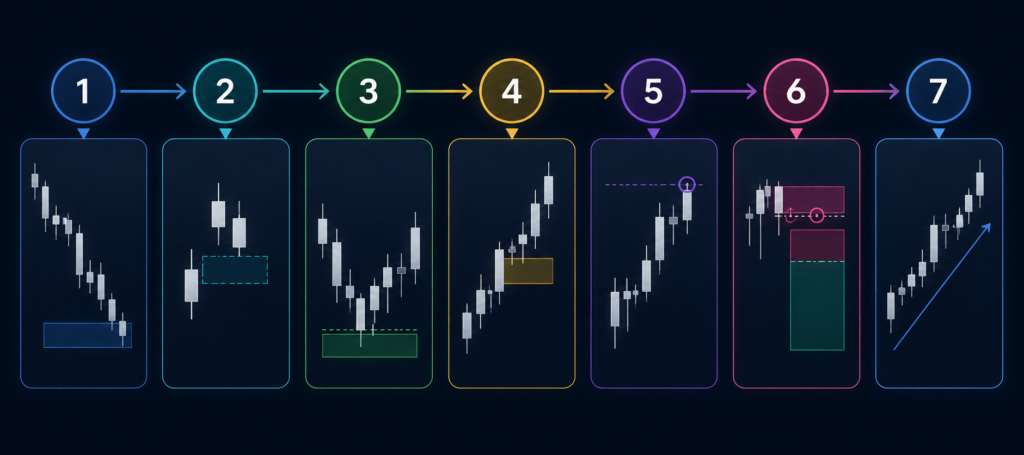
Here is a simple but powerful imbalance trading strategy you can apply right now.
Step | Action | Detail |
1 | Set daily bias | Use the daily chart to determine bullish or bearish direction |
2 | Find displacement | Look for an impulsive move that breaks structure |
3 | Mark the FVG | Identify the ICT imbalance zone on the 1H or 15M chart |
4 | Wait for retrace | Let price return into the Fair Value Gap |
5 | Enter at CE | Enter at the 50% midpoint (Consequent Encroachment) |
6 | Set stop loss | Place stop below the FVG low (bullish) or above FVG high (bearish) |
7 | Target liquidity | Aim for the next draw on liquidity — old highs, old lows |
This framework follows institutional order flow logic. It keeps you on the right side of smart money.
Common Mistakes in Imbalance Trading
Even experienced traders make these errors. Avoid them:
- Trading against the trend : Always align the FVG with the higher timeframe bias. Do not trade bullish FVGs in a strong downtrend.
- Entering too early: Wait for price to return into the imbalance zone. Do not anticipate the move.
- Ignoring context : An ICT imbalance near a key order block or liquidity level is stronger. Isolated FVGs have lower probability.
- No risk management : Always use a defined stop loss. Imbalances can expand. Protect your capital first.
- Overtrading: Quality matters more than quantity. One clean imbalance trading setup per session is enough.
Why Institutional Order Flow Changes Everything
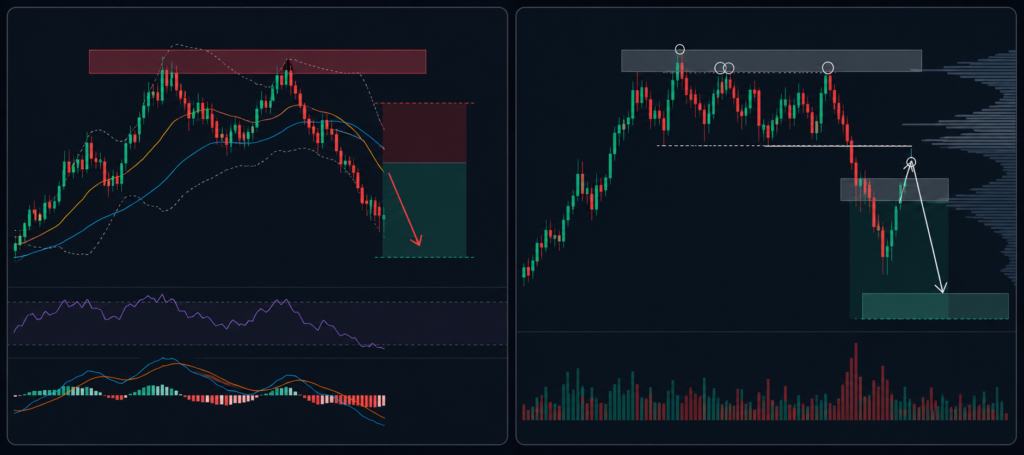
Most trading education focuses on retail patterns. Head and shoulders. Double tops. RSI divergence. These patterns work sometimes. But they fail consistently because they ignore the bigger picture.
Institutional order flow shows you where the real money is going. It reveals accumulation zones. It exposes liquidity manipulation. It gives you the “why” behind price movements.
When you combine this with ICT imbalance concepts, your chart reading transforms. You stop guessing. You start reading price like a professional.
FAQs : Imbalance Trading
What is the difference between an imbalance and an order block?
Does imbalance trading work on all timeframes?
Can beginners use imbalance trading?
How is imbalance trading related to smart money concepts?
What pairs work best for imbalance trading?
Final Thoughts
Imbalance trading is not a shortcut. It is a framework. It teaches you to see the market from an institutional perspective. When you understand ICT imbalance and institutional order flow, you stop fighting the market. You start moving with the smart money.
The best traders on the planet do not rely on indicators. They read price. They understand why price moves. And that understanding starts with imbalances.
Start small. Study the structure. Practice identifying Fair Value Gaps on demo. Then bring your skills to the live market with confidence.
At ForexMarketTrendss.com, we are committed to giving you the real knowledge that institutional traders use every day. Master the imbalance. Follow the order flow. Trade with precision.