
Leverage in Forex: The Complete Guide for Smart Traders (2026)
If you want to trade bigger positions with a smaller deposit, leverage in forex is the tool that makes it possible. It is one of the most powerful and most misunderstood concepts in currency trading.
This guide breaks it all down. You will learn what leverage in forex means, how the forex leverage ratio works, exactly how does leverage work in forex, and how to protect yourself while using it.
What Is Leverage in Forex?
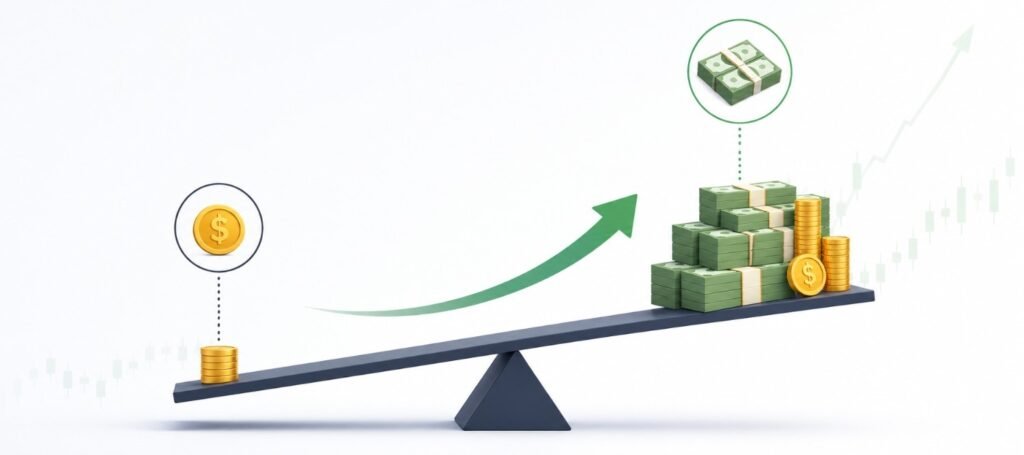
Leverage in forex is borrowed capital. Your broker lends you money so you can control a larger position than your actual balance allows.
Think of it this way. You deposit $1,000. With a forex leverage ratio of 1:100, you can control a $100,000 position in the market. Your broker covers the remaining $99,000.
This gives retail traders access to the same position sizes that large banks once monopolized.
How Does Leverage Work in Forex?
How does leverage work in forex? It works through a margin system.
When you open a leveraged trade, your broker sets aside a small portion of your funds as “margin” a security deposit. The rest of the capital is provided by the broker.
Here is a simple breakdown:
The higher the forex leverage ratio, the less margin you need but the more sensitive your trade becomes to market movements.
The Forex Leverage Ratio Explained
The forex leverage ratio is expressed as a number like 1:50, 1:100, or 1:500.
1:50 means for every $1 you own, you control $50 in the market.
1:100 means every $1 controls $100.
1:500 means every $1 controls $500.
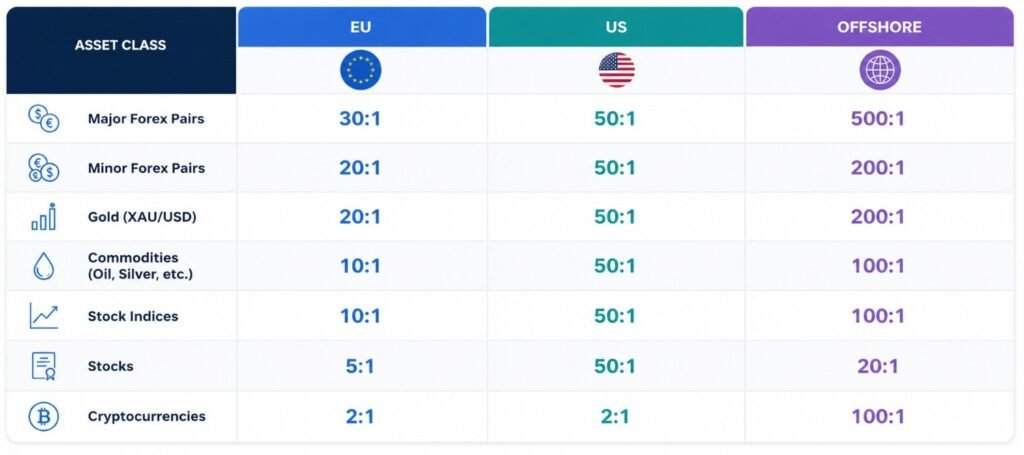
Regulators around the world set maximum leverage limits to protect retail traders. Here is a quick comparison:
Traders in regions with stricter rules sometimes use offshore brokers for higher leverage. Always check the regulatory status of any broker you use.
How Leverage Amplifies Both Profits and Losses
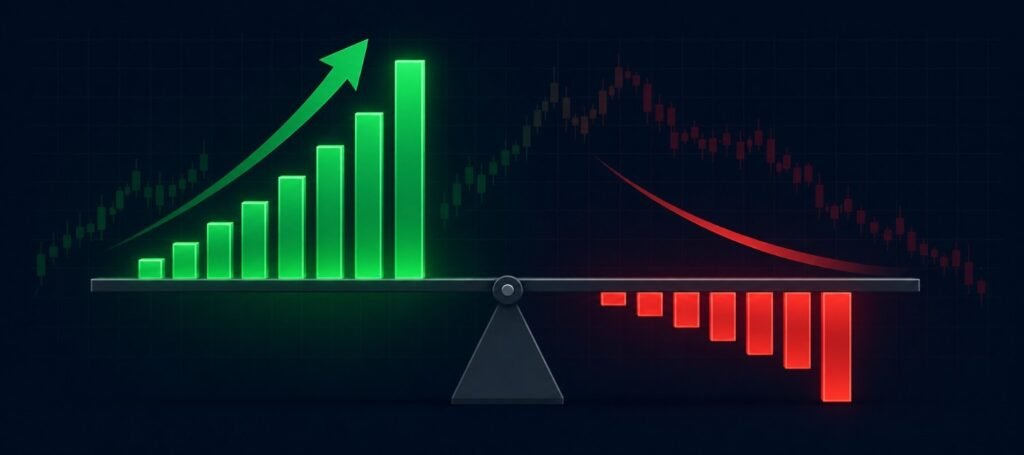
This is the key point every trader must understand. Leverage in forex does not just multiply your gains it multiplies your losses equally.
Example:
You open a $100,000 EUR/USD position using $1,000 of your own money (1:100 leverage).
The market moves 1% in your favor → You gain $1,000 → That is a 100% return on your capital.
The market moves 1% against you → You lose $1,000 → Your entire account is wiped out.
This is why risk management is not optional it is essential.
Leverage vs. Margin: What Is the Difference?
Many traders confuse leverage and margin. They are related but different:
Leverage is the ratio of borrowed money to your own capital.
Margin is the actual amount your broker holds as collateral for your open trade.
If your losses eat into your margin below a certain level, your broker issues a margin call a warning to deposit more funds or close positions.
Smart Risk Management When Using Leverage
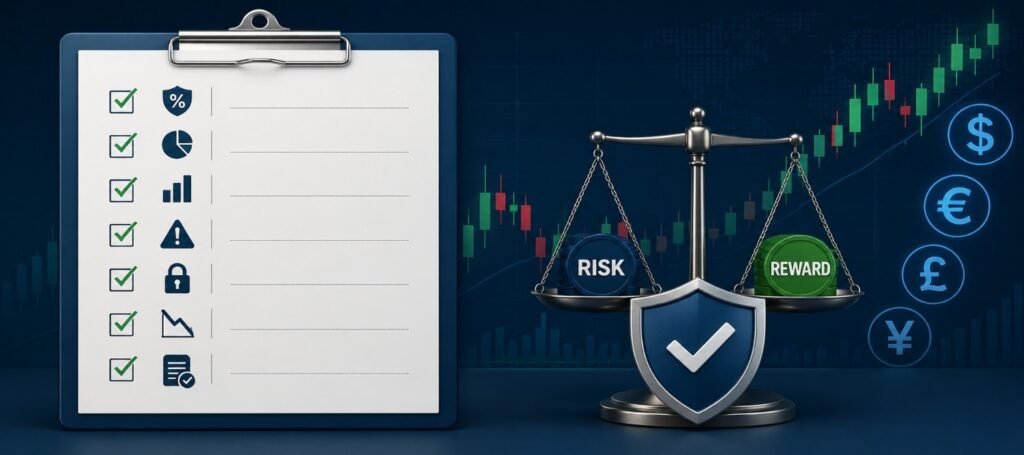
sing leverage in forex responsibly is what separates winning traders from losing ones. Follow these core rules:
Use stop-loss orders on every trade. They automatically close a losing position before it wipes your account.
Never use maximum leverage. Just because your broker offers 1:500 does not mean you should use it. Start with 1:10 or 1:20.
Risk only 1–2% of your account per trade. This protects your capital during losing streaks.
Understand how the forex leverage ratio affects your pip value. Higher leverage means each pip movement has a bigger financial impact.
Use a leverage calculator before entering trades. Know your exact risk before you click “buy” or “sell.”
Best Leverage Ratios by Trading Style
Different strategies suit different leverage levels. Here is a practical guide:
Who Should Use High Leverage in Forex?
High forex leverage ratios are not for everyone. They suit:
Experienced traders who fully understand risk management.
Traders with small accounts who want to take calculated, well-planned positions.
Scalpers and day traders with proven, tested strategies.
They are NOT recommended for:
Complete beginners who are still learning how markets move.
Traders who do not use stop-loss orders.
Anyone trading based on emotions rather than a strategy.
Common Mistakes Traders Make with Leverage
Avoid these costly errors:
- Over-leveraging — Opening positions that are too large for your account size.
- Ignoring margin levels — Not monitoring your free margin in real time.
- No stop-loss — Letting losses run far beyond what you planned.
- Chasing losses — Increasing leverage after a losing trade to “win it back.”
- Using maximum leverage on volatile pairs — Exotic currency pairs move fast and unpredictably.
FAQs: Leverage in Forex
What is a good forex leverage ratio for beginners?
For beginners, a forex leverage ratio of 1:10 to 1:30 is ideal. It limits exposure while you learn how the market behaves.
How does leverage work in forex when I lose a trade?
When how does leverage work in forex results in a loss, the loss is calculated on the full position size not just your deposit. That is why a small price move can lead to a large loss.
Can I lose more than I deposit with leverage?
With most regulated brokers, negative balance protection prevents this. However, some offshore brokers do not offer this protection. Always check before depositing.
Is leverage in forex legal?
Yes. Leverage in forex is completely legal and offered by regulated brokers worldwide. Limits vary by country and regulatory authority.
Does higher leverage mean higher profit?
Higher leverage means higher potential profit and higher potential loss. It is a multiplier in both directions. Profit depends on your strategy and risk management, not on the leverage alone.
What happens during a margin call?
A margin call is issued when your account equity drops close to your used margin. Your broker will ask you to add funds or will start closing your open positions automatically.
Final Thoughts
Leverage in forex is a powerful tool. Used correctly, it lets traders of all sizes participate in the $7.5 trillion daily forex market. Used carelessly, it can eliminate an account in minutes.
The forex leverage ratio you choose should always match your experience level, strategy, and risk tolerance never your greed.
Understanding how does leverage work in forex is not just book knowledge. It is practical survival in the trading world. Start small. Manage your risk. Scale up as your skills grow.