
NZDUSD Forecast 2026: Full Analysis, Price Targets & Trading Guide
If you trade forex, you already know how fast market conditions can shift. The NZDUSD forecast is one of the most searched topics among traders right now and for good reason. This pair is moving, and it carries real opportunity.
This guide breaks down the current outlook, key price targets, technical levels, and what actually drives the Kiwi dollar. Whether you are a beginner or an experienced trader, this analysis gives you a clear edge.
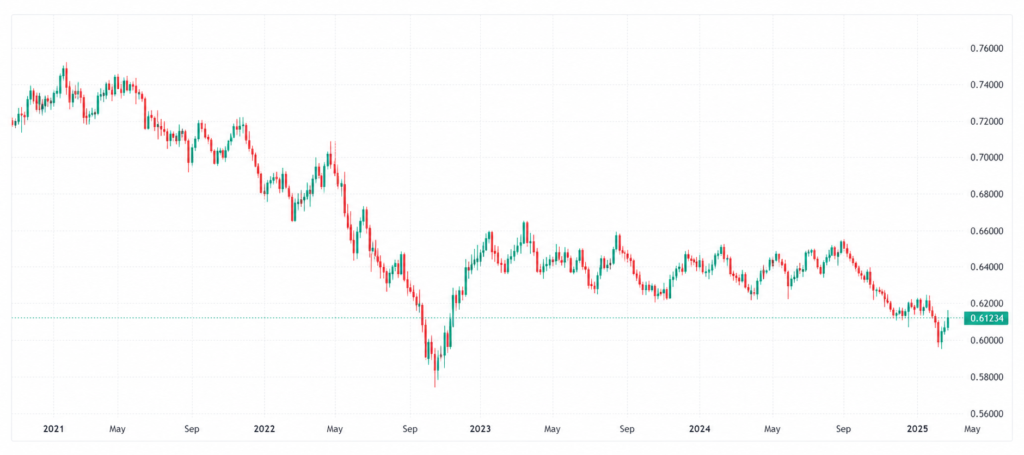
What Is NZD/USD? A Quick Overview
NZD/USD commonly called the “Kiwi” represents the exchange rate between the New Zealand dollar and the US dollar. It tells you how many US dollars one New Zealand dollar buys.
This pair belongs to the category of minor forex pairs. Unlike major pairs such as EUR/USD or GBP/USD, minor pairs do not include the US dollar on both sides or in NZD/USD’s case, they involve smaller economies. Still, NZD/USD is widely traded, liquid, and full of trading opportunities.
New Zealand’s economy is small but commodity-driven. Dairy exports, agricultural goods, and tourism heavily influence the Kiwi. That makes NZD/USD especially sensitive to global risk sentiment and commodity prices.
NZDUSD Forecast 2026 : Key Price Targets
Analysts forecast NZD/USD to reach 0.5894 by June 2026, 0.5961 by September 2026, and 0.6004 by December 2026. These targets reflect a gradual recovery trend for the Kiwi.
Here is a quick reference table:
Time Period | Forecasted NZD/USD Level |
June 2026 | 0.5894 |
September 2026 | 0.5961 |
December 2026 | 0.6004 |
Mid-2027 | 0.6264 |
For July 2026, the pair is expected to range between 0.587 and 0.613, with a projected month-end rate of around 0.604.
The overall trend is cautiously bullish, but traders must watch key resistance zones carefully before entering long positions.
Technical Levels Support, Resistance & EMAs
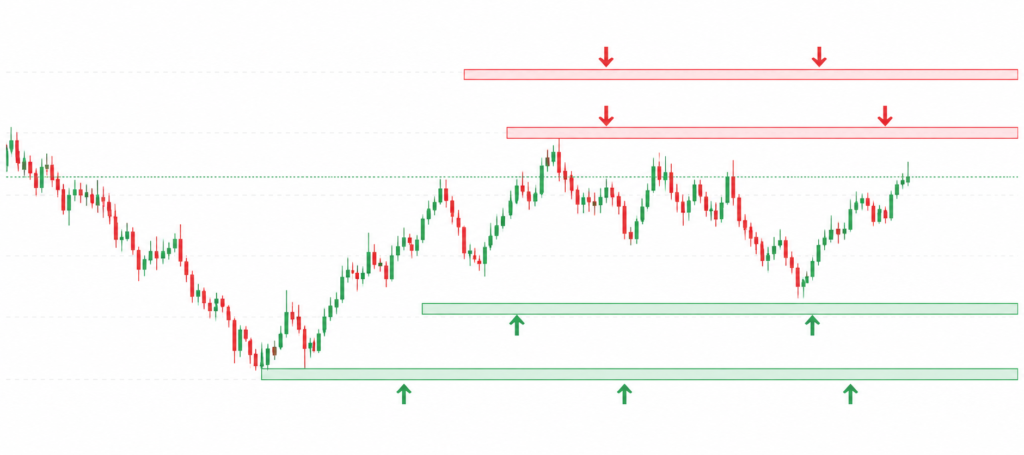
Understanding price levels is essential for every NZDUSD forecast. Here are the most important zones right now:
- Key support zone: 0.5800 – 0.5850
- Key resistance zone: 0.5920 – 0.5950
- Longer-term resistance: 0.6500 – 0.6600
Technically, NZD/USD is in a medium-term bullish trend entering 2026, with support holding at 0.58–0.59 and resistance sitting at 0.65–0.66. Upside momentum requires sustained risk-on sentiment and commodity strength, while the downside opens quickly during risk-off or commodity shocks.
The pair has been facing a stubborn resistance at 0.5920, which analysts had previously flagged as a key target level. The pair continues to trade near its EMA50, which limits recovery attempts during bearish phases.
What this means for traders:
- A clean break above 0.5920 opens the door toward 0.6000.
- A drop below 0.5800 shifts sentiment bearish in the short term.
- Watch RSI levels overbought signals near resistance have triggered short-term pullbacks recently.
What Drives the NZDUSD Rate?
The NZDUSD forecast is not just about charts. Fundamental drivers play an equally important role. Here is what moves this pair:
- RBNZ (Reserve Bank of New Zealand) Policy Interest rate decisions from the RBNZ directly impact the Kiwi. Dovish cuts weaken NZD. Hawkish holds or hikes boost it.
- US Federal Reserve Guidance The Federal Reserve entered 2026 with monetary policy no longer restrictive, following rate cuts in 2025 that reflected slowing growth and easing inflation. A weaker dollar environment generally supports NZD/USD.
- Commodity Prices NZD/USD is heavily influenced by dairy, meat, and agricultural commodity demand, as well as risk sentiment and global trade conditions. When dairy prices rise, the Kiwi typically follows.
- Global Risk Sentiment NZD is a risk-on currency. When global markets feel confident, NZD/USD rises. When fear spikes, it falls fast.
- China’s Economic Data New Zealand exports heavily to China. Weak Chinese demand hits the Kiwi harder than most other currencies.
Is NZD/USD One of the Best Currency Pairs to Trade?
Many traders ask whether NZD/USD qualifies as one of the best currency pairs to trade. The honest answer is it depends on your style.
Here is a balanced breakdown:
Factor | NZD/USD Rating |
Liquidity | Moderate to High |
Volatility | Medium |
Spread Cost | Low to Moderate |
Trend Clarity | Good |
Commodity Sensitivity | Very High |
Beginner-Friendly | Yes |
Why traders like it:
- It offers clear trends compared to some exotic pairs.
- Spreads are reasonable with most major brokers.
- It correlates with AUD/USD, offering cross-pair analysis opportunities.
- It reacts well to technical setups like breakouts and retracements.
Why traders stay cautious:
- Sudden commodity shocks can disrupt even high-probability setups.
- China-related news can spike volatility without warning.
- Some analysts consider NZD/USD a high-risk, medium-term investment option depending on macro conditions.
NZD/USD Among Minor Forex Pairs How Does It Compare?
NZD/USD sits in the minor forex pairs category. These pairs include one major currency (usually USD, EUR, or GBP) but not two. They are less traded than major pairs but still offer strong opportunities.
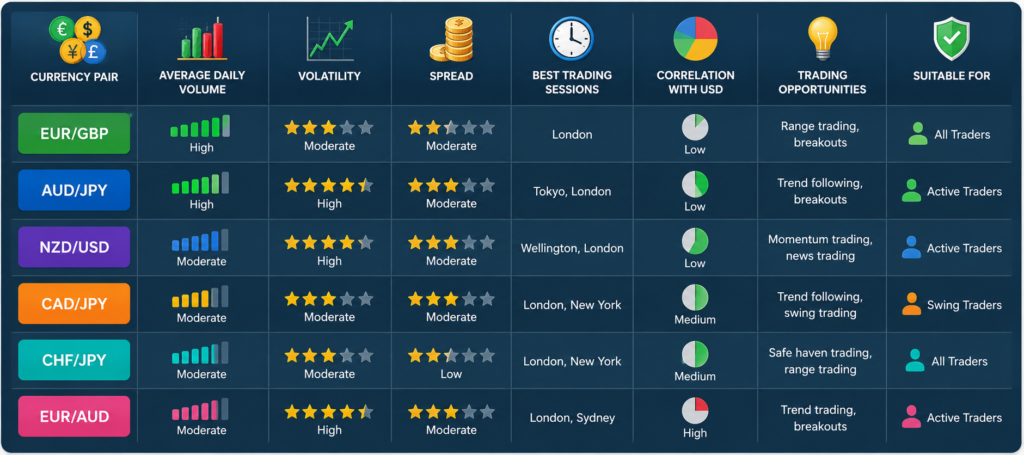
Here is how NZD/USD compares to other popular minor pairs:
Pair | Nickname | Daily Volume | Best For |
NZD/USD | Kiwi | High | Trend & swing traders |
AUD/USD | Aussie | Very High | Commodity traders |
USD/CAD | Loonie | High | Oil-linked trades |
USD/CHF | Swissie | Medium | Safe-haven plays |
NZD/JPY | — | Medium | Carry trade strategies |
NZD/USD offers a compelling combination of trend visibility, reasonable liquidity, and commodity correlation. For traders who understand New Zealand’s macro environment, this pair can be very rewarding.
Short-Term vs Long-Term NZDUSD Outlook
Short-Term (1–3 months): The pair faces near-term headwinds. NZD/USD is currently trading below its 8-day and 21-day EMAs, suggesting short-term bearish pressure despite the broader recovery trend. Traders should wait for confirmation above 0.5920 before adding long exposure.
Medium-Term (3–6 months): The outlook improves. Risk-on sentiment and commodity stability support the Kiwi. The three-month projected rate stands at approximately 0.5940, with the six-month target around 0.5990.
Long-Term (6–12 months and beyond): The upside scenario for NZD depends on strong global growth, rising commodity prices, and continued risk-on sentiment, while the downside risk comes from weak growth, falling commodities, or a risk-off shock.
Trading Tips for NZD/USD in 2026
Use these practical tips when trading this pair:
- Follow RBNZ meeting dates. Rate decisions cause sharp moves. Trade cautiously around these events.
- Monitor dairy auction results. Global Dairy Trade auctions directly affect NZD sentiment.
- Use the DXY as a guide. When the US Dollar Index weakens, NZD/USD often rallies.
- Watch China PMI data. Weak Chinese manufacturing data hits NZD hard.
- Set clear stop-losses. The 0.5800 level is a critical floor. A break below it changes everything.
- Trade the London-New York overlap. Liquidity peaks during these hours, giving better entry and exit fills.
FAQs : NZDUSD Forecast
What is the NZD/USD forecast for the end of 2026?
Is NZD/USD a good pair for beginners?
What makes NZD/USD a minor forex pair?
What is the biggest risk for NZD/USD in 2026?
What is the current NZD/USD price?
Does the US Federal Reserve affect NZD/USD?
Final Thoughts
The NZDUSD forecast for 2026 paints a cautiously optimistic picture. Price targets point toward the 0.5940–0.6004 range by year-end. The technical trend is bullish at the medium-term level, but short-term resistance at 0.5920 still needs to break convincingly.
For traders exploring the best currency pairs to trade, NZD/USD offers a strong combination of trend clarity, commodity sensitivity, and manageable spreads. It deserves a spot on every serious forex watchlist.
Among minor forex pairs, NZD/USD stands out for its responsiveness to global macro events and its strong correlation with commodity markets. That makes it a pair where analysis actually pays off.