
Introduction
Few things end a funded trading career faster than misunderstanding the prop firm maximum loss rule. You can read a strategy a hundred times, nail your entries, and still lose your account in a single afternoon because a hidden drawdown threshold quietly tripped. Most traders treat these limits as fine print, yet they are the single most important constraint on every funded account. This guide breaks the rule down in plain language, separating the overall maximum loss from the maximum daily loss so you stop confusing the two. You will learn how firms calculate drawdown from balance or equity, why floating profit and loss matters, and how static and trailing limits behave differently. By the end, you will know exactly where the tripwires sit and how disciplined risk management keeps you on the right side of them.

What the Prop Firm Maximum Loss Rule Actually Means
At its core, the prop firm maximum loss rule is the line a firm draws to protect the capital it allocates to you. Cross that line, and the account is either suspended, reset, or permanently closed. The rule exists because proprietary trading firms front the risk. They give traders access to capital, share the upside through payouts, and absorb losses when an account fails. To stay solvent, they must cap how much any single trader can lose before the firm steps in.
The confusion begins because the phrase “maximum loss” actually covers two distinct limits that operate on different timescales. The first is the overall or total maximum loss, which represents the deepest your account can fall from its starting balance before it is terminated. The second is the maximum daily loss, a tighter, faster-acting cap that resets each trading day. A trader can be comfortably inside the overall limit yet still lose the account by breaching the daily limit on a single volatile session. Understanding that these two work together, not interchangeably, is the foundation everything else builds on.
What Is Maximum Daily Loss in a Prop Firm
The question “what is maximum daily loss in prop firm” comes up constantly because the daily limit is the one that catches most traders off guard. The maximum daily loss is the largest amount your account is permitted to drop within a single trading day. Once you hit that floor, the day is over, and in most cases the breach is automatic and irreversible.
This limit is usually expressed as a percentage of your account size, and a value of roughly five percent is common across the industry, though it varies by firm and account tier. On a hundred-thousand-dollar account, a five percent daily cap means a loss of around five thousand dollars in a day would breach the account. The crucial detail many traders miss is the reference point. Firms typically measure the daily loss from either your balance at the start of the trading day or your equity at the start of the day, and that starting figure usually includes any open floating profit or loss carried into the new session.
Because of this, the daily limit is not a fixed dollar amount sitting in the background. It moves with your account. If you ended yesterday up, your new daily floor sits higher; if you carried a drawdown, your cushion for the day shrinks. Treating the daily loss limit as a live, recalculated boundary rather than a static number is what separates traders who survive volatile days from those who blow up on them.
Prop Firm Daily Drawdown Explained: How the Number Is Calculated
To get prop firm daily drawdown explained properly, you have to look at exactly how the firm measures your loss in real time. There are two common reference methods, and the difference matters more than most traders realize. Balance-based daily drawdown measures your loss against your account balance at the day’s open, ignoring unrealized profit on open trades until they close. Equity-based daily drawdown measures against your total equity, including floating profit and loss, which means open losing positions count toward the limit the moment they move against you.
The equity-based approach is stricter because a deep but temporary drawdown on an open position can trip the limit even if the trade would have recovered. A trader holding through a sharp adverse spike might watch the account close on floating losses alone. Balance-based rules give a little more breathing room intraday, but they still close the account once realized losses accumulate past the threshold.
Timing of the reset adds another layer. Most firms reset the daily limit at a fixed server time, often around the daily market rollover, so the “trading day” may not align with your local clock. Knowing your firm’s exact reset time, reference method, and whether floating PnL counts is non-negotiable for managing risk precisely.
Overall Maximum Loss: Static Versus Trailing Drawdown
The overall maximum loss is where the distinction between static and trailing drawdown becomes decisive. A static, or absolute, drawdown is anchored to your starting balance and never moves. If your account starts at one hundred thousand dollars with a ten percent static limit, your hard floor is ninety thousand dollars for the life of the account, regardless of how high your balance climbs. This is the simpler, more forgiving structure once you are in profit.
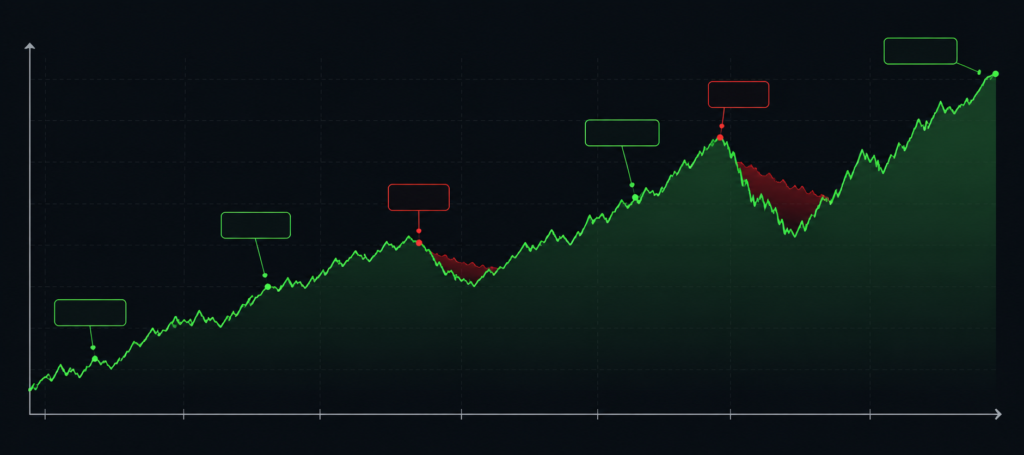
A trailing, or relative, drawdown behaves very differently. It follows your account upward as you make gains, locking in part of your progress and effectively raising the floor beneath you. The most stringent variant follows your equity tick by tick, meaning an intraday high you never actually banked can still lift your loss limit. Many firms freeze the trailing drawdown once your balance passes the initial deposit plus the buffer, after which it converts to a static floor at your starting capital.
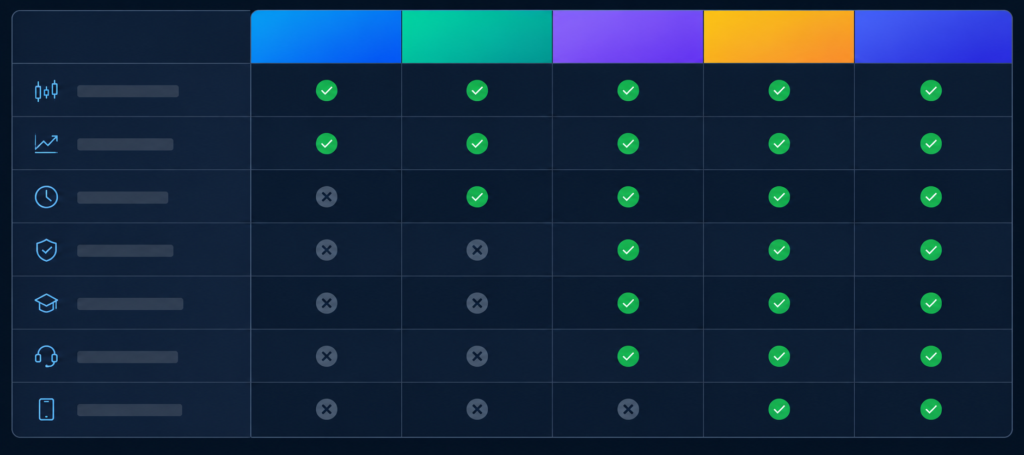
The table below illustrates how these structures typically compare. Values are example ranges for illustration only and vary by firm and account type.
| Rule Type | What It Tracks | Reference Point | Typical Range | Behavior in Profit |
|---|---|---|---|---|
| Maximum daily loss | Single-day loss | Start-of-day balance or equity | ~4%–5% | Resets each day |
| Static max drawdown | Total loss | Fixed starting balance | ~8%–12% | Floor never moves |
| Trailing (balance) drawdown | Total loss | Highest closed balance | ~5%–10% | Floor rises, then often locks |
| Trailing (equity) drawdown | Total loss | Highest equity peak | ~5%–10% | Floor rises with unrealized highs |
The practical takeaway is that a trailing equity drawdown demands far tighter trade management than a static one, because gains you have not locked in can still raise the bar you must clear.
Intraday Versus End-of-Day Breach
Not every firm checks your limits the same way, and the moment of breach can change your entire risk approach. Real-time, or intraday, breach rules close your account the instant your equity touches the limit, floating losses included. There is no grace, no recovery window, and no chance to let a trade breathe back into profit.
End-of-day breach rules are more lenient. They evaluate your account only at a set snapshot time, typically the daily close, and judge you on your balance or equity at that moment. A position that dipped deep into drawdown during the session but recovered by the snapshot would not breach. Never assume both limits use the same trigger; read the rule set for each separately.
Why These Rules Exist
It is easy to view the maximum loss rule as an obstacle, but it is really the firm’s survival mechanism. Proprietary trading firms operate on a portfolio of funded accounts, and they expect a meaningful share to fail. The drawdown limits cap the firm’s exposure on each account, ensuring no single trader can inflict damage large enough to threaten the wider operation. In effect, the rule is the firm’s stop loss on you.
These limits also act as a filter for discipline. A trader who respects a five percent daily cap and a ten percent overall floor is demonstrating exactly the controlled, repeatable risk behavior the firm wants to fund and scale. A funded trader who manages drawdown well becomes a long-term, payout-generating partner rather than a liability.
How to Avoid Breaching the Maximum Loss Rule
Staying inside the limits is less about prediction and more about preparation. The most reliable safeguard is to set a personal daily loss stop that sits well inside the firm’s hard cap. If the firm allows a five percent daily loss, capping yourself at two or three percent and walking away when you hit it gives you a buffer against slippage, spreads, and the emotional spiral of revenge trading.
Position sizing does the heaviest lifting. By risking a small, fixed fraction of the account per trade, you ensure that even a string of losers cannot approach the daily floor in a single session. Hard stop losses on every position remove the temptation to hold a losing trade in hope, which is the classic path to an intraday breach under equity-based rules.
Finally, respect the calendar and the clock. Know your firm’s daily reset time so you do not unknowingly carry risk across the boundary, and reduce size around high-impact news when spreads widen and spikes can blow through stops.

How Rules Differ Across Prop Firms
No two prop firms enforce the maximum loss rule identically, and assuming they do is a costly mistake. Some firms use a static overall drawdown that never moves, which heavily favors traders once they build a profit cushion. Others use a trailing drawdown that locks in gains and tightens the floor as you grow, demanding more careful management of unrealized profit.
The lesson is simple: read the specific rule book for the exact account you are buying, not a generic summary. Two firms advertising “ten percent max loss” can produce completely different survival odds depending on whether that floor is static or trailing and when it is measured.
What Top Traders and Research Say
The discipline behind respecting a maximum loss rule mirrors decades of trading wisdom and behavioral research. In Trading in the Zone, Mark Douglas argues that consistent traders treat risk as a predefined, accepted cost rather than a threat to fight, which is precisely the mindset a hard drawdown limit enforces.
Behavioral finance explains why traders struggle to do this. The classic study “Trading Is Hazardous to Your Wealth” by Brad Barber and Terrance Odean found that overtrading and excessive activity systematically eroded returns, a direct warning against the kind of revenge trading that breaches daily limits. Their work pairs naturally with Kahneman and Tversky’s research on loss aversion, which shows that people feel losses far more sharply than equivalent gains.
The practical antidote is captured in a line often attributed to Paul Tudor Jones: “The most important rule is to play great defense, not great offense.” A funded account is won not by spectacular wins but by never letting a single day cross the line.
Frequently Asked Questions (FAQs)
What is the maximum daily loss in a prop firm?
The maximum daily loss is the largest amount your funded account can drop in a single trading day before the account is breached. To answer what is maximum daily loss in prop firm precisely, it is usually a percentage, often around five percent, measured from your start-of-day balance or equity. Once you reach that floor, the trading day ends and the breach is typically automatic. It resets at the firm’s fixed daily reset time, so your cushion refreshes each new session.
How is prop firm daily drawdown calculated?
With prop firm daily drawdown explained simply, firms measure your loss against a reference point set at the day’s open. Balance-based rules track realized losses from your opening balance, while equity-based rules include floating profit and loss on open trades in real time. The equity method is stricter because a temporary unrealized drawdown can trip the limit. Knowing which method your firm uses, and the exact reset time, is essential to managing the daily floor accurately.
What is the difference between static and trailing drawdown?
A static drawdown stays anchored to your starting balance and never moves, so your floor is fixed for the life of the account. A trailing drawdown rises as your balance or equity grows, locking in gains and tightening the loss limit beneath you. Trailing rules demand tighter management of unrealized profit, while static rules become more forgiving once you build a cushion. The prop firm maximum loss rule behaves very differently depending on which structure applies.
What happens if I breach the maximum loss rule?
Breaching either the daily loss limit or the overall maximum loss usually closes the account immediately or suspends trading for the day. A daily breach typically ends only that session in some structures, while an overall breach generally terminates the funded account permanently. Some firms offer a paid reset, but profits and progress are often lost. This is why understanding the funded account loss limit and trading well inside it matters so much.
Why do prop firms have maximum loss rules at all?
These rules are the firm’s core risk management mechanism. Because the firm provides the capital and absorbs losses, the maximum loss rule caps its exposure on every account and protects the broader operation. It also filters for disciplined traders who manage drawdown responsibly. In effect, the rule functions as the firm’s own stop loss, aligning your risk behavior with the firm’s long-term survival and payout model.
Final Thoughts
The prop firm maximum loss rule is not a technicality to skim over; it is the operating system of every funded account. Once you separate the maximum daily loss from the overall drawdown, understand whether your firm measures from balance or equity, and recognize whether your floor is static or trailing, the rules stop feeling like traps and start working as a structured risk framework. The traders who thrive are rarely the ones with the flashiest strategies. They are the ones who size positions conservatively, set personal limits inside the firm’s hard caps, honor their stop losses, and treat every trading day as a fresh boundary to respect. Master the drawdown mechanics first, and consistent profitability becomes far more achievable. For more practical, trader-focused guides on funded accounts, risk management, and prop firm strategy, visit forextradingboards.com.
This article is for educational purposes only and does not constitute financial, investment, or trading advice. Trading carries significant risk; always do your own research and consult a qualified professional.