Introduction
Every forex trader knows the sting of a sudden loss. The chart moves against you, the stop-loss triggers, and a hot wave of frustration takes over. In that moment, many traders do something dangerous. They jump straight back into the market to win it back, and this destructive habit is called revenge trading in forex. It feels like control, but it is actually emotion driving the order. One bad trade becomes three, three becomes ten, and a manageable loss turns into a blown account. This article breaks down exactly why revenge trading happens, what it does to your brain and your balance, and the practical systems that stop it. You will learn the psychology, the warning signs, real research, and a clear recovery plan you can apply on your very next session.
What Revenge Trading Actually Is
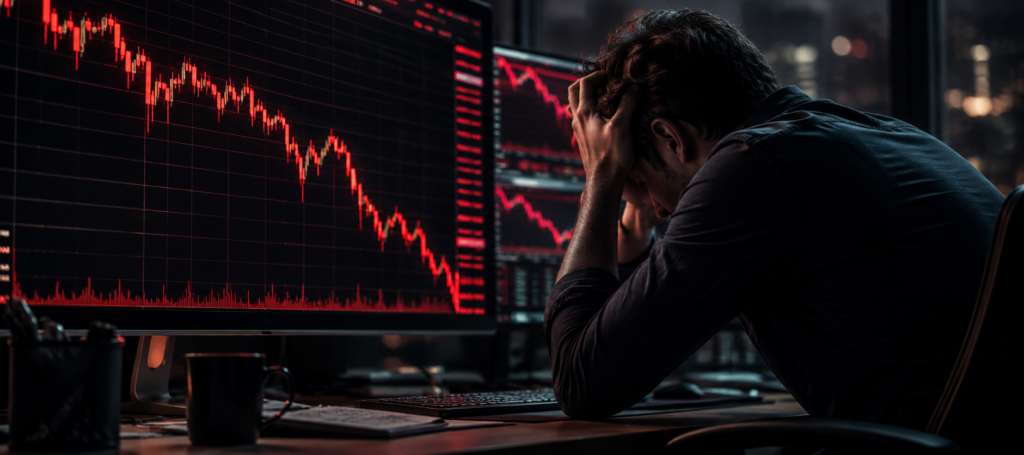
Revenge trading in forex is the act of placing trades driven by the emotional need to recover a recent loss, rather than by your strategy or analysis. The defining feature is motive. A normal trade comes from a setup you planned and a signal you trust. A revenge trade comes from anger, frustration, or wounded pride. You are no longer trading the market. You are trading against your own loss, and the market does not care about your feelings.
The mechanics are easy to spot once you know them. A trader takes a loss, feels cheated, and immediately opens a new position. Often the position is larger than usual because part of the brain wants to make it back fast. Sometimes the trader abandons the stop-loss entirely, reasoning that the price simply has to bounce. None of these decisions rest on analysis. They rest on emotion, and that is what makes them so reliably destructive.
What makes this habit dangerous is how reasonable it feels in the moment. The trader is not being lazy or careless. In fact, they may feel intensely focused, even determined. But that focus is aimed at the wrong target. Instead of asking whether this is a good trade, the mind asks how to get even. That single shift in the question is the entire problem, and recognizing it is the first real step toward control.
The Psychology Behind Revenge Trading
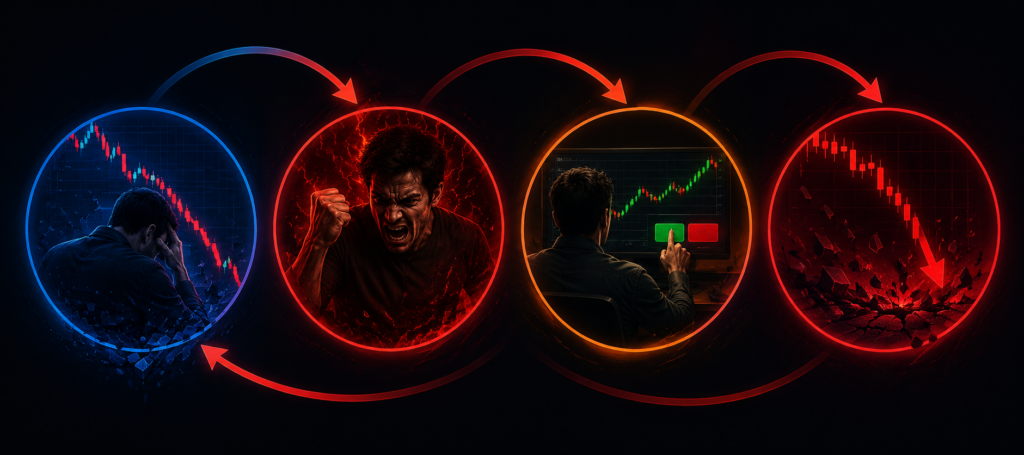
The roots of revenge trading sit deep in human psychology, which is exactly why willpower alone rarely fixes it. When you lose money, your brain processes it as a genuine threat. Stress hormones rise, the rational part of your mind quiets down, and the impulsive part takes the wheel. In that state, a trader is biologically primed to act fast and seek relief, and placing another trade feels like relief even when it is reckless.
Loss aversion plays a central role here. Humans feel the pain of a loss far more strongly than the pleasure of an equal gain. A hundred-dollar loss hurts roughly twice as much as a hundred-dollar win feels good. That imbalance pushes traders to do almost anything to erase the discomfort, including taking trades they would normally reject. The loss becomes an open wound, and the next trade becomes a desperate attempt to close it.
Ego and identity make everything worse. Many traders quietly tie their self-worth to their results. A losing trade then feels like a personal failure, not just a financial one. The mind reframes the market as an opponent that has insulted you, and revenge feels justified. This is why the behavior is called revenge in the first place. It is emotional retaliation dressed up as a trading decision, and understanding that framing is essential to dismantling it.
Common Triggers and How They Hijack Decisions
Revenge trading does not appear from nowhere. Specific triggers set it off, and most of them are predictable. A stop-loss getting hit moments before the price reverses is a classic one. So is a string of small losses that slowly drains both the account and the trader’s patience. Big news events, sudden volatility, and even a single careless mistake can all light the fuse. The trigger itself is normal trading life. The problem is the emotional reaction it produces.
The table below maps the most common triggers to the emotional response they create and a practical fix you can apply immediately. Use it as a quick diagnostic when you feel the urge to retaliate against the market.
| Trigger | Emotional Response | Practical Fix |
|---|---|---|
| Stop-loss hit just before reversal | Anger, feeling cheated | Walk away; review the trade in your journal, not the chart |
| Several small losses in a row | Frustration, impatience | Stop after a preset daily loss limit |
| A large unexpected loss | Panic, urge to recover fast | Close the platform for 24 hours |
| Missing a winning move | Regret, self-blame | Accept missed trades as normal; wait for your next setup |
| A careless manual error | Shame, urge to fix it | Log the mistake; do not place a correction trade |
Notice how every fix involves slowing down rather than acting faster. That is not a coincidence. Triggers hijack decisions by compressing your reaction time, so the antidote is always to create space between the feeling and the order. When you insert even a few minutes of distance, the rational brain has a chance to come back online and reclaim the decision.
The Real Cost to Your Trading Account
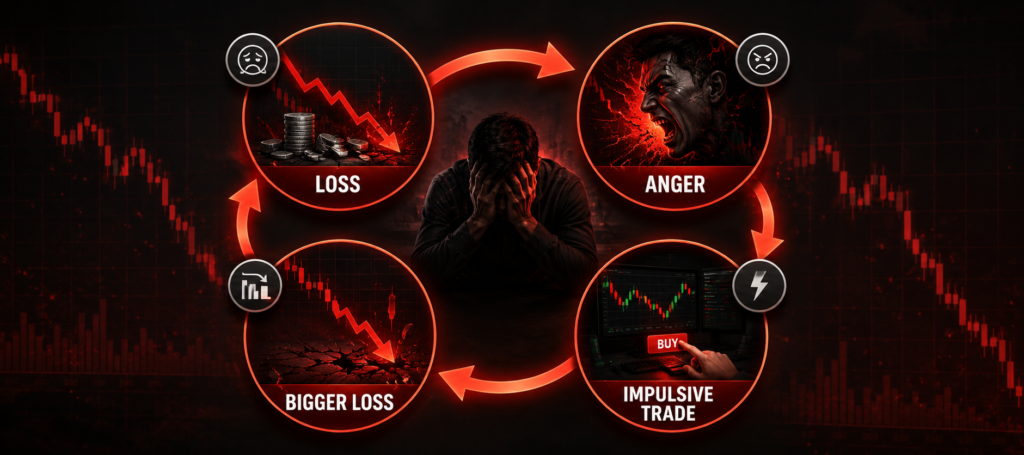
The financial damage from revenge trading is rarely a single bad trade. It is the cascade. One emotional position leads to another, position sizes creep upward, and risk management quietly collapses. A trader who normally risks one percent per trade might suddenly risk five or ten percent without even noticing the shift. A small, recoverable drawdown becomes a deep hole, and the math of recovery turns brutal. A fifty percent loss requires a one hundred percent gain just to break even.
Beyond the balance, there is a hidden cost to your skill and confidence. Every revenge trade teaches your brain that emotional reactions are an acceptable response to losses. The habit strengthens each time you indulge it, the same way any compulsive behavior does. Over months, this rewires how you trade, making discipline harder to access exactly when you need it most. You are not just losing money. You are training yourself to lose money.
There is also an emotional toll that follows traders out of the chart room. Sleep suffers, stress climbs, and relationships strain under the weight of avoidable losses. Trading stress that should be temporary becomes chronic, and burnout creeps in. Protecting your capital is important, but protecting your mental state is what keeps you in the game long enough to actually succeed. This article is educational and is not financial advice; always trade within your own risk tolerance.
How to Stop Revenge Trading Forex: A Practical System
Knowing how to stop revenge trading forex starts with accepting one hard truth: you cannot out-discipline a strong emotion in real time. Relying on willpower in the heat of a loss is like trying to diet while standing in a bakery. Instead, you build a system that removes the decision from your emotional brain entirely. The goal is to make the right behavior automatic and the wrong behavior difficult.
The single most powerful tool is a hard daily loss limit. Decide in advance the maximum you are willing to lose in one day, for example two or three percent of your account. When you hit that number, you stop trading. No exceptions, no one more trade. Many traders write this rule down and even set platform alerts or use prop-firm-style limits to enforce it. The limit works because you set it while calm, and it protects you when you are not.
A mandatory cooldown after any loss is the second pillar. After a losing trade, step away from the screen for a set period, even just fifteen or thirty minutes. Walk, breathe, drink some water, do anything that breaks the emotional loop. This pause is where revenge trades die. The urge to retaliate is intense but short-lived, and if you can outlast it, it usually fades. The market will still be there when you return with a clear head.
Fixed position sizing locks the door behind you. When every trade risks the same small, predetermined amount, you physically cannot size up to chase a loss. The decision is already made before emotion enters the picture. Pair this with a written trading plan that defines your entries, exits, and risk, and you give your rational brain a script to follow when your emotional brain wants to improvise.
Finally, keep a trading journal. After each session, write down not just the trades but how you felt. Over time, patterns emerge. You will start to see your personal triggers coming, and that awareness is the foundation of lasting control. The journal turns vague frustration into specific, fixable data.
Building Long-Term Discipline and Emotional Control
Stopping revenge trading in the moment is the rescue plan. Building genuine trading discipline is the cure. Discipline is not a personality trait you are born with. It is a skill you develop through repetition, structure, and self-honesty. The traders who last decades are not the ones with the most willpower. They are the ones who built systems that make discipline the path of least resistance.
A consistent routine does most of the heavy lifting. When you trade at the same times, follow the same checklist, and review the same metrics, trading becomes a process rather than an emotional rollercoaster. Process protects you from impulse. It is hard to act recklessly when every step is already defined. Treat your trading like a profession, not a slot machine, and your behavior follows the framing.
Reframing your relationship with losses is equally important. Losses are not failures. They are a normal, expected cost of doing business, like inventory shrinkage in a shop. A professional trader knows that a single loss means nothing across a large sample of trades. When you internalize that a loss is just one data point in a long series, the emotional charge drains out of it, and there is nothing left to take revenge for.
Mindfulness and physical self-care round out the picture more than most traders expect. Sleep, exercise, and even basic breathing practices improve your ability to stay calm under pressure. Trading is a performance activity, and your mental state is your most important tool. Protect it the way an athlete protects their body, and your decision-making sharpens automatically.

What Top Traders and Research Say
The wisdom of experienced traders and decades of research point in the same direction. In his classic book Trading in the Zone, Mark Douglas argues that consistent results come from a disciplined mindset far more than from any indicator or strategy. He emphasizes that traders must accept risk fully and detach their emotions from individual outcomes, which is precisely the antidote to revenge trading. The book remains a staple for anyone serious about the mental side of the markets.
The science backs this up. The behavioral economists Daniel Kahneman and Amos Tversky developed prospect theory and documented loss aversion, showing that people feel losses roughly twice as intensely as equivalent gains. That single finding explains much of why traders chase losses so compulsively. Their work, which earned Kahneman a Nobel Prize, gives revenge trading a clear scientific foundation rather than treating it as a mere character flaw.
Perhaps no one captured the practical lesson better than the legendary trader Jesse Livermore, who warned, “The desire for constant action is responsible for many losses.” Boiled down, the message is simple: trading from emotion rather than analysis is a losing game. The best traders and the best research agree that mastering yourself is the real edge.
Frequently Asked Questions
What is revenge trading in forex? Revenge trading in forex is when a trader places trades to recover a recent loss out of anger or frustration rather than following their strategy. These trades ignore proper analysis and risk management, often using larger position sizes or no stop-loss. It is one of the most common forex trading mistakes and a leading cause of blown accounts. The behavior is driven by emotion, not logic, which is exactly why it tends to make losses far worse.
Why is revenge trading so dangerous? It is dangerous because it abandons risk management at the worst possible moment. A trader chasing a loss often risks far more than usual, turning a small drawdown into a deep one. The deeper the hole, the harder the math of recovery becomes. Beyond money, it builds a destructive habit and fuels trading stress, eroding both your account and your confidence over time.
How do I stop revenge trading forex for good? Learning how to stop revenge trading forex means building systems instead of relying on willpower. Set a hard daily loss limit, take a mandatory cooldown after every loss, and use fixed position sizing so you cannot size up to chase. Keep a trading journal to spot your personal triggers. These rules work because you create them while calm, so they protect you when emotion takes over.
What are the main revenge trading causes and solutions? The core revenge trading causes and solutions come down to psychology and structure. The causes are loss aversion, ego, stress, and impulsive reactions to losing trades. The solutions are equally clear: predefined risk rules, cooldown periods, a written trading plan, and reframing losses as a normal business cost. Address the emotional triggers with structure, and the behavior loses its grip.
Is revenge trading the same as overtrading? They overlap but are not identical. Overtrading is placing too many trades, often from boredom or a need for action. Revenge trading is specifically driven by the need to recover a loss. Revenge trading frequently leads to overtrading, since one emotional trade triggers another. Both stem from poor emotional control, and the same discipline-building habits help prevent each of them.
Can revenge trading be completely cured? You can manage it so well that it stops affecting your results, though the underlying emotional pull never fully disappears because it is human nature. The key is building a trading routine and mindset that make discipline automatic. With consistent rules, journaling, and a healthy relationship with losses, even experienced traders keep the urge in check. Treat it as an ongoing practice, not a one-time fix.
Final Thoughts
Revenge trading in forex is not a sign that you are a bad trader. It is a sign that you are human, wired to feel losses deeply and to crave relief from them. The traders who succeed are not the ones who never feel the urge to strike back at the market. They are the ones who build systems that catch the urge before it becomes an order. By understanding the psychology, recognizing your triggers, setting hard loss limits, enforcing cooldowns, sizing every position the same, and journaling your emotions, you turn a destructive impulse into a manageable one. Discipline is a skill, and like any skill, it grows every time you practice it. Protect your capital, protect your mindset, and let the market come to you instead of chasing it in anger. For more practical trading psychology guides, risk management strategies, and market insights, keep reading and growing with us at forextradingboards.com.